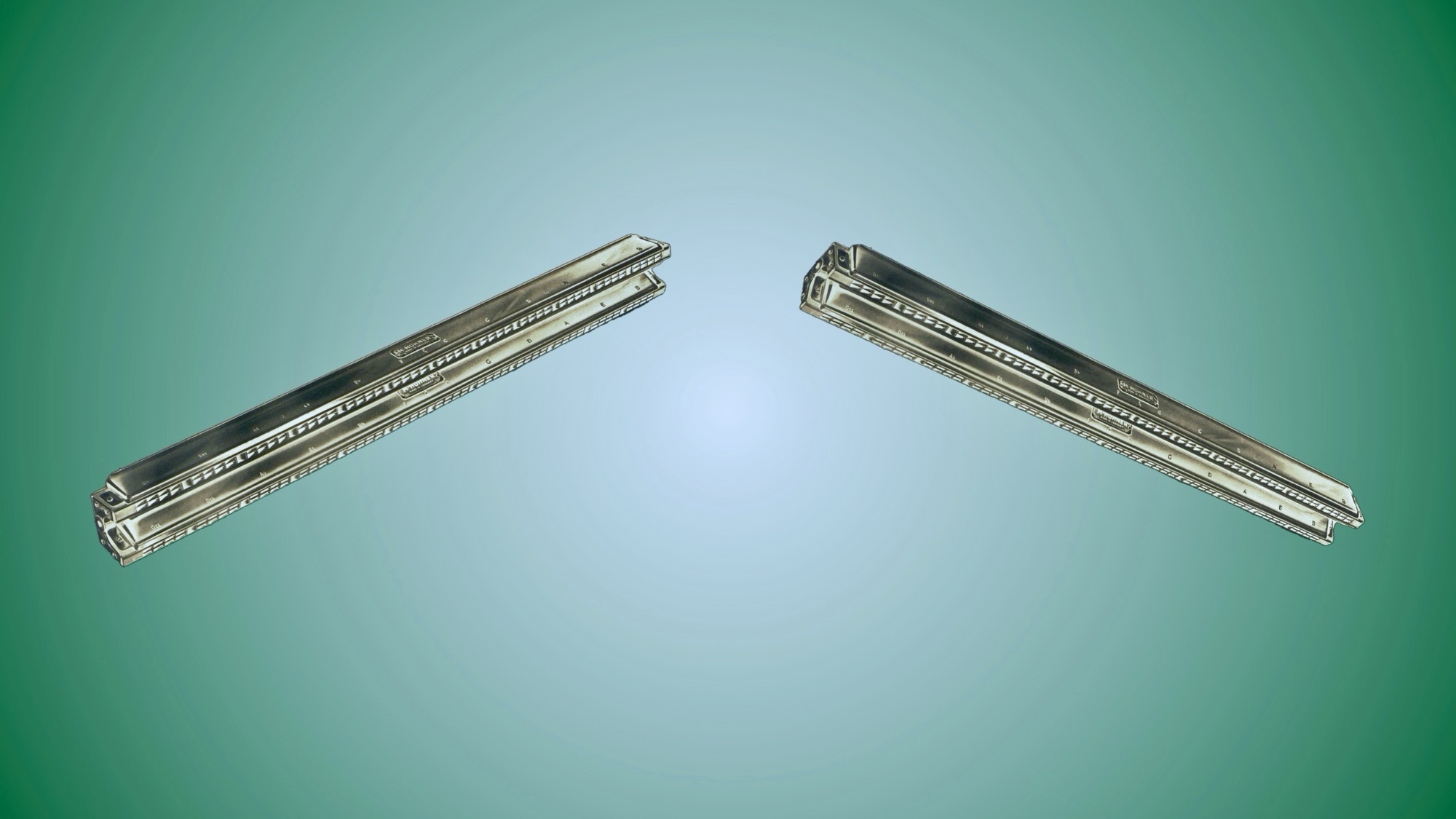


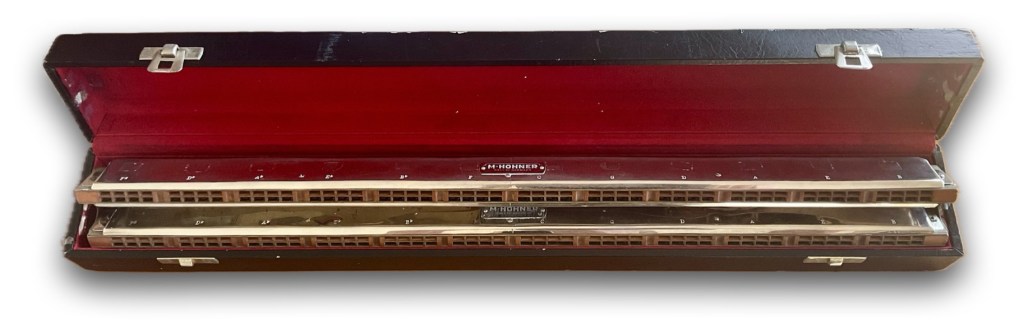
The one after the 266 (I said move over once – and a half). However more likely after the 265 as the 266 was originally the 264 1/2. Confused welcome to the world of harmonica identification.
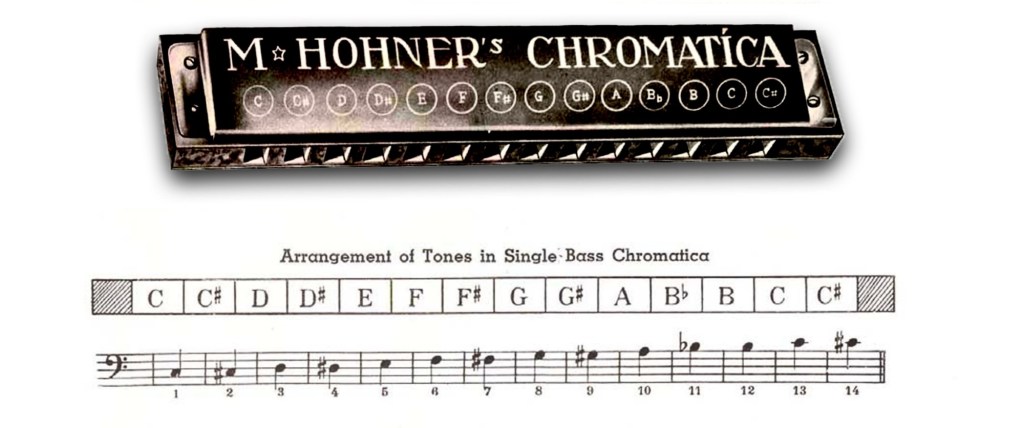
The 48 Chord Harmonica (also known as the Akkorda) was manufactured nearly ten years later than its closely associated orchestral companion the Bass Harmonica. Last month we were able to definitively date that to as early as 1927 (it maybe have even been available as early as 1925).
I had read of a prewar (second) chord model, but couldn’t find one in the Hohner catalogues of that time in fact the earliest it appears is in a Catalogue from 1950. One of those mentions of a prewar model came from Harmonica expert and exponent Boaz Kim.
A callout was made to Boaz and his immediate response was thus, “From a memoir of Nat Bergman who played with two early harmonica ensembles like the Carl Freed Harlequins and the Cappy Barra Harmonica Band, it was in January 1935 where him and another player went to get some drafting paper to design a new Hohner chord harmonica that Carl wanted. It seems to line up with a few other books by Al Smith and Kim Field. It also lines up with another early band, the Philharmonicas, who definitely had one in 1935 or 1936. Lastly, the famous and late Stan Harper actually had one of the first Hohner chord harmonicas that was actually from that era, if it wasn’t the first.”
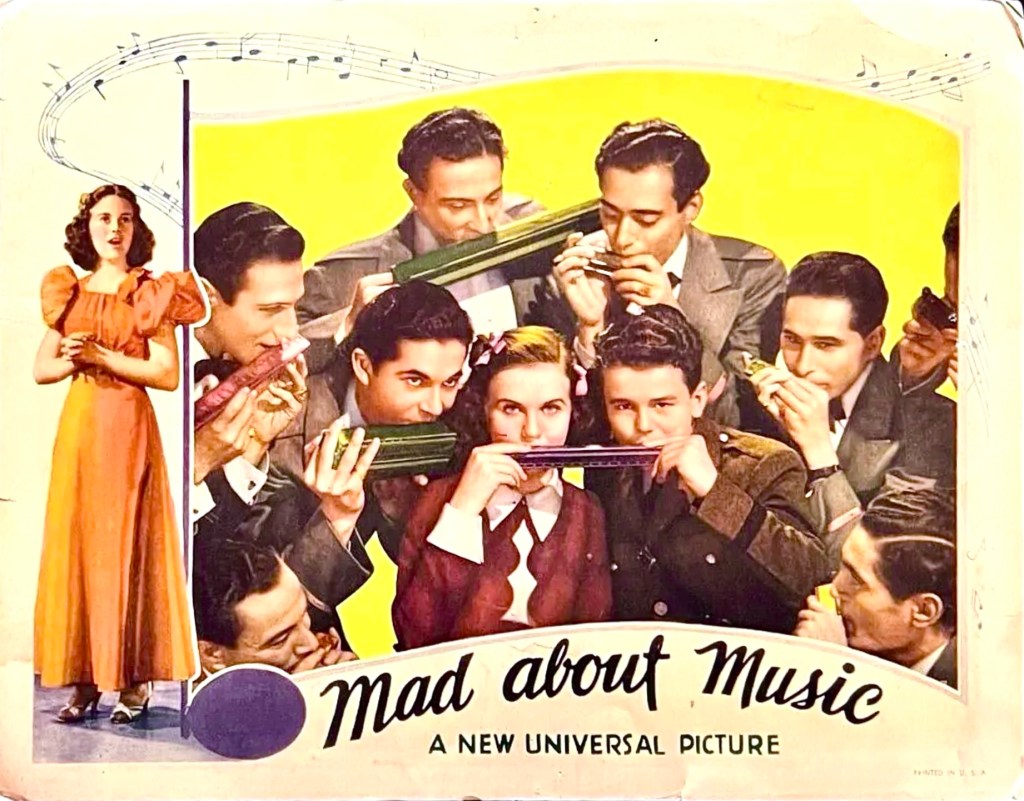
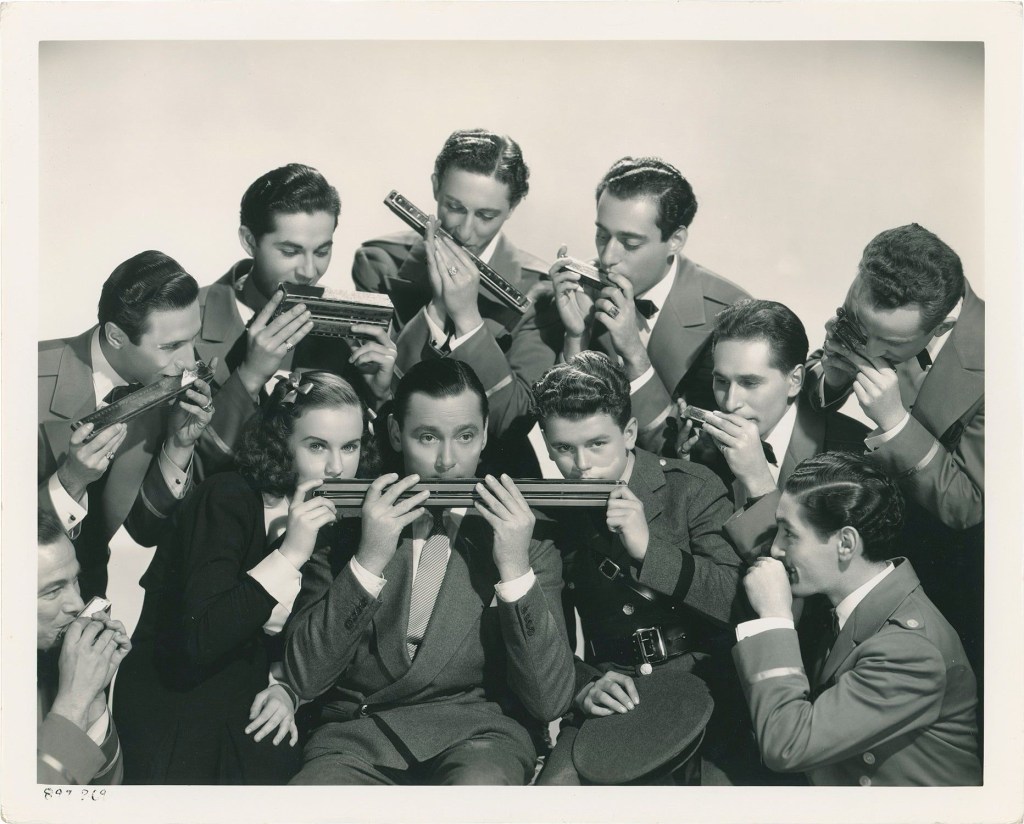
The Cappa Barra Story by Art Dane (from the memoirs of Nat Bergman) is available online and it confirms Boaz’s claim that Nat and Sam (Scheckter) went to Woolworth (on behalf of Carl Freed) for paper to design a chord harmonica (Nat Bergman – Diary entry January 12, 1935). The 1938 movie ‘Mad About Music’ starring Deanne Murphy featured the Cappa Barra Harmonica Ensemble and also the Chord Harmonica.
Apparently Fuzzy Feldman, an early member of the Harmonica Rascals, before the chord harmonica’s availability, wedged several Hohner Auto Valves of different keys between his fingers to play rhythmical chord chugging. In fact when he had the opportunity to play the 48 Chord he wasn’t too enamoured with its playability so he carved it into segments.

Al Fiore, from Jerry Murad’s Harmonicats, had a different method for procuring a variety of chords. His original version consisted of a construction of Hohner Vinettas.
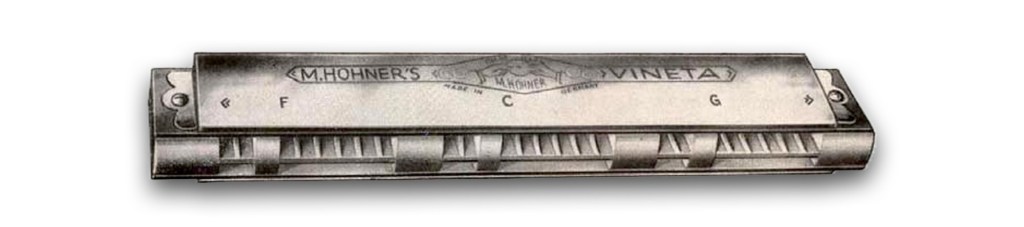
3 single bass notes and the respective major chords when blowing, and 3 bass notes with dominant seventh chords when drawing.
Later, Al propelled the chord harmonica (Hohner 48) into the stratosphere with the Harmonicats recording of Peg o’ My Heart. The tune edged out Frankie Laine’s That’s My Desire (sorry Mum) for the number one song of 1947. Al’s chord progression was the essence of the tune.
It should be mentioned Al always credited Alan Pogson from the Rascals with the solo. He learnt it from him when he subbed for Alan in that band. Clap eyes on Al playing Peg o’ My Heart live.
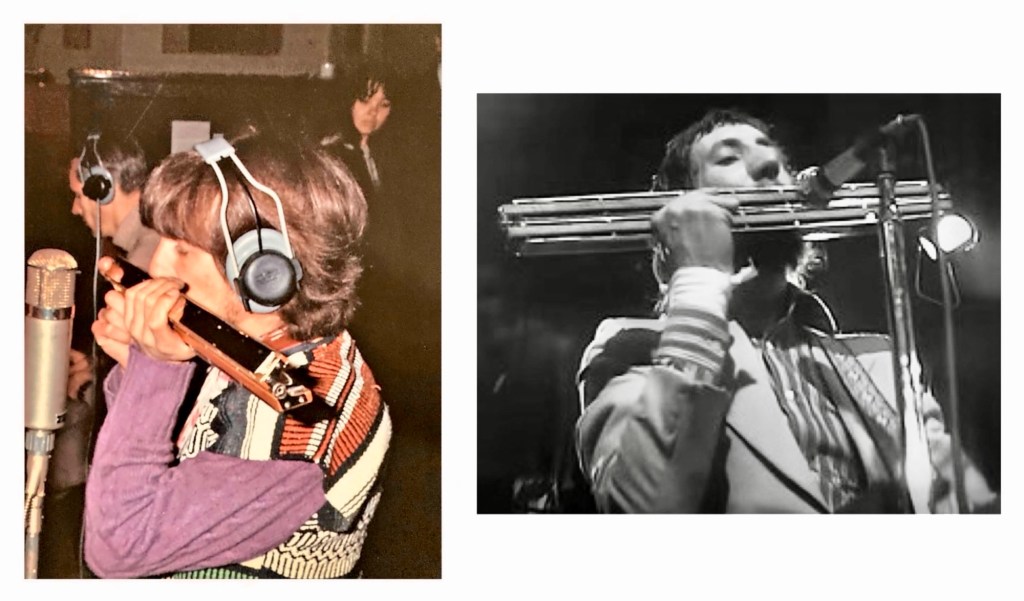
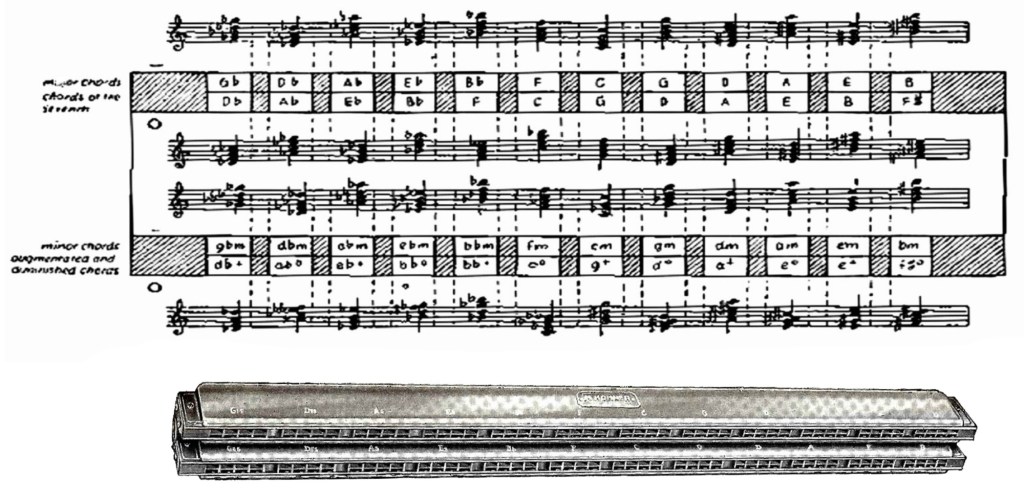
The top deck consists of all major chords when blowing and on drawing the dominant 7th chords. The bottom deck has the minor chords when blowing and on drawing the diminished and augmented chords. With the technique of tongue blocking/splitting there are even more chords available.
The original Hohner 267 had a reverse layout, and from what I can ascertain, that related to the top deck ‘F’, ‘C’ and ‘G’ chords presented as ‘G’ ‘C’ & ‘F’. This was the model Al Fiore played and Hohner continued to make this layout available just for him. The reed plates in the wooden comb model consisted of four pieces in each section containing three chords.

Their latest model has an ABS transparent plastic comb with individual plates for each chord – you could easily move them around if you were so inclined. Other features on the latest model include a rounded smooth ABS mouthpiece and recessed screws on the cover plates. Also, the Hohner badge is stamped on the plates (not raised).
Y’all Got Your Ears On
Every minute is a minute gone
No time to plan ahead
I can’t tell you if I’m right or wrong
I don’t want to leave you
I just need to jump off the Earth
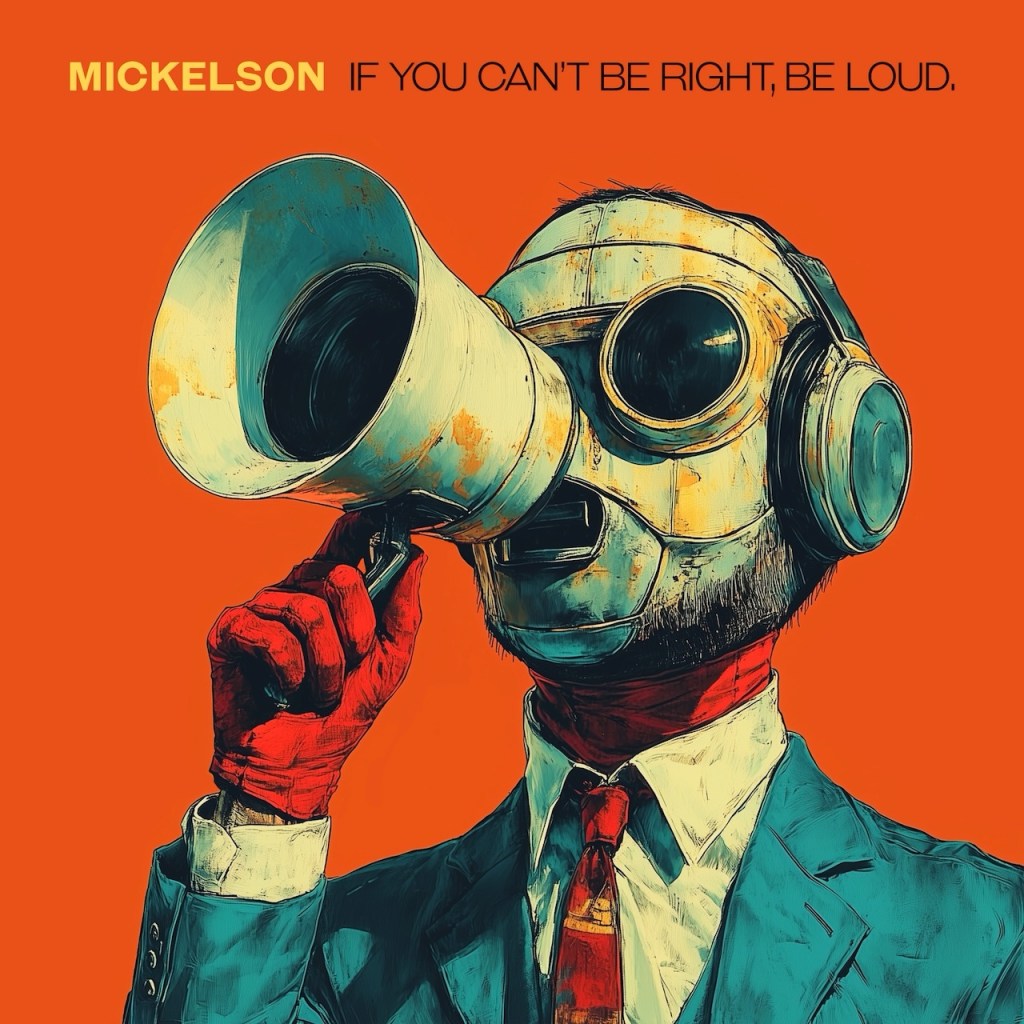
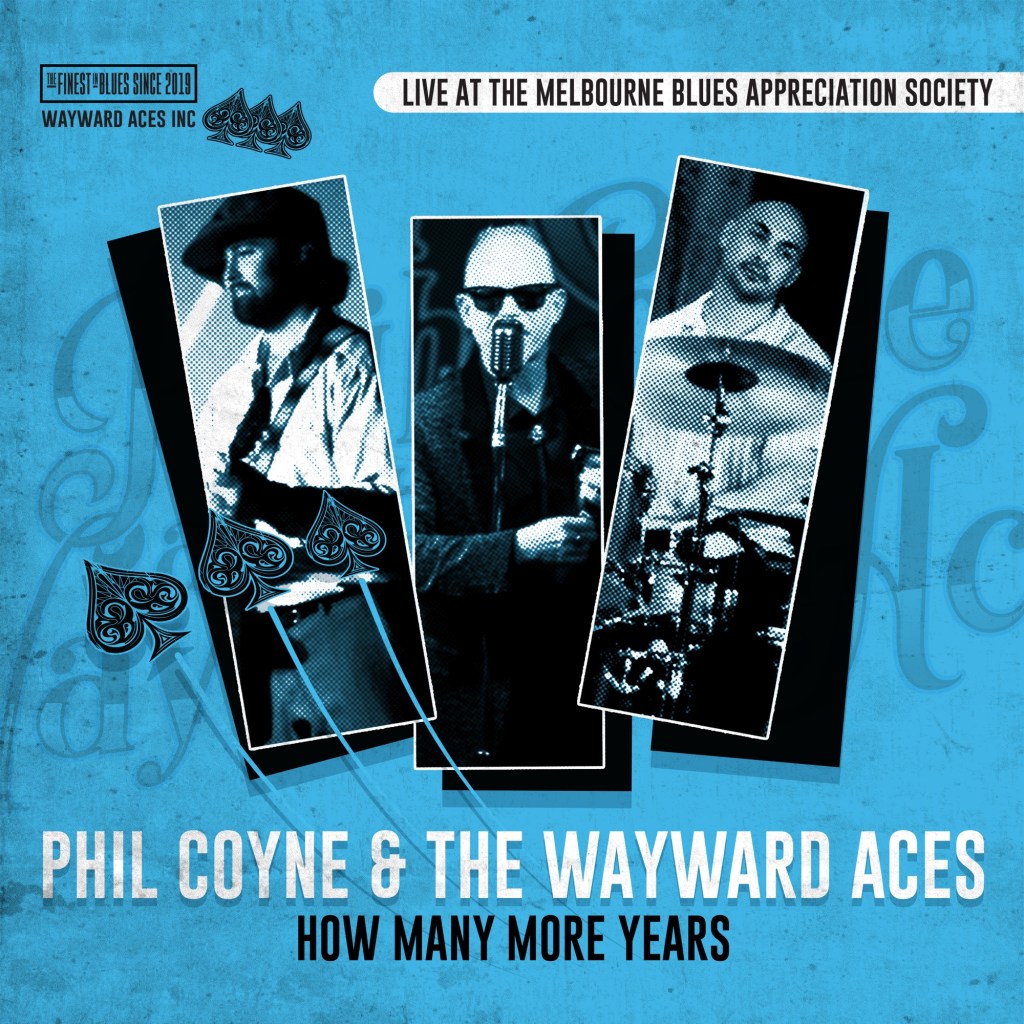
An Album Up Over & A Single Down Under
Direct from San Francisco (and maybe the Embarcadero – too many episodes of the ‘Streets of’) is Mickelson’s ripper new album ‘If You Can’t Be Right, Be Loud’. Highlight for the author is Jump Off The Earth (Mickelson: Vox, banjo, guitar, bass Jon Buckett: keys Lee Moulding: drums). You may remember my recent rave review of his song Hercules & Iron Man that first appeared on his debut 2015 album ‘Flickering’, which was included in the Grammy ballot for Best Folk Album and Best Roots Music Performance. I rate this tune nearly as highly.
There are no fillers on the long play, but others worthy of the highest praise include; Blue Is The Warmest Colour with its melodic harmonising chorus, Interiors is a beauty and the first single Only Grey Matter Boiling In My Head is right up there. There is even a harmonica track, all of 101 seconds Beneath The Blue Suburban Sky. Good on ya Scott (Mickelson) Banjo and Harmonica. Now that’s a ripper combo. What ya reckon Dave? Remember John Lennon played Banjo on All You Need Is Love. Out now on Bandcamp.
⭐️ ⭐️ ⭐️ ⭐️ ⭐️
From Melbourne’s inner west, a fabulous cover of Howlin’ Wolf’s How Many More Years by Phil Coyne and The Wayward Aces. It’s the first single dropped off their upcoming album ‘Live at Melbourne Blues Appreciation Society’. Phil Coyne sure can blow a blues riff. Phil embellishes Wolf’s harp riffs and his vocals have a smoky edge too, but not as gritty as the master. Oscar LaDell provides the repetitive hypnotic groove on guitar and Will Harris bounces the rhythm along on drums. Out now on Bandcamp.
Coming Up (Like a Flower)
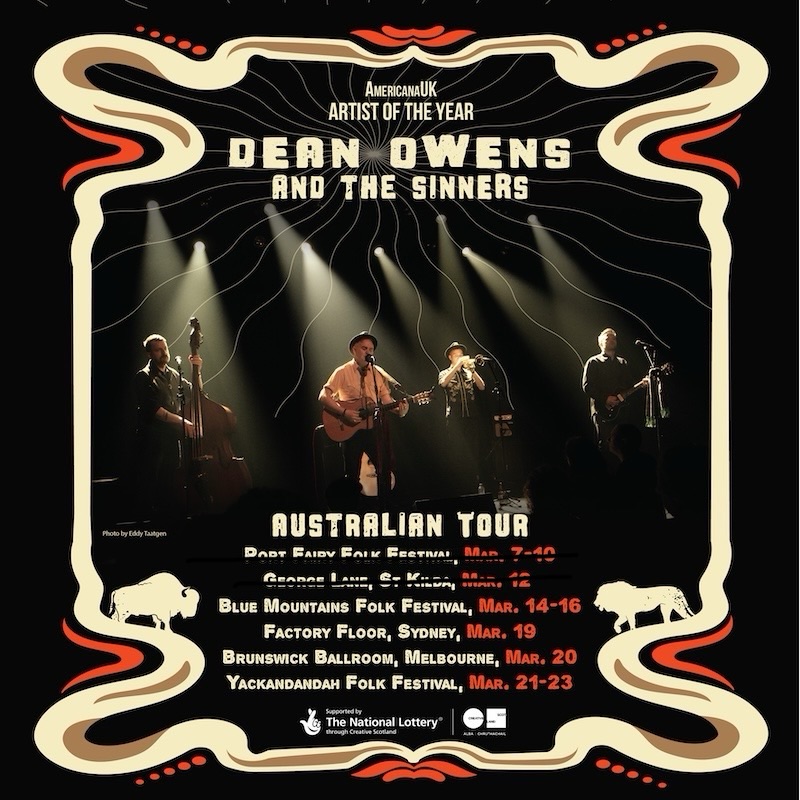
Scottish singer songwriter Dean Owens has landed in the Antipodes with shows in both Sydney and Melbourne. He headlines the Port Fairy and Blue Mountains folk festivals. The trip coincides with the release of his album ‘Spirit Edge’ an album of melodic, concise songwriting about family and connections to places, with a nod to spirit animals. We’ve already had a ‘Bo Peep’ at several of the tunes from the precursor EP’s, ‘The Ridge Trilogy’ and HRR has already eulogised two, Light This World and My Beloved Hills.
The album is hotter than a firecracker. The highlight for me of the songs we hadn’t heard previously is Burn It All. A song empathising the plight of the dispossessed and displaced. The tune typifies the Owen’s ariose with a strong emotive lead vocal, sweet backing vocal and sonorous brass.
Check it out (soaring with the eagles all week long) over on – you guessed it Bandcamp.
⭐️ ⭐️ ⭐️ ⭐️ ⭐️
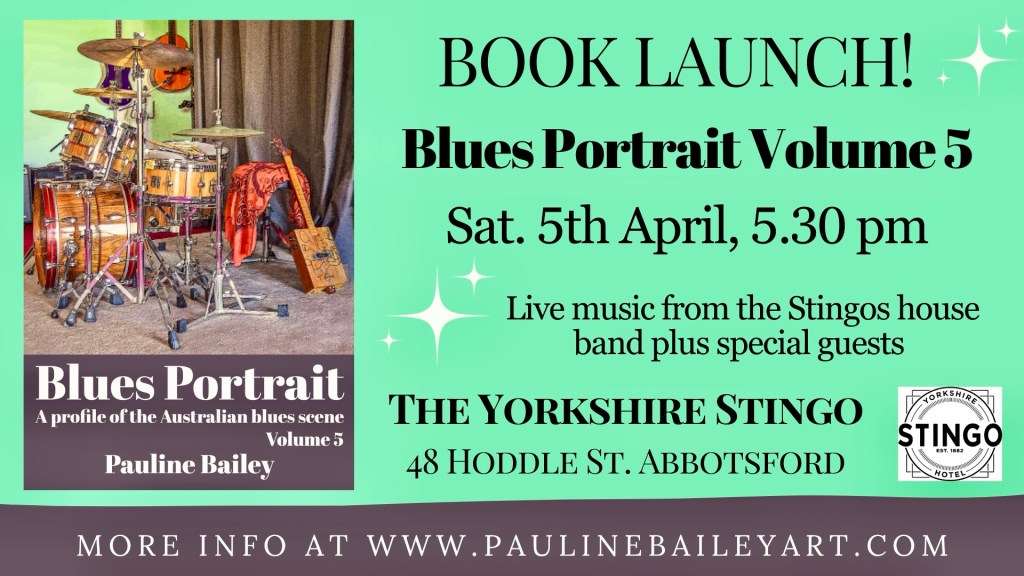
Pauline Bailey is set to launch her fifth volume of Blues Portraits of the Australian Blues scene. What an effort! This edition features another forty musicians detailing their personal experiences, the influence of blues and how it inspired their musical journeys. Pauline informs HRR that, “the harp players in this edition are Dan Sullivan, Rockbottom James, Dorothy-Jane Gosper, Charlie Musselwhite and Jarrod Shaw (Jarrod’s mainly a guitarist but does play harp as well).” Head here for your Pre-Order (pick up) or your Pre-Order (with postage). For previous reviews Blues Portrait Volume 4 and Blues Portrait Volume 1, 2 and 3.

Boys on an American Walk
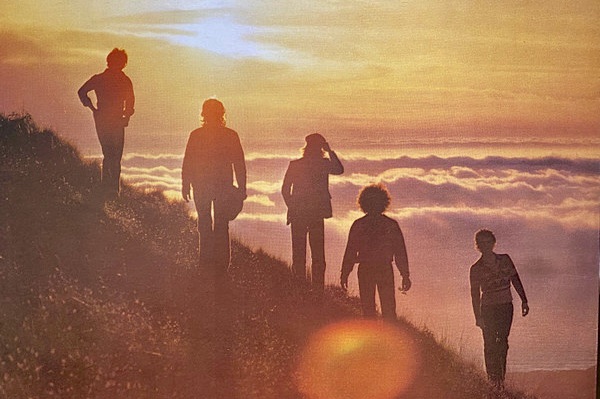
Last month we had a test squad of thirteen popular tunes that had bass harmonica. I may have missed a worthy tune so I have dropped myself and included the American interpretation of Boy On The Run by The Dingoes from the album ‘Five Times The Sun’. To my lug holes, Brod Smith is playing bass harp during the instrumental after the third verse.
I contacted former Dingo Chris Stockley for confirmation and our chin wag covered some interesting ground. Chris recalled Brod using the bass harmonica on tunes, but wasn’t sure about Boy On The Run. When I mentioned my recent purchase of a bass harmonica he inquired where I obtained the instrument. I thought his inquisitiveness was a little left field, however the reason he asked was his wife had just seen one at the ‘Op Shop’ where she volunteers one day a week (not eight).
We also cleared up the composing credits of this wonderful tune. Brod’s memory had failed him in a 2018 interview with Brian Nankervis on ABC radio that I recently espied. Chris had no such memory issues. “I was living in Robinson Road, Hawthorn at the time and Brod was living in Auburn. Morning’s he’d often pop around and bot my wife’s red and white cigarettes and use our toilet for some reason. He’d hang around for cups of coffee and then disappear. On one of those days I was playing my guitar and he said what’s that? It was the opening riff to what later became Boy On The Run. Brod thought we could use that. So I finished off the music and Brod went away to pen the lyrics. A week later we got back together and there we had it.”
I’m partial to both renditions of Boy On The Run, but like Chris the Australian version is the much preferred. The American take is acoustic with Kerryn prominent on the mandolin and Brod also blows a very different harp riff. Chris was very proud of the instrumental (and so he should be) following the third verse in the original version where the chords go from E minor to A major. In Chris’ words, “It really toughens the song up so it’s not just another country rock song. They’re quite nasty those chords.” For some reason this was dropped from the later recording and also the lyrics to the bridge were mysteriously changed. I should also acknowledge the long outro of the original was Chris’ idea too.
Chris’ recent recording with his current band BRAM is well worth a listen with Have You Ever Seen An Angel Fall a cracker.
Kaleo Too!
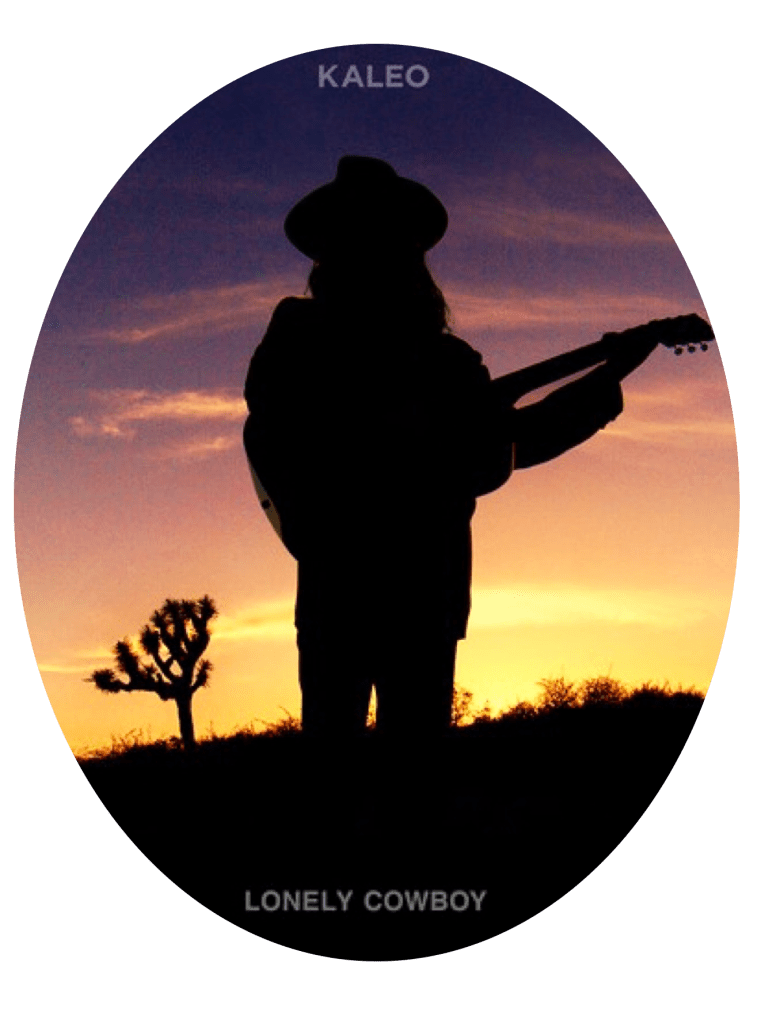
My son posted a comment on last month’s blog. After his initial reading, he and his girl (Ess) headed to the Palais to witness the Icelandic band Kaleo on their Melbourne leg of their Payback World Tour. And would you believe it, the instrument was used on stage for their tune Lonely Cowboy.
Here’s what Lachie penned. “Speaking of double decker bass harmonicas and and their underutilisation and appreciation.. What did I see at the Kaleo concert at the Palais Theatre last night? A double decker bass harmonica being played! With the playing attributed to band member: Þorleifur Gaukur Davíðsson – harmonica, bongos, keyboard. Many other harmonica infused tunes were played, making for one great night!” 🙌🙌
Aussie Scorcher

The Scorcher manufactured by F A Rauner and distributed in Australia by Feldheim, Gotthelf & Co is back on the Aussie charts (models timeline). I’ve reinstated them on the basis of new evidence. There’s The Tivoli Scorcher as well. A feature article will appear soon.
Sinclair’s Chagrin
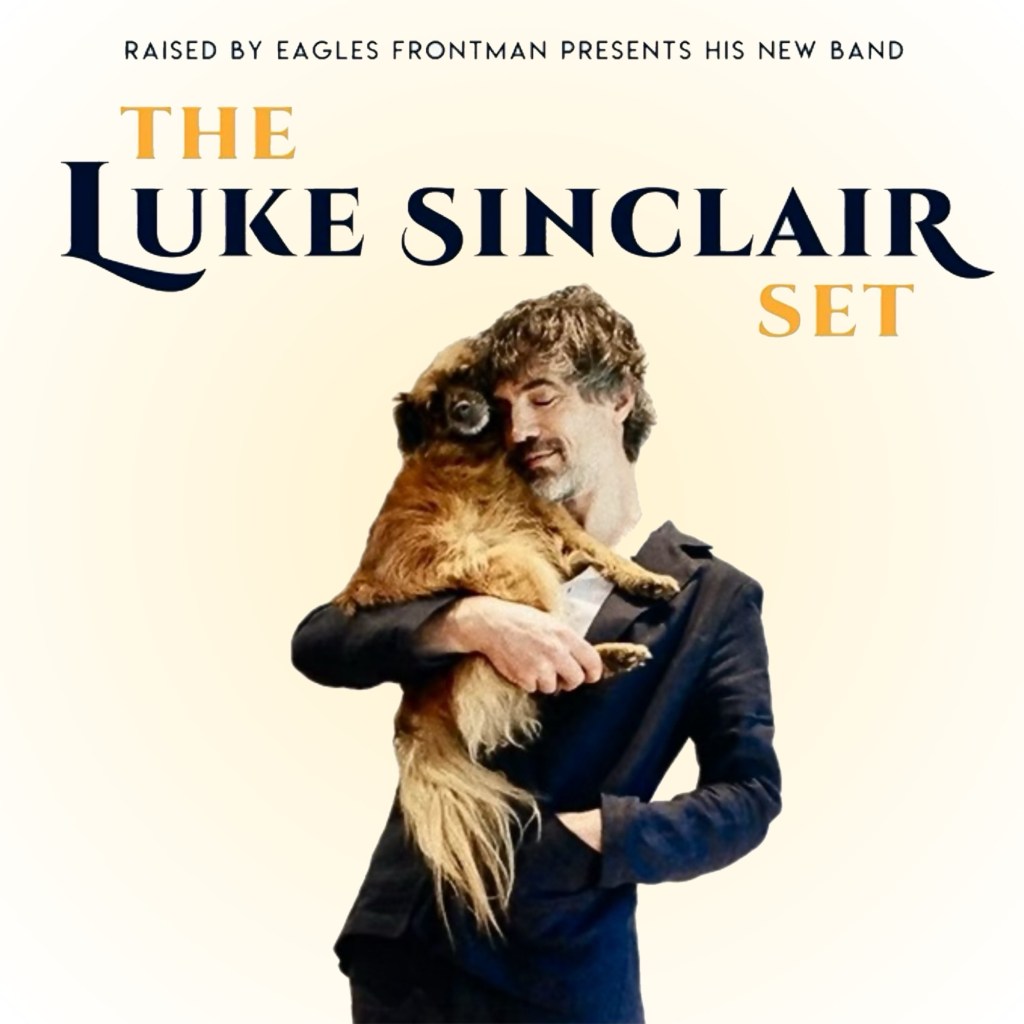
I’m a big admirer of Luke’s musical abilities and I concur with his views on the Australian Music Industry. Luke appeared on Raph Epstein’s ABC radio program outlining the many shortcomings of a major streaming service (I won’t and cannot mention their name). A particular focus was the lack of representation in their AI generated playlists for up and coming Aussie artists.
Hear here 🎶 starts at 1:19:30.
This is how Luke summed up their chat on his FB page. He was extremely passionate – as he should be. “We talked about Spotify’s relentless fuckery, the lack of Australian content on our streaming services, and the urgent need for content quotas ensuring Australian music gets out to Australian ears.”

The House of Representatives has tabled their final report into the challenges and opportunities within the Australian live music industry. Of the twenty recommendations I’d like to highlight two, in particular the last; Recommendation 11 – 4.43 The Committee recommends the introduction of a new obligation for major international tours to include Australian support acts as a condition of approval – a proposal commonly referred to as ‘Michael’s Rule and Recommendation 20 – 4.54 The Committee recommends the Australian Government work with music streaming services to increase the proportion of Australian content that algorithms or automated playlists generate for Australian users, and that if co-operation is not forthcoming that legislation be strongly considered to mandate and enforce higher proportions of Australian music on these services.
Netsuke Leigh

Last month we reviewed Leigh Sloggett’s gig at the Westernport Hotel and his new cracker release Cassandra. The accompanying video to the single was produced by Leigh and he even videoed several scenes. I remarked then he was a man of many talents. And there’s more strings to his bow! At the time I wasn’t aware of his sculptural skills in the Japanese art of Netsuke. Six letters – Gollygeewowee!
Explore his creations here Lucky Leigh.
Please check home page for copyright details


Cheers Shep. Great links again. A long enjoyable read too. Will need to call back in tomorrow (daytime) again and catch some song sites that need more listening. Lachie catching a live bass harp after the blog read was cool. I’ll revisit and re-read the harp info again tomorrow too. All the best.
LikeLiked by 2 people
Mickelson have got some tunes!
LikeLiked by 1 person
Surely does. Thanks for popping by mate.
LikeLike