
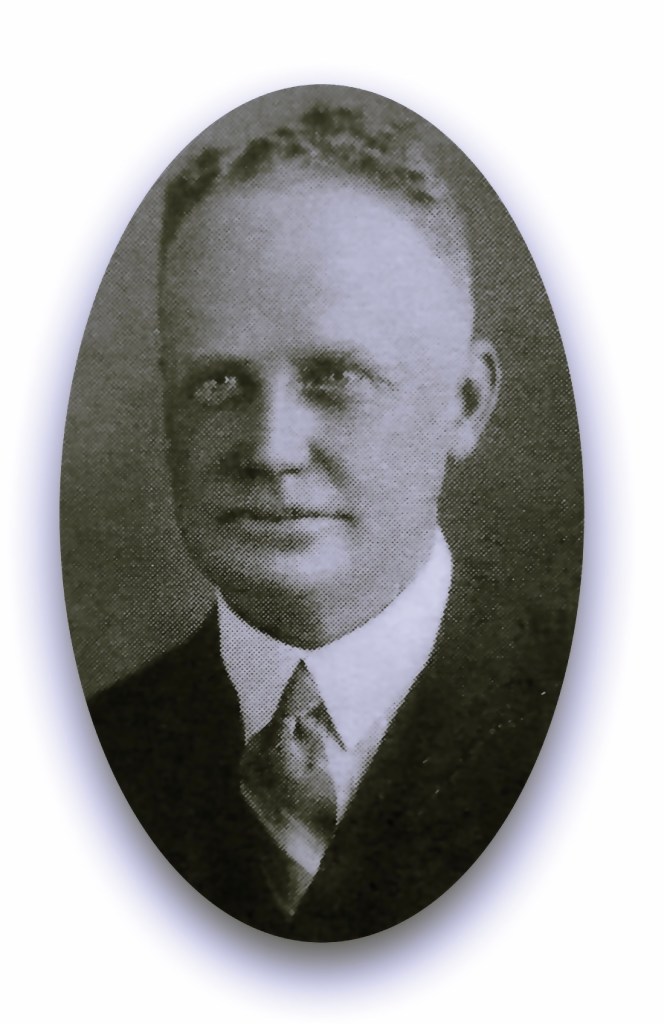
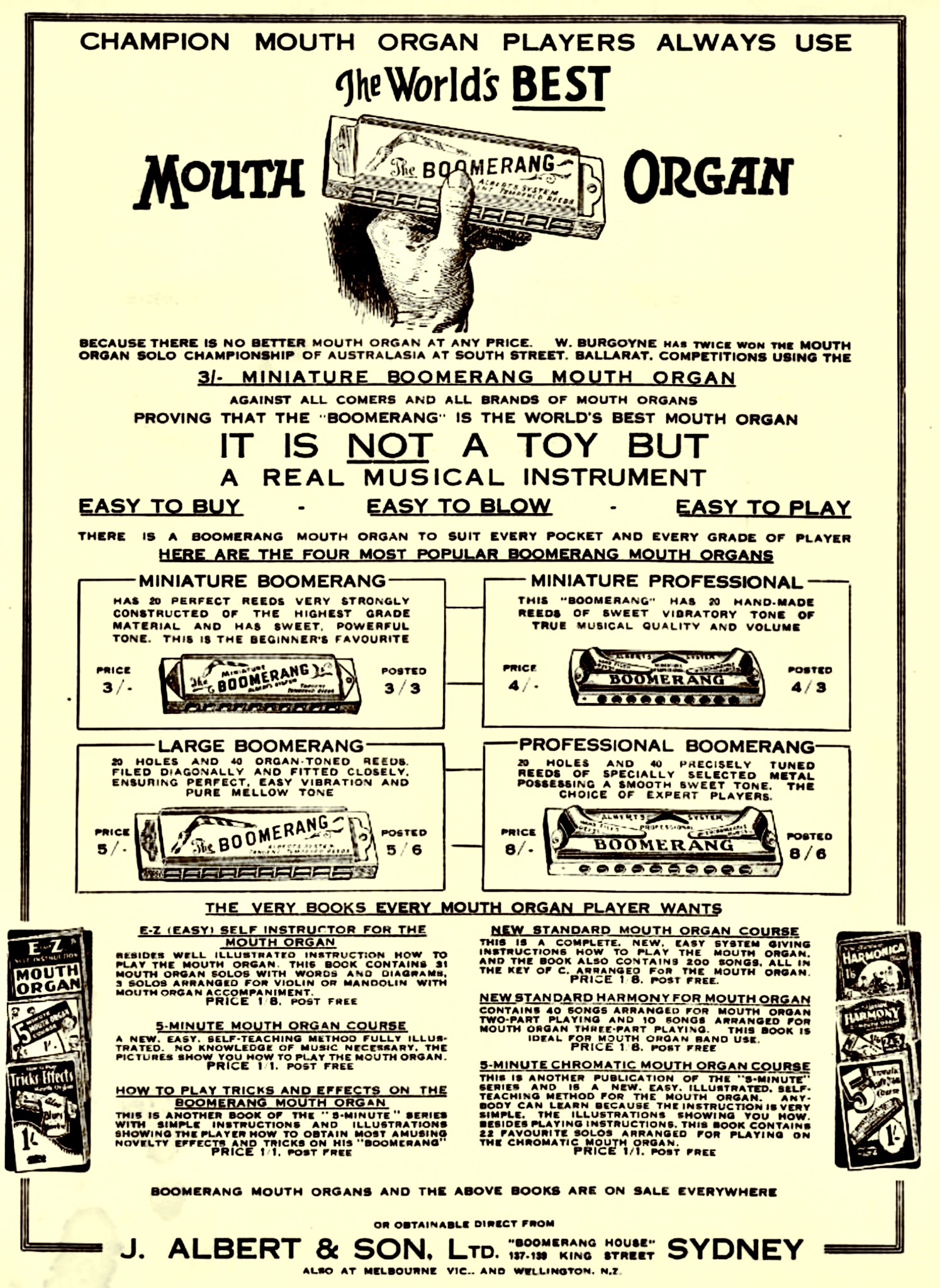
Waldo was indeed a magnificent mouth organ exponent racking up a life time of trophies and achievements.
He was runner up to the legendary P C Spouse in the Australian Championships at South Street Ballarat in 1927.
Later he would go on and hold the title in consecutive years of 1934 and 35 and have a Boomerang sponsorship from Albert’s to boot.
The life of Waldo takes us back to 1890 in Runnymede of Victoria.
Waldo was born in Runnymede Victoria a post town on the Campaspe River and Mount Pleasant Creek in 1890. Life was a peach (or was that an apple) growing up on the family’s vineyard and orchard – appropriately named Magna Charta. The population at the time was approximately a hundred citizens. All that exists today is the cemetery. In 1916 Waldo enlisted and fought in the Great War with the 36th Australian Heavy Battalion as a gunner on the battlefields of France. While on service he met and wed Lillian Agnes Cowan on the 26 February 1918 in Glasgow, Scotland. In 1919 Waldo applied (and was granted) free passage to Australia for his bride. Sadly in that year Lillian died giving birth to Ian Douglas Burgoyne at the Women’s Melbourne Hospital.
It didn’t take Waldo long to find another partner, who he would stroll down the aisle with in the following year. His wife, Elsie Louise Riddell, would raise baby Ian in Malvern while Waldo worked tirelessly as a local Traffic Officer.
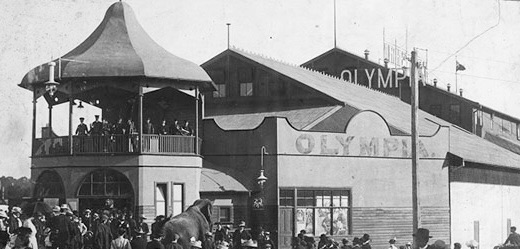
Waldo contested the Boomerang Mouth Organ Competition conducted by the South Melbourne Thistle Society at a chockablock South Melbourne Town Hall in April of 1926. He reigned supreme beating E Collier (Harold) and Sydney Dickins – two prominent names in the art of playing the ten hole tin can. Waldo also presided in the imitation of other musical instruments section. He was quite proficient at making the little instrument sound like the bagpipes. In December of the same year, he was joint runner up with his younger brother Cyril Roy to another well known exponent of the craft William Bell. This Boomerang competition was held at Wirth’s Olympia in connection with the Kilties Carnival.
The impetus for Waldo’s passion for the instrument that fits in the pocket was competing in the inaugural National Championships in Ballarat in 1925 and witnessing first hand the expertise of Percival Spouse. In 1927, at the same championships held at the Coliseum Ballarat, he was runner up to the great man and again his skill at making bagpipe noises from the little instrument won him the imitation section. His brother Cyril finished in fourth place in the solo championship. In 1934 he would reach the pinnacle and be crowned National champion defeating Stan Andrews and William Bell. Returning the following year, it would be back to back when Waldo defeated William Bell and J Gibbs.
Tragedy befell Waldo once again in 1936 just days before the National Championships preventing any chance of a three peat. His and Elsie’s second son, William Ray Emerson Burgoyne, passed away suddenly at the Alfred Hospital aged just sixteen. A loving brother of Ian, Betty and Bruce. W Burgoyne of North Melbourne had finished fourth in the 1926 Under 16 National Championship and perhaps this may have been William. He would have nearly been six years of age and I had read somewhere the youngest at that championship was only five years of age. Waldo finished runner up in both the 1935 and 1937 titles completing some run.
William’s passing wouldn’t be the last tragedy that befell the Burgoyne household.
Ian Burgoyne
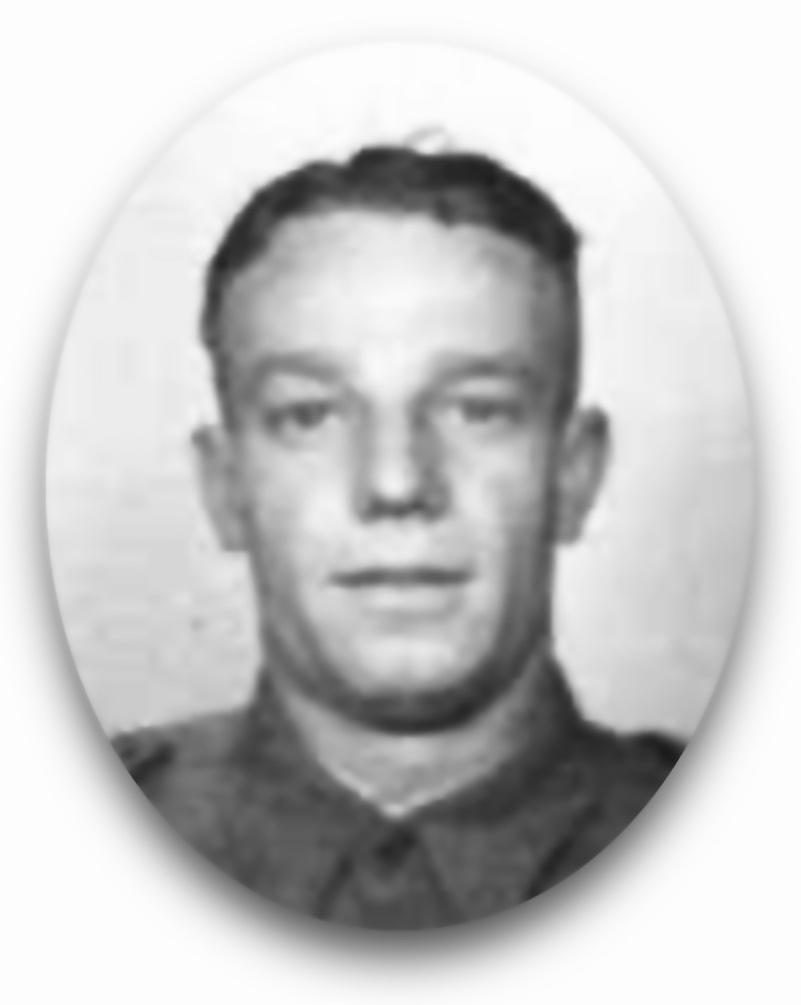
First born Ian was captured by the Japanese at Kokopo New Guinea in 1941. It is said Ian was aboard the Montevideo Maru when it was torpedoed by the USS Sturgeon. Well I’m still not convinced – why would I trust a government version of events especially when they left their troops in New Guinea to be lambs to the slaughter. Having had the opportunity to either get them to safety or provide them with greater strength, they did neither.
Ian was a member of Lark Force a strength of fourteen hundred men given the task of defending Rabaul against the might of the Japanese. Inexplicably they had been trained in trench warfare and not jungle fighting and were supplied with leftover artillery from WWI.
There are many questionable aspects to the fate of Lark Force and also the sudden acquisition of Montevideo Maru’s nominal roll that allegedly put to rest their whereabouts. Surprisingly the manifest was located in the shelled Tokyo in October of 1945 where many documents (it has been said up to 70%) were shredded or destroyed.
The Japanese’ track record for the humane treatment of prisoners in New Guinea (or elsewhere for that matter) wasn’t exemplary. They executed one hundred and fifty prisoners at the Tol Plantation on the shores of Wide Bay and members of Lark Force were marched into the sea and machine gunned at Kavieng New Ireland.
It had taken three and half years for families of the missing soldiers to be notified of the sinking of the POW ship and that their loved ones were aboard. It has been suggested that the Japanese used the loss of the Montevideo Maru to conceal many of their other crimes committed in the weeks after the fall of the town. It is also alleged that many soldiers and civilians executed at Tol and other locations, had their names added to the manifest of the ship after it was sunk in an attempt to cover up other atrocities.
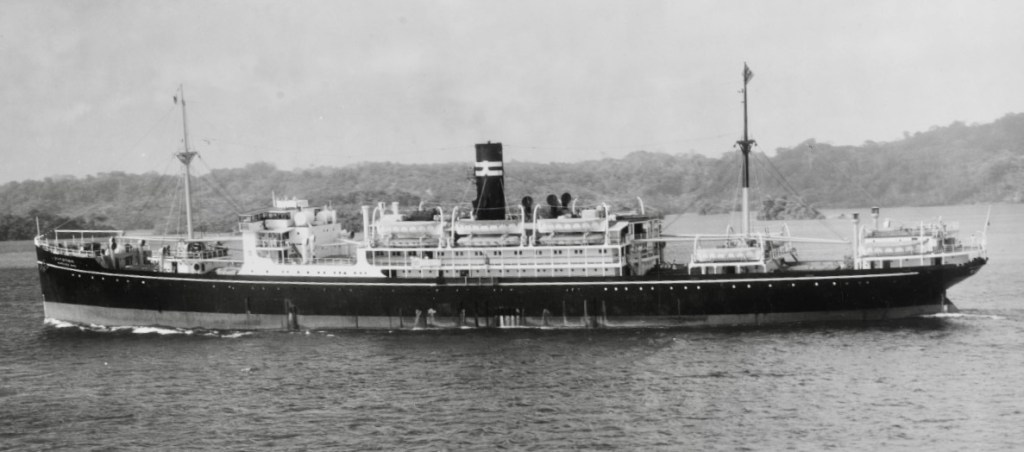
As you can probably already ascertain this is a subject close to my heart as it has a connection to my father through the Brunswick Salvation Army Corps. Several members of their brass band were allegedly aboard the Montevideo Maru including the renowned Arthur Gullidge.
Arthur Gullidge
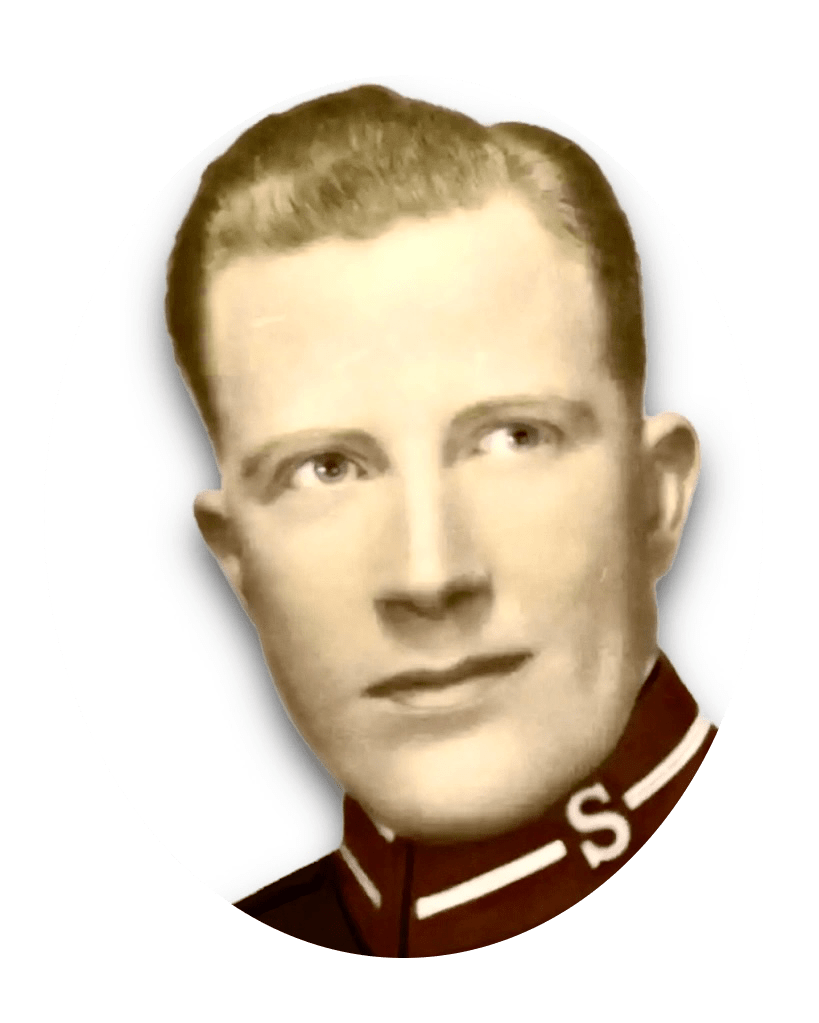
Born on 9 April 1909 at Broken Hill, Arthur lost his father due to a mine cave-in when he was just two years of age. Arthur studied the cornet at a young age exhibiting a natural inclination for the brass instrument. His progression would see him elevated to bandmaster at the Brunswick Corps.
Arthur composed significant band music both for the Salvation Army and also a secular publication the Regal Brass Band Journal, under the name of W. Arthur Greendale.
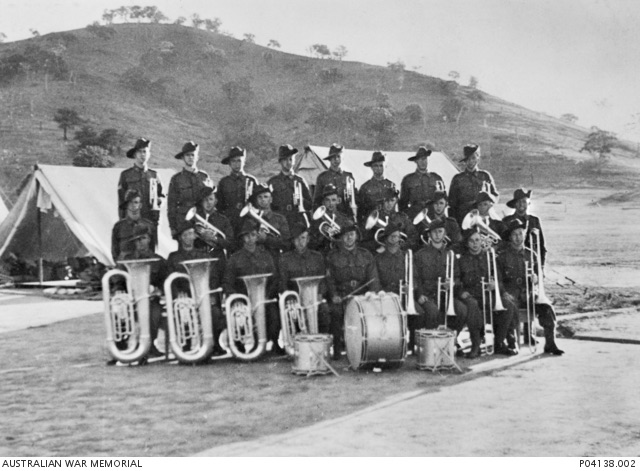
Following the outbreak of WWII Arthur enlisted with a number of his men from the Brunswick Corps band, and together they became valued members of the 2/22nd Battalion Band. The stretcher-bearers would soon face the reality of war when they arrived in Rabaul, New Guinea. It would be here, amid the trauma of the battlefield, that Arthur composed the instrumental, Divine Communion that propelled him to legendary status.
With fifteen of his fellow bandsmen, Arthur was taken prisoner by the Japanese and, along with other prisoners of war, was placed on the Japanese transport ship the Montevideo Maru (allegedly).
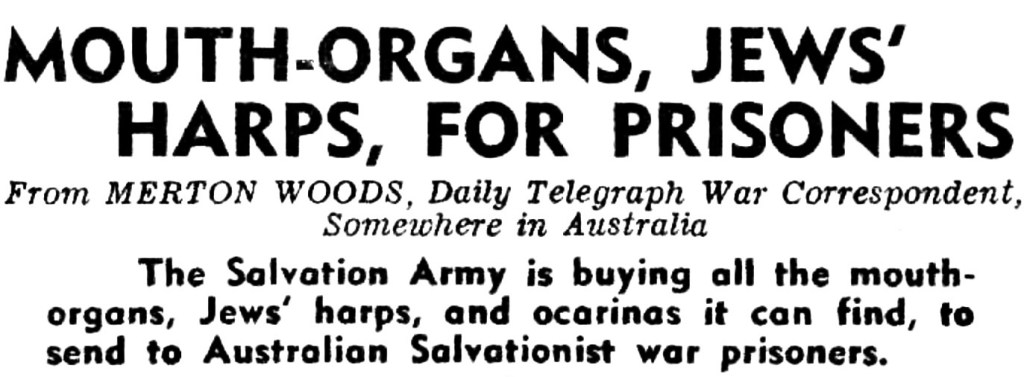
“The Salvation Army is buying all the mouth-organs, Jews’ harps, and ocarinas it can find, to send to Australian Salvationist war prisoners. Salvation Army Commissioner William R. Dalziel, who is making a tour of the Northern Territory, told me this. “We are doing our utmost to get Christinas parcels to Australian Salvationists being held prisoners by Japs,” he said. “We are including musical instruments in every parcel because most Salvationist prisoners are musicians; Wherever two or more Salvationists are in the same prison camp we intend to put different instruments in each parcel. We are trying particularly hard to get parcels containing instruments to an Australian band captured by Japs at Rabaul. Most of the players in this band including Sergt. Bandmaster; Arthur Gullidge were members of the Brunswick (Vic.) Salvation Army Band. I can imagine the thrill they will get if we can send instruments to them.”
This plea for instruments in The Daily Telegraph, sadly would have been too late for the Brunswick boys – a couple had been executed at Toll, one was killed in action, another shot escaping and, if it’s true, the rest were already on the death ship (the Montevideo Maru), that departed in July of 1942.
Whereabouts Unknown
I penned an email to the author of ‘Whereabouts Unknown’ Margaret Reeson after the recent discovery (2023) of the submerged Montevideo Maru
Hi Margaret, I’m penning an article on Waldo Burgoyne whose son Ian was a member of Lark Force. I’m familiar with the story as Dad fought in New Guinea and he was a Brunswick Salvo. I’m interested in your take of the recent find of the Montivedeo Maru. Was there any evidence that it was an unmarked as a POW and why wouldn’t they have displayed they were a POW transport as this would have prevented being fired at? I believe it would be beneficial to explore the wreck. As I am very sceptical. Thanks for your book on this sad history. Shep
“Hi Shep. There is likely to renewed interest in the story of the Montevideo Maru and those who died, since the recent discovery. There have been so many groups of people affected, including as you say, the Brunswick Salvos.
There have been questions about whether or not the ship was marked in any way as carrying prisoners of war. I have seen no clear evidence one way or the other, but suspect that it may not have been marked. This is not something that I have expertise in, so I am not sure what form such a marking would have taken. Is there an international protocol of marking a prison ship? My other question is: even if the ship was marked as a prisoner of war carrier, would the US submarine have been able to see it? The pursuit was undertaken in the middle of the night. Was there moonlight? Was the ship brightly lit? From a distance, would the submariners see more than the outline of the larger vessel? I don’t know any of those answers.
As the sunk vessel is very deep, we may never be able to have answers, apart from knowing where it is. That is important to a number of family members.” Margaret Reeson (author of Whereabouts unknown)
Montevideo was discovered, 4,000 meters below the South China Sea.
I don’t agree with Defence Minister Richard Marles’ assessment that the discovery of the Montevideo Maru closed the chapter on this maritime disaster. In my humble opinion the only way the book, not the chapter can be closed, is for the vessel to be dived and searched. Then again, maybe it would conjure more questions than answers. My limited research suggests that Prison ships should have been marked with white crosses.
Bishop Scharmach
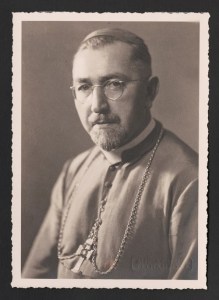
Bishop Scharmach worked for fifteen years in the Rabaul Vicariate, mostly on the south coast of New Britain, where he did the spadework, before succeeding Bishop Vesters in 1939, and leading the mission through the dark war years to the present complete renovation. He was Polish, but he managed to convince the Japanese that he was German and they should spare the lives of the missionaries and the mixed-race children who were there at Vunapope. The bishop is said to have told the Japanese he was the Adolf Hitler’s representative in New Guinea and that they had to respect his status and those under his care.
Here is Bill Nicholson’s copy of Bishop Scharmach’s account of the Japanese occupation of Rabaul and what he wrote about the Montevideo Maru incident:
“…Now a strange thing happened. Officers from Rabaul, whom I had not met, came to see me. Nothing official! After some small talk, they volunteered the information that all the civilians were put on board the Montevideo Maru, but on the way to Japan the ship was torpedoed near the Philippines and all civilians lost. (The POWs were apparently not mentioned – BN). This was sad news indeed. Two more Japanese officers called on me on different days giving the same report. I grew suspicious. Never before had Japanese officers of their own accord given the slightest indication of the Empire’s losses. After hostilities the question of the Montevideo Maru came before the War Criminal Court at Rabaul. The Japanese told the Australian authorities what they had told me. But investigation at US Navy headquarters disclosed that the Americans had never torpedoed a ship like the Montevideo Maru near the Philippines. Further a mass grave had been discovered at Matupit near Rabaul. Allegedly there were found in the grave wrist watches and other things identified as belonging to people who were supposedly on the Montevideo Marti. Piecing this together it is highly probable that a Montevideo Maru never existed. The prisoners were taken by truck to Matupit and other places. Most likely they were equipped with spades and were ordered to dig a trench, after which machine guns mowed them down. It would have been easy for the Japanese to throw the bodies into the trench and cover the trench. That would have been in keeping with their forces procedure elsewhere. Just to put investigators on the wrong track they assiduously spread the story of the Montevideo Maru.” Bill Nicholson (Maritime Times of Tasmania Autumn 2010)
Rabaul Muddle
SIR, — As it is possible, now, to question the wisdom of military decisions given some years ago, without prejudicing national security, I suggest the time has come for at least some preliminary inquiry into the circumstances surrounding the invasion of Rabaul in January, 1942. Much has been heard of the courage and gallantry of the Australian 22nd Battalion, a detachment of the New Guinea Volunteer Rifles, and five Wirraway pilots, who were sacrificed there; but not one word has been said publicly, yet, about the ghastly muddling of high military officials, who allowed the incoming Japs to capture some scores of middle-aged European civilians, and to sink ships which might have carried those civilians to safety. For at least 48 hours before the Japs actually arrived in Rabaul, early on January 23, 1942, it was known that the invasion fleet was coming — the fact was published in Australia. Lying in Rabaul harbor there was one modern 9000-ton ship and half a dozen smaller vessels. The big ship alone was quite capable of carrying all the European civilians to safety. Yet, incredible as it may seem, that ship was kept alongside the wharf in Rabaul until the Japs came and sank her, and a number of the smaller ships also were lost. The civilians became prisoners of the Japs, and little has been heard of them since. Certain high officials who are regarded as having been responsible for that tragic muddle are still high officials.
R. W. ROBSON.
Editor, Pacific Islands Monthly.
(The Daily Telegraph, Wed 14 Mar 1945)
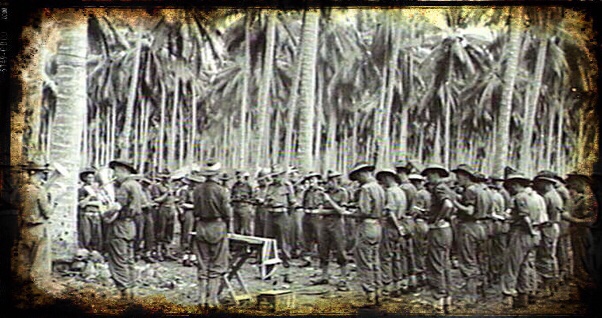
War! What is it good for – absolutely nothing!
Please check home page for copyright details.

I thought that I would always have it all

 Harmonica Riff Raff
fascinating… again!
LikeLiked by 1 person
That was a very deep read Shep. The subject theme of loss at the beginning alongside the war and cruelty losses are pretty profound on the emotional reactions when reading. And interspersed with listening to the Salvationist Band 6 and a half minute music link? A very thought provoking experience on reading. And the instruments sent to provide the need to seek some hope with music provision. You realise how powerful being able to play music is for the soul. All the best Shep.
LikeLiked by 1 person
Hello from Adelaide
I have played a Harmonica since my early childhood & have been given the gift of pitch & pre-empting key changes when listening to music or singing. My Father had the German Alberts System De Luxe Chromorgan, passed on to me & which I have just put down to text you. I played Yellow Bird easily on it & am quietly reminiscing about Dad & the many times I spent playing tunes off the radio & other sources. Modern technology is amazing & I googled the harp, finding it on my first search. Many thanks for the opportunity to share my JOY, the day after Dad would have celebrated his 102nd Birthday. He died before his musical grandson was born. Genes, it’s in the genes! Blessings to all. It’s Christmas! 🎄🦘🦘🦘🙏🍒🦞🥂⭐
LikeLiked by 1 person
Merry Christmas fellow riff raffer. 🥃🥃
LikeLike