

Who made who, who made you?
AC/DC
Who made who, ain’t nobody told you?
Who made who, who made you?
If you made them and they made you
Who picked up the bill, and who made who?
Yeah who made who
Who turned the screw?
This article is a combination of quite a few drafts for separate articles so spare a thought for my proof reader. In conjunction with the Guru, Pat Missin, we investigated several Aussie Harps to find who was the manufacturer. These include: Boss Cracker, Cuckoo, Topnotcher, The Bugler and the Monarch. Along the way we also tried to find the identity of B C Dunlop, Ballarat Joe and Sandow.
Who made the Cracker?

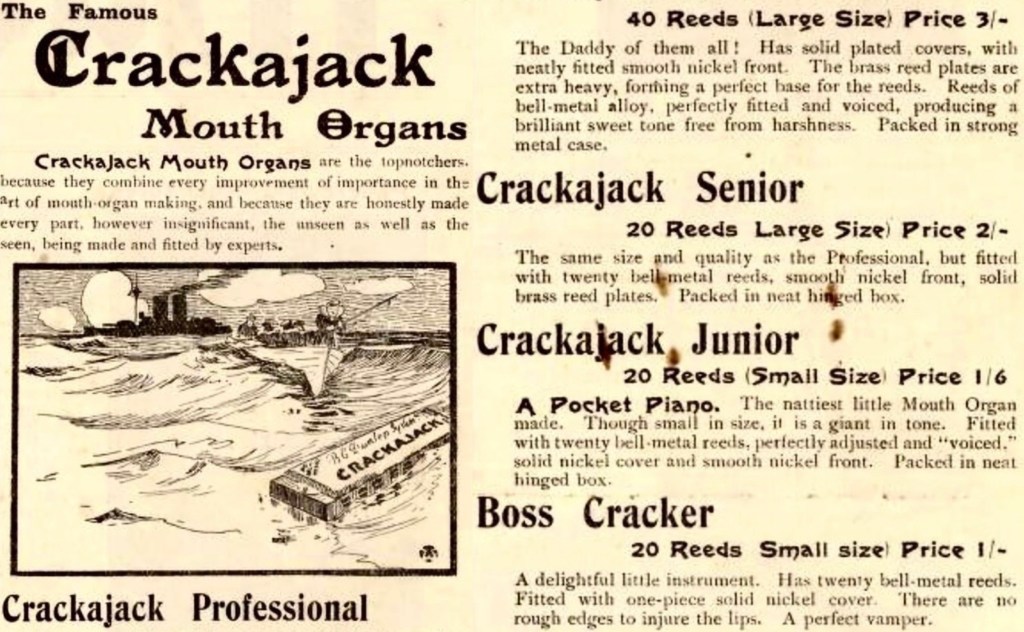
Well the Cracker was a very different beast from the other F A Rauner Crackajacks. I had established Rauner as the manufacturer a few years back when the registered number 28285 appeared on the box sticker for an Aussie Crackajack. This number was applied by Rauner for their Cracker Jack line. Pat Missin (Guru Pat), located a Trademark with a different maker for the Boss Cracker. Of course he would!
One Moment Please?
The Onesie.
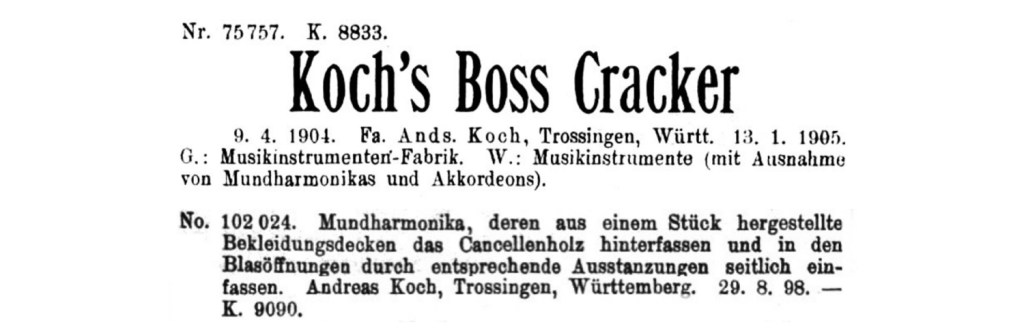
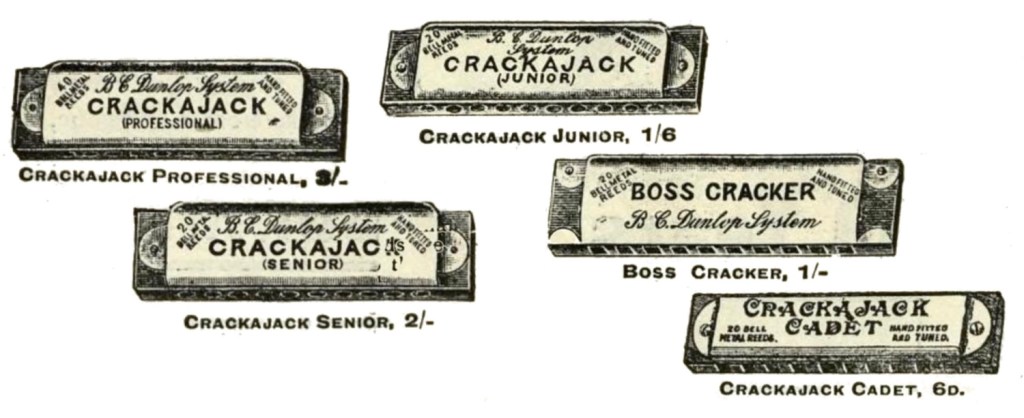
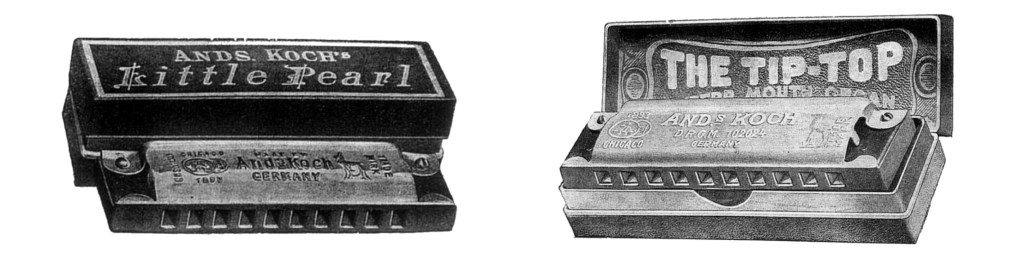
Pat’s take, “Best I can figure right now is that Allan’s had two different companies building harmonicas for them at about the same time.
It would appear that ‘Boss Cracker’ was considered sufficiently unique to be a separate TM. Understandably, the ‘Koch’s’ part was dropped and the B.C Dunlop name added to make it blend in with the others. However, if you look at the 1905 ad, you will see that it has noticeably different covers to the other three harps. I’ve not seen that one-piece cover/mouthpiece design on anything other than the ‘Boss Cracker’ and those two Koch models I sent you. Wobbly as my German is, the DRGM is pretty clearly describing a one-piece cover/mouthpiece. Also the addition of the ‘Boss Cracker’ to the line up roughly coincides with the registering of the Koch TM.”
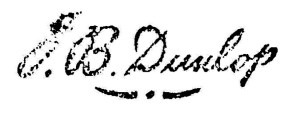
Who is B C Dunlop?
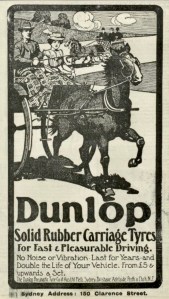
……..If you want the Best Organ that the world produces, get the CRACKAJACK PROFESSIONAL, No. 1 which is packed in a tin metal box. It has 40 bell metal reeds, and has a full, sweet, musical tone, all built on the Dunlop System, and when you are buying ask for B C Dunlop Crackajacks. Some stores don’t keep them because they aren’t cheap; but don’t take the “other kind” – they are not “just as good”…Wholesale Agents, ALLAN and Co..COLLINS STREET, MELBOURNE..
(The Argus, 24 December 1903).
This humble detective searched high and low to locate B C Dunlop with no success at all. We had ventured on this path previously and I’m thinking it may be a made up name to compete with the Boomerang brand that had the Albert’s system, which has an obvious derivation, but has no unique intricacies. This was just a marketing ploy as perhaps B C Dunlop is too! Coinciding with the popularity of Dunlop pneumatic tyres, punters might identify precision with Crackajack harps.
Who Made The Cuckoo?

Followers of the Dawg Blawg would be aware of a recent addition to my collection the Cuckoo.
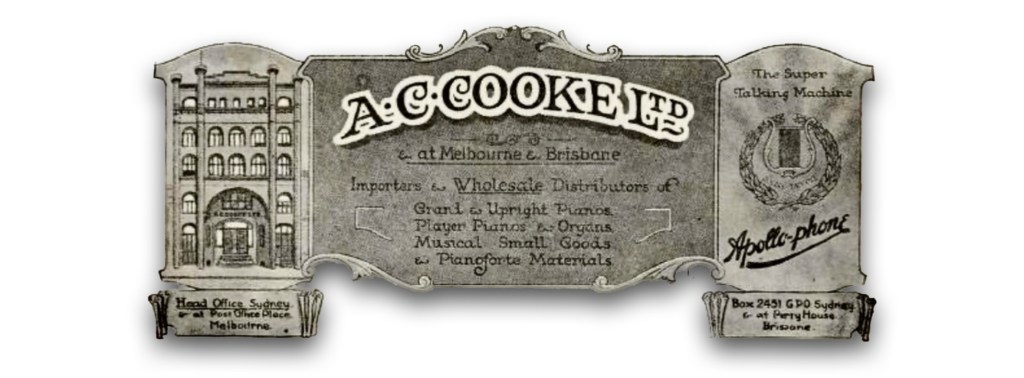
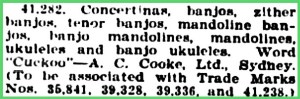
I discovered that it was definitely an Aussie model produced for importers and distributors of musical instruments A C Cooke Ltd of Sydney. With, one would assume, the name originating from Cooke. It was trademarked by them in 1925.
A C Cooke Ltd commenced operations early 1924 at number four Dally Street Sydney with A C Cooke (Manager) and G R McKenzie directors. Mr Cooke was Commodore for Broken Bay Motor Yacht Club which was established in 1927. After just seven years of operation the company had been placed in insolvency. It may have been put on life support as the New South Wales Gazette reports in 1940 of an extraordinary meeting on how to dispose of books and documents of A C Cooke Ltd.
Although there’s no direct evidence of the German company who produced this high quality product, I have a leaning towards Seydel due to the claim of detachable plates stamped on the cover plates. Seydel, however usually used the term interchangeable rather than detachable.
In the search for who made the Cuckoo, Guru Pat dug up some interesting information on other Cuckoos who had been out in the market place before A C Cooke’s.
There Were Two Possibility.
“I’ve seen a couple of TMs for “Cuckoo”. One is from Borgfeldt.
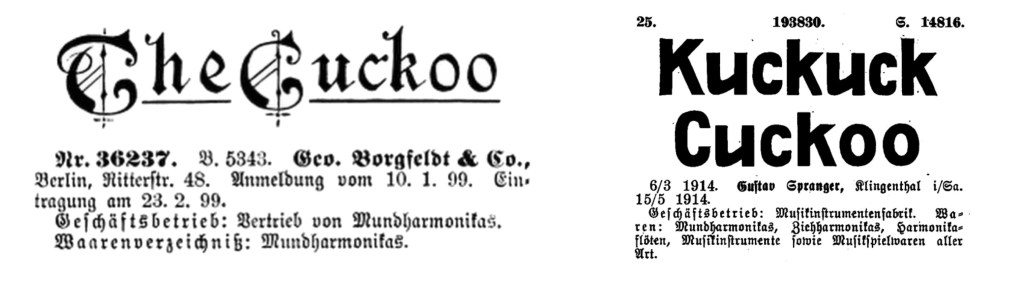
There’s also one for Kuckuck/Cuckoo from Gustav Spranger…..the Kuckuck spelling suggests a German market, whereas the “interchangeable plates”, etc. would be consistent with being aimed at the Australian market.
Who is Emmet?
I also found some US ads for ‘Emmet Cuckoo Harmonicas’ – it ran in a couple of Pennsylvania papers in April 1890”.
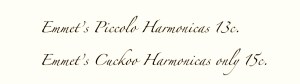
Who was Emmet? Joseph Klein Emmet (1841-1891) was a singer and comedian born in St. Louis, Missouri. He arrived on our sunny shores in 1876 for a stay that lasted nearly two years. Joseph developed a Dutch/German song and dance comedy routine early in his career while working in vaudeville. He developed a German alter ego ‘Fritz’ with which he enjoyed great success after writing a play titled ‘Fritz our German Cousin’. He danced gracefully, sang and played several instruments; guitar, banjo, harmonica and drums. According to The Argus (27 March, 1876), he performed all “exceedingly well”. He apparently could blow five distinct variations on the harmonica of Home Sweet Home and was ahead of his time on the popular instrument.
Hoo Doo
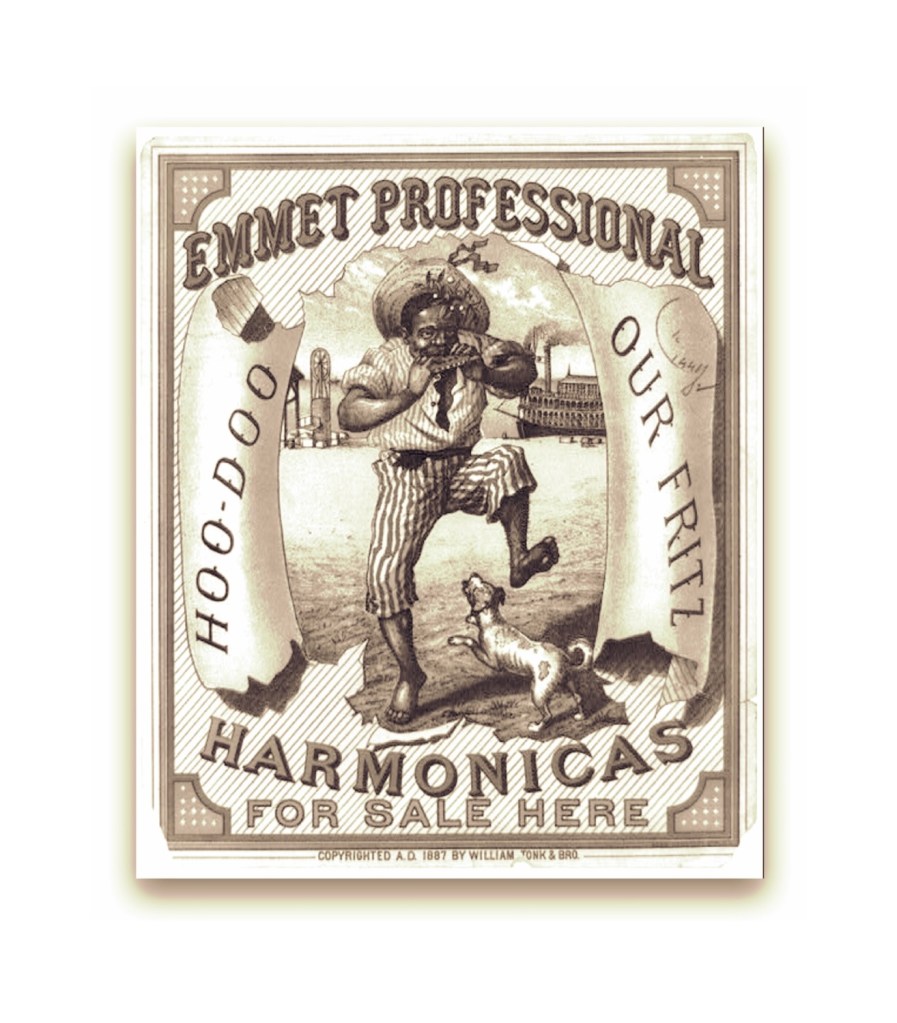

J. K. Emmet had his name emblazoned on harmonicas made by several different companies (Seydel may have had one) and he even had his own signed model (1903) – a pioneer of signature harps.
Joseph was somewhat eccentric and known to enjoy his liquor. Here’s an amazing account of his residency in Adelaide 1876.
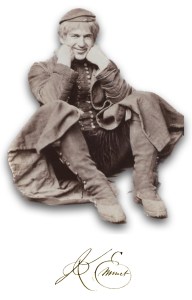
The well-known comedian, Mr J. K. Emmet, was on Monday evening guilty of an act of a most senseless character. For the last three or four days he has been residing with his wife and child at the Pier Hotel, Glenelg, ostensibly for the purpose of recruiting after his recent difficulty with the Theatre Royal management. About half an hour after sundown he was observed to leave the hotel, leap over the sea-wall, rush madly along the beach, and plunge into the sea. He was enveloped in an Ulster overcoat at the time, and upon getting into the water he rolled over on his back, making the most frantic movements. He was at once followed by one of the barmen named Walter Sillence, and was eventually dragged out by a fisherman named Vicars. Upon reaching dry land Mr Emmet gave vent to a hearty peal of laughter, though whether this was a consequence of a malady from which he has been suffering for the past week or ten days, and which was the occasion of the abrupt termination of his engagement at the Theatre Royal, or whether it implied that he experienced enjoyment in the extravagant nature of his conduct, no one present appeared to know. He was at once conveyed back to the hotel, and a few hours subsequently was heard amusing himself by playing several airs on the mouth harmonicon. It was rumoured that Mr Emmet had had a little family difference in the afternoon, and many assigned this as the cause of his strange behaviour. It is also stated that this is not the first time he has enacted a similar part since he came to Australia, now eighteen months ago.
Geelong Advertiser, Fri 3 Aug 1877
Who made the Topnotcher?
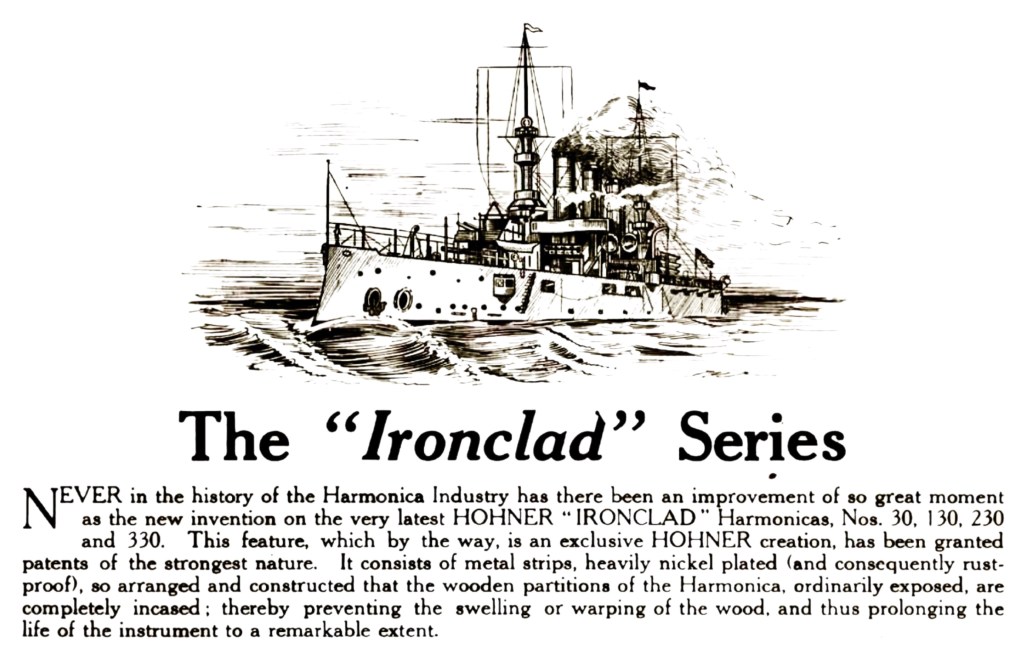
Ironclad: an armored naval vessel especially of the mid to late 19th century (Merriam-Webster)
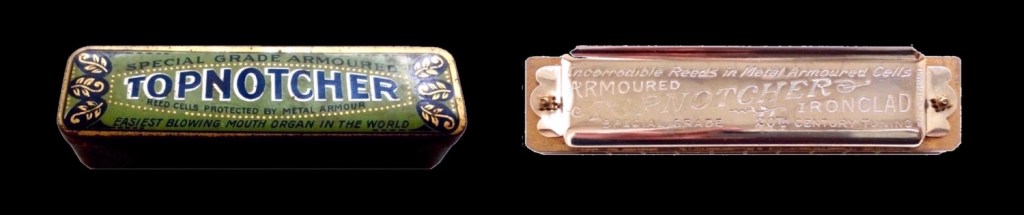
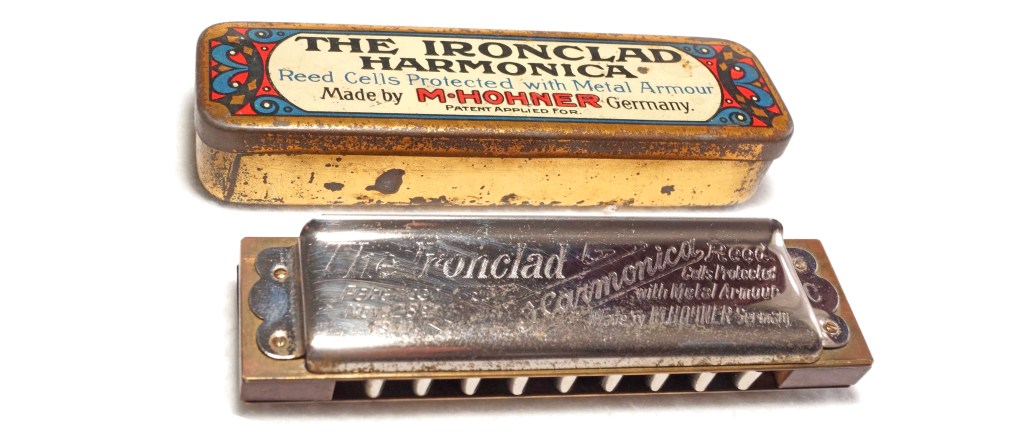
We had previously established the Topnotcher manufacturer as C H Meinel after a model appeared online with their balloon trademark. I felt there was still some uncertainty, in particular for the Ironclad model, as Hohner had patented an Ironclad brand mouth organ that referred to their reed cells being lined with metal.

We also reviewed the claim on a couple of their other models which were stamped with ‘Armoured’. The Ironclad (1924), Scout and Artist (1923) models all had metal lined reed cells. Hohner had patented metal lined reeds back in 1910 and used this invention on their popular Ironclad range.
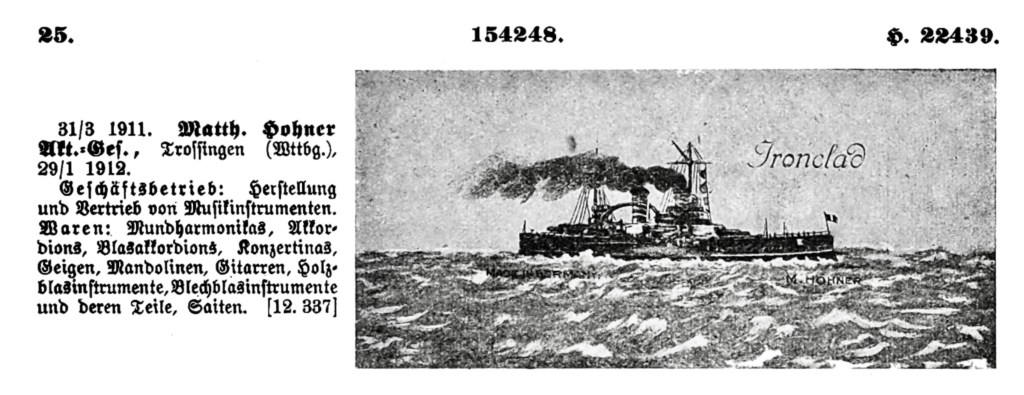
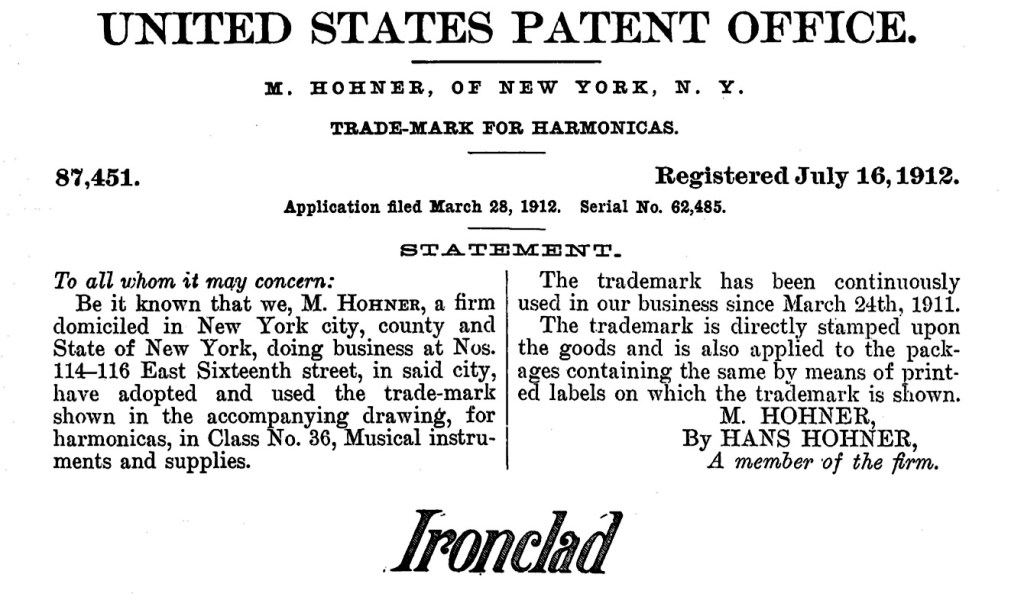
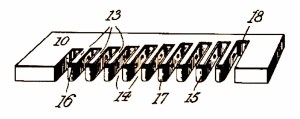
From Hohner’s Patent representing the metal strips covering the comb.
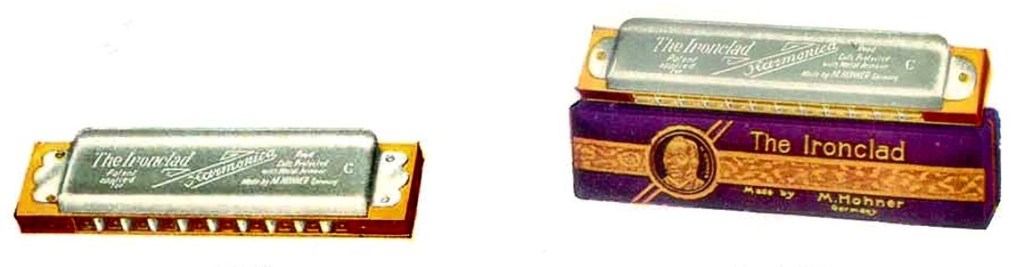
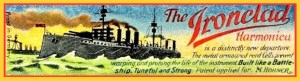
Over to Guru Pat (Missin) for his knowledge and expertise. “John’s (Whiteman) collection includes a Borgfeldt harp called “The Ironclad”. It gives the DRGM number 179960 from 1902, which was by the Dolling company for an all metal harmonica. It’s probably a red herring, but I include it for completeness. I’ve not been able to locate Borgfeldt’s TM for it, assuming they had one.

Hohner released their “Ironclad” in 1911, with two German TMs and one US.
There are definite similarities between the Topnotcher and Hohner’s Ironclad (including the fact that that Hohner sold some in metal boxes, which is unusual for them), but I’m not 100% certain that they were the manufacturer. There were other companies making metal clad combs around that time, including C.H. Meinel. Schlott claimed a DRGM for their metal clad combs, but I’ve not been able to find it. Essbach had a DRGM for something similar dated 1913. Robert Jaron (whoever he was) had a DRGM for a metal-lined wood comb in 1912 and Hohner had a couple from 1911, presumably linked to their Ironclad. Unfortunately, DRGMs don’t really go into much detail (some of them just say “mundharmonika”, with no further details), so I don’t know what the differences were between the various designs.
It strikes me as odd that to include both “Topnotcher” and “Ironclad” on the same cover, if they were being made by Hohner. Also, the wording on the cover is similar to Hohner’s, but not identical. If Hohner had made them, why wouldn’t they use their standard wording? Do you recall seeing any other harmonicas with the claim “incorrodible reeds” on the cover? That seems like a distinctive phrase.
As I said, I doubt that the Topnotcher/Ironclad was made by Hohner, but it is weird that their Ironclad series had a lot in common with harmonicas made for the Aussie market. The tin box was not something Hohner did very often. Ditto for all those claims on the covers – they sounded more like what you would on an Albert’s or Paling’s harmonica. Very odd.
So, nothing definitive (again!), but I think a company like Meinel or Schlott would be more likely to make something like this for Palings than Hohner. Stranger things have happened, though.”
I hadn’t witnessed other models with the claim ‘incorrodible reeds’ on the cover.
Confucius Say
“The man who asks a question is a fool for a minute, the man who does not ask is a fool for life.”
Amazing
I pondered on the legality of it all. My newspaper advertisement research had identified Paling’s Topnotcher Ironclad models were advertised from December 1922 through to 1926 . There were still quite a few unnamed Topnotcher models on sale after this time – five models in 1928 and seven models in 1931. In 1934 Paling’s specifically advertise a pictured Topnotcher Scout ‘armoured’ model. A Hohner Ironclad (with graphic) was offered by Angus & Coote Ltd of Sydney in 1929.
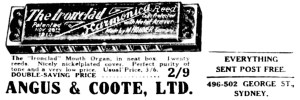
Pat’s response “I don’t know if they thought they had a loophole, but I would have thought that the wording on the Topnotcher would have been too close to Hohner’s to stand up to a legal challenge.”
He’s Who.
We’re going to drop anchor with C H Meinel, as I’ve set eyes on a Topnotcher with the Balloon trademark. This, and the Guru’s proclamation that C H Meinel manufactured metal clad combs at that time and the unlikelihood of Hohner throwing Topnotcher on the Ironclad mouth organ, sealed the deal.
Who Made The Bugler?
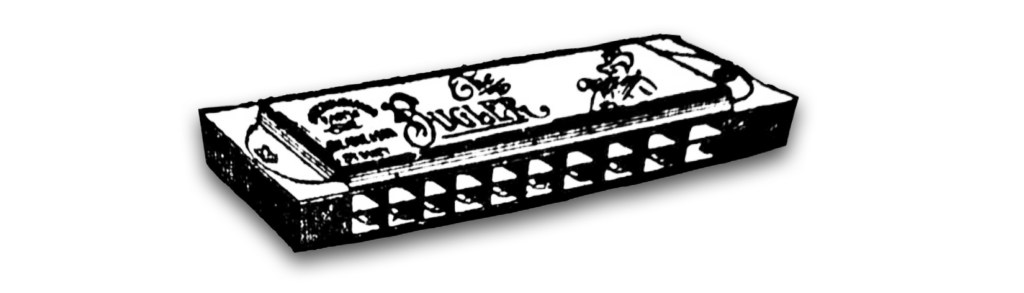
W Deane’s The Bugler (1899) was also placed under the lens after originally thinking it could be Seydel as Dean’s wife was the sister of Frank Albert (Albert’s Boomerang Mouth Organs made by Seydel). I’m now thunkin’ it was likely to be Ands Koch as he had many different Bugle models, Band, Call, Horn and Vamper – he could be the man.
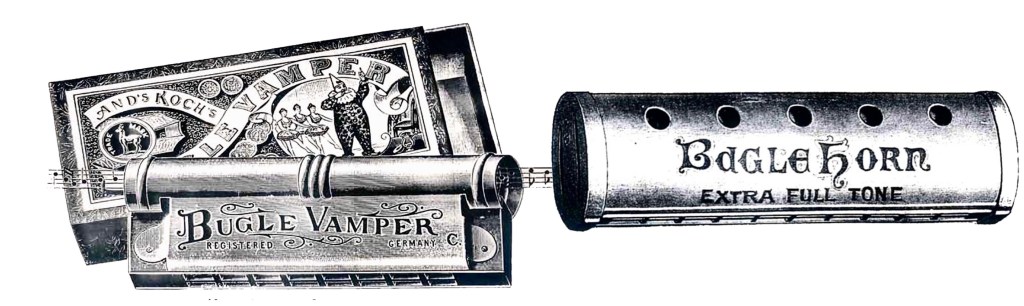
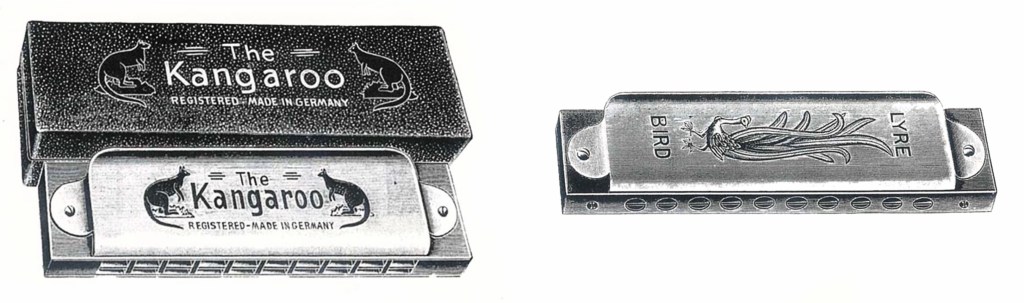
Ands Koch also manufactured W Coxon’s Lyrebird and The Kangaroo down under.
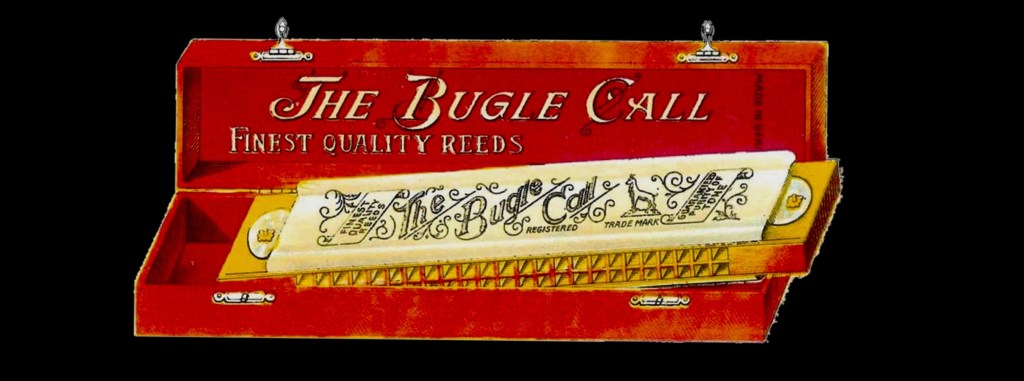
Ands had a penchant for the Old English cursive script and there are similarities with the ‘B’ of the The Bugler with The Bugle Call.
Then I came across a Otto Weidlich’s Imperial Band in John Whiteman’s Harmonica Anthology and the ‘B’ was even nearer.
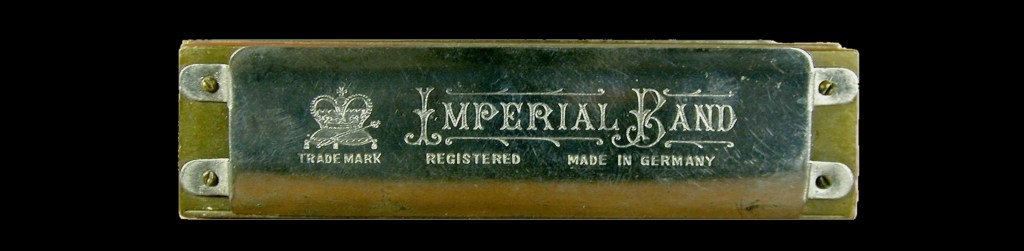
So we could throw in maker Otto Weidlich to the mix as Pat recently found trademarks that assigned him to the Bess O’ Th’ Barn, Rozella and Magpie mouth organs.
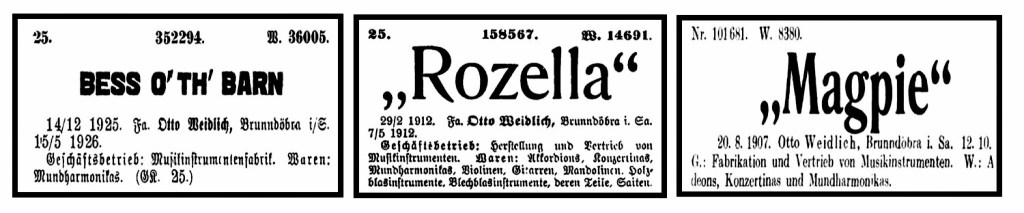
Over to the Guru for a bit of hoodoo. “That ‘B’ does look very much like the Weidlich’s ‘B’, but there were a few companies (Borgfelt and Schlott spring to mind) that used similar fonts in the early 1900s. However, I don’t recall a Seydel TM in that style.”
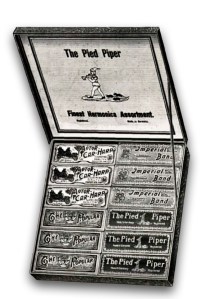
Within Otto’s dozen regular Richter size harmonicas are: The Motor Car Harp, The Popular, The Pied Piper and the model previously mentioned Imperial Band. All were attractively boxed ready for the dealer’s window and wareroom displays.
Who Made The Monarch?
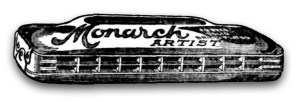
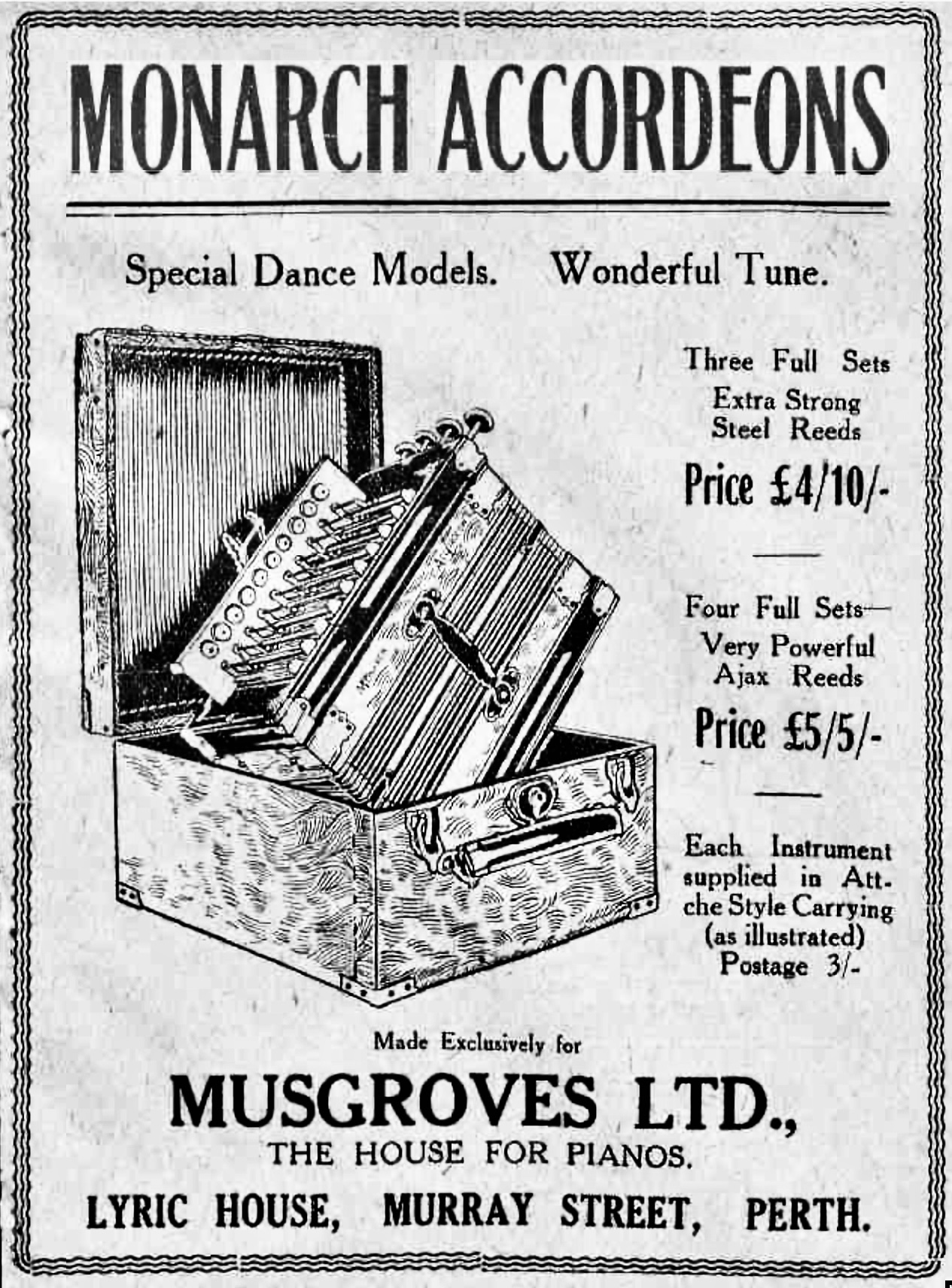
Musgroves The Monarch went under the torch too! We had concluded they belonged to Ernst Dienst as he made an accordion of that brand name.
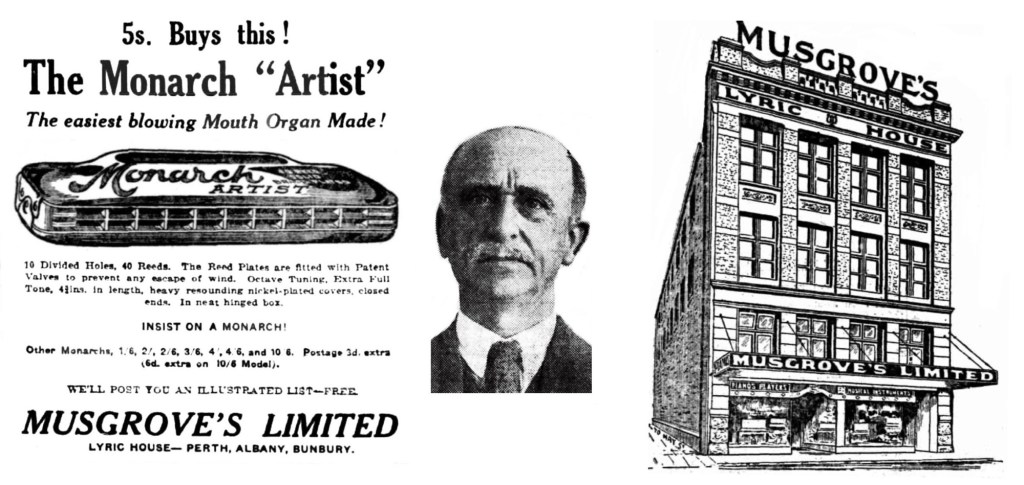
My restless brain thought that it maybe F A Rauner, who manufactured the fabulous Crackajack mouth organs – purely on the basis of similar model types, Junior, Senior, Professional & Artist.
Easy Mistake To Make
Still sticking fat with Dienst on the basis of Pat’s previous information and with this 1925 advert for Musgroves, supporting the Monarch Accordeons are made exclusively for them.
Who is Ballarat Joe?
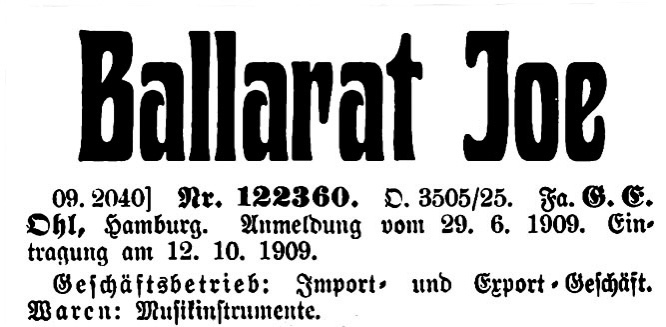
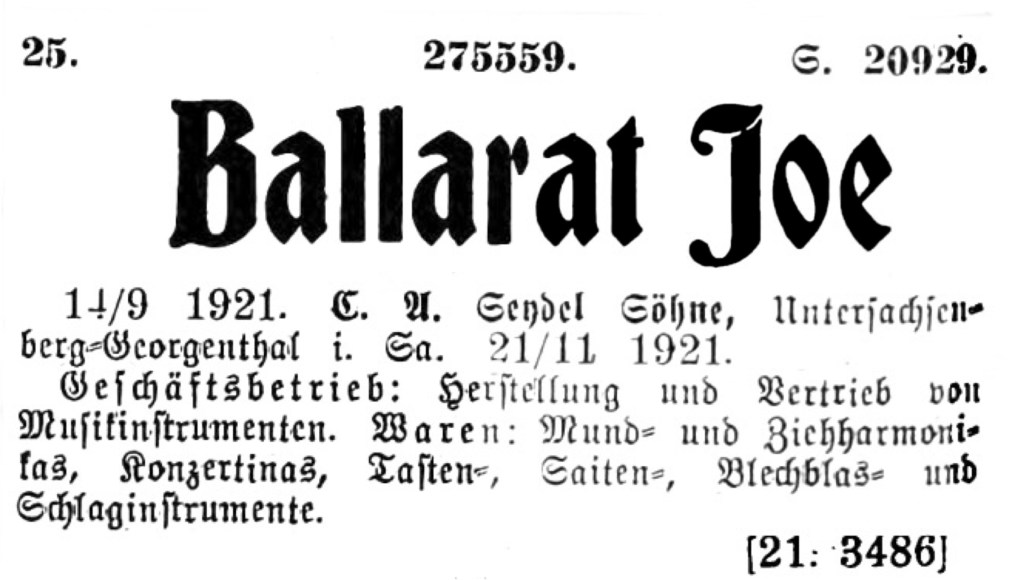
Not sure if these were ever in production, but they were certainly trademarked by G E Ohl in 1909 and Seydel in 1921. Ohl had the TM for the Crackshot ‘Down Under’ and recently a specimen has been unearthed (literally).
Who was this Ballarat Joe and what connection does he have with the proletariat peace pipe (my nickname for the mouth organ)?
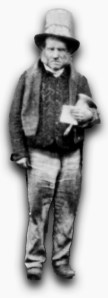
Ballarat Joe was Joseph Cheswick and he was also known as Joe the Bellman. He wasn’t a harpist, but a barrel organist. Bit of a cheat really. Joe first visited Ballarat in the 1870’s. Always immaculately dressed in a white bell topper with a deep band with coat drawn in and wasp waisted. A large red hanky would dust off his well polished Boucher boots. Joe trundled his barrel organ down Sturt street till he reached the Post Office. Depending on the response, he would either stay or head off to the front of Craig’s Royal Hotel then to Vale’s Corner.
Each year he would head back to England arriving back to our shores with the latest high grade barrel organ. In 1872 his new organ was made by Impof & Co. of London. Placed on the organ was a placard describing Joe’s loss of his first organ which had cost £300 when he was shipwrecked off the Cape of Good Hope on the Queen of the Thames.
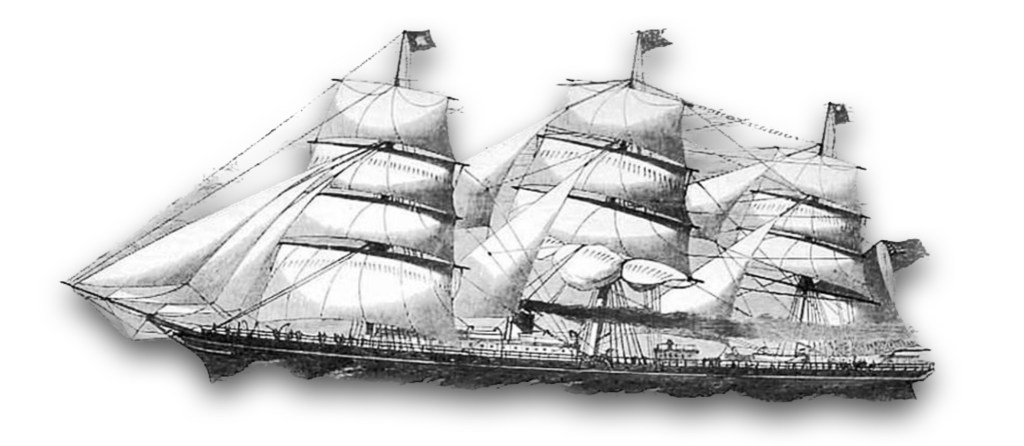
Joe was also noted for his ambidextrous bell ringing skills. He would draw large crowds with his comic gesticulations and humorous patter. Joe claimed he was once a member of the 3rd Dragoon Guards and certainly many of his mannerisms suggested a military background.
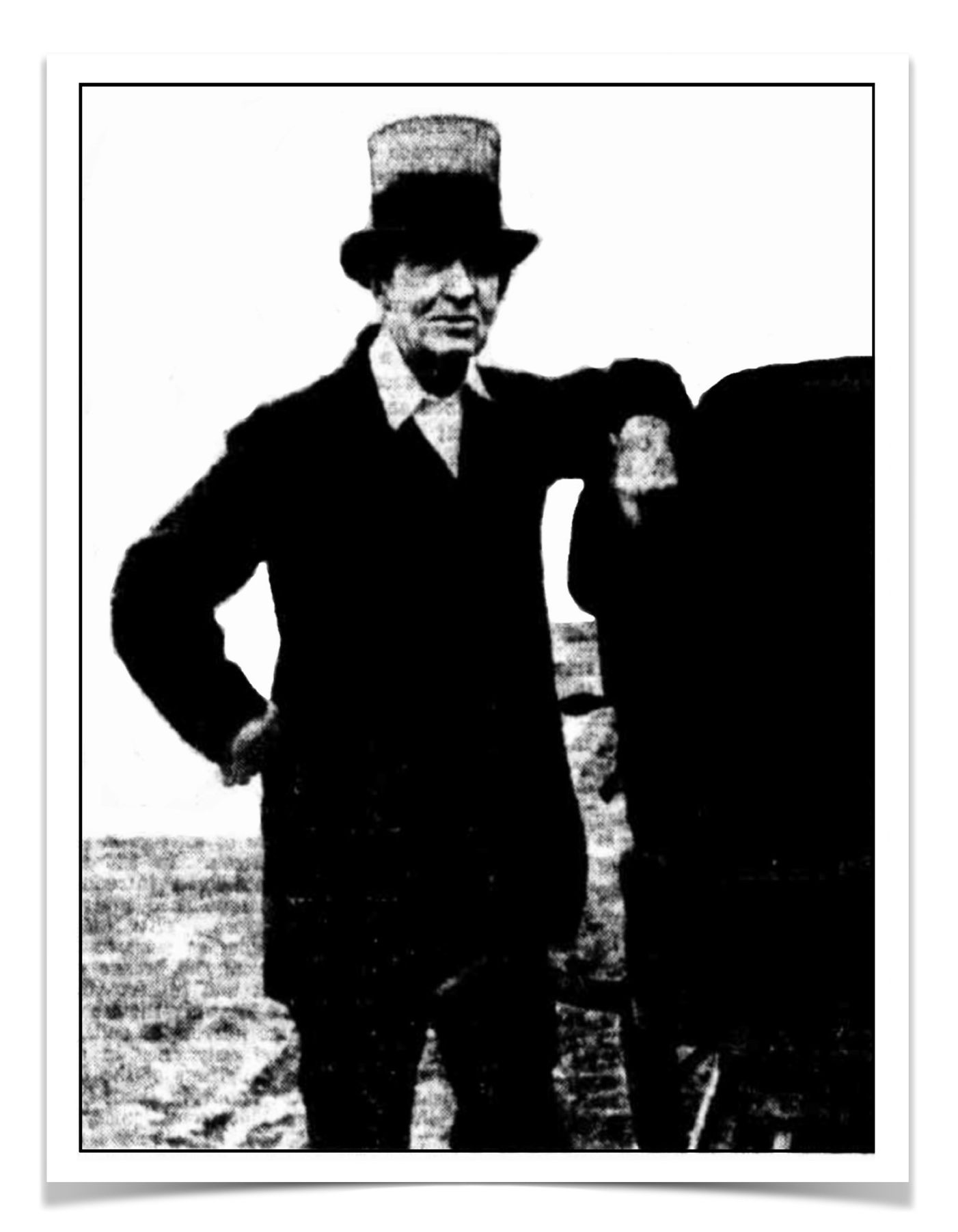
A street organist busker was old Ballarat Joe, who rendered fine music during long years ago. Favourite tunes on he’s big organ he’d play, and coins he’d collect in a businesslike way. From he’s grand organ a clear and loud rich strains of music would draw a crowd. Street Buskers made during long years ago, and a steady old saver was Ballarat Joe.
The Bulletin 7th April 1948
Who is Sandow?
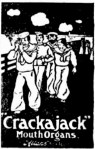
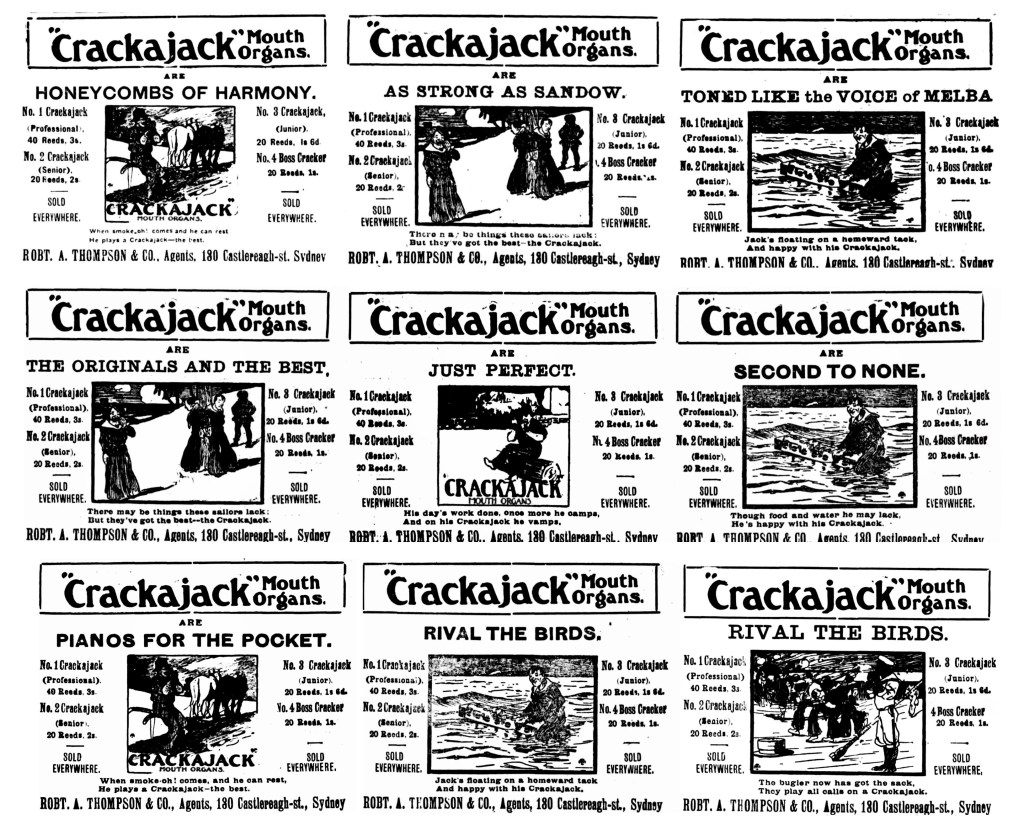
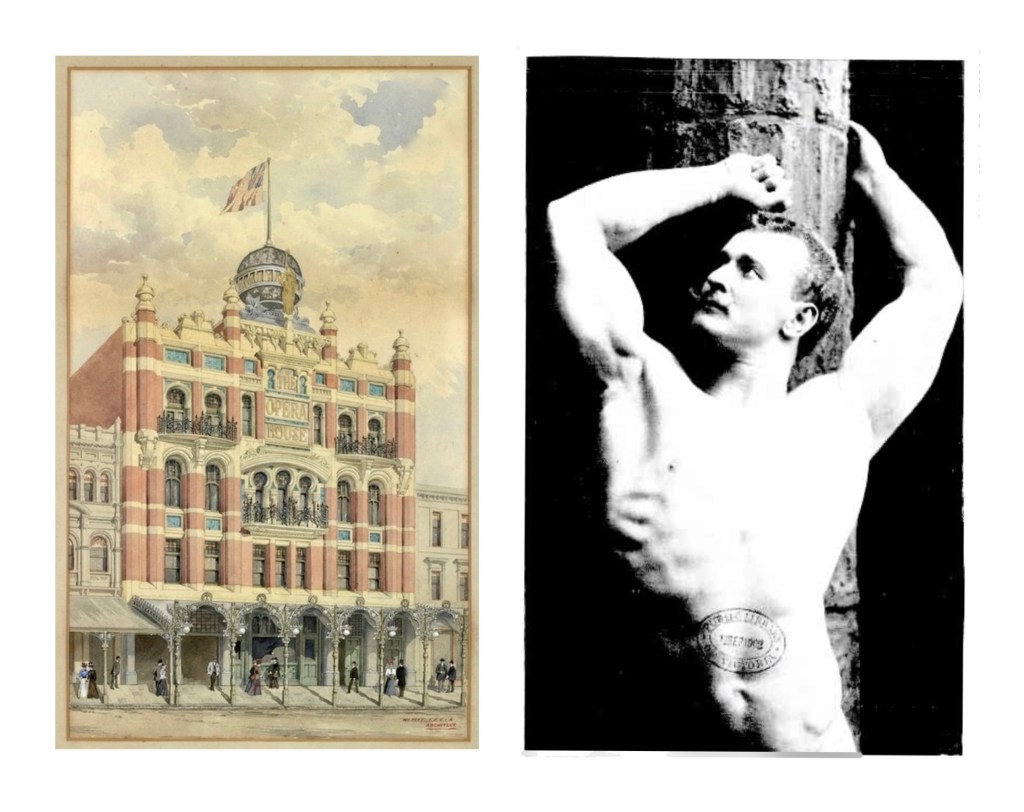
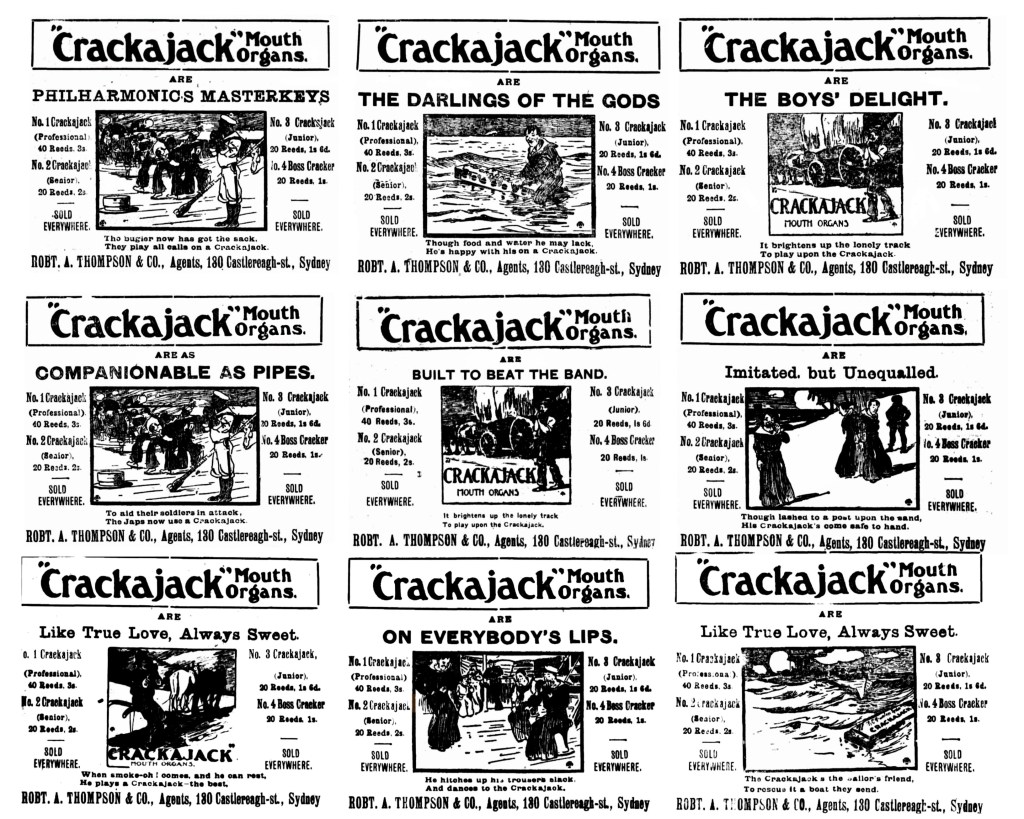
After our recent look at how the Boss Cracker fits into the Crackajack line up, I came across these series of advertisements from Robert A Thompson & Co in Sydney, who were selling Melbourne’s Crackajacks with various marketing tags in 1903. Of interest, and requiring further investigation, was ‘Crackajack Mouth Organs are as strong as Sandow’. What the hell is Sandow? An early twentieth century super glue? Nup! He was the first Arnold Schwarzenegger – a pioneer in the art of body sculpting. Eugene Sandow was a German bodybuilder and showman. He made regular appearances in Australia including a show at the Melbourne Opera house in 1902.
Please To Do So.
Confucius also say, “stick and stone may break my bone but name will never hurt me.” Apparently when he was a child!
Well, who are you? (Who are you? Who, who, who, who?)
The Who
I really wanna know (who are you? Who, who, who, who?)
Tell me, who are you? (Who are you? Who, who, who, who?)
‘Cause I really wanna know (who are you? Who, who, who, who?)
Please check home page for copyright details
 Harmonica Riff Raff
Loved all the references to The Amazing Harry Hoo from Get Smart. Very witty Shep. 👏 👏👏
LikeLiked by 1 person
I beg to differ. 😂
LikeLike
Great read again Shep. Are all proletariat peace pipe users characters of unique individual whacky nature! The stories over your blogs of the musicians that wield the harp seem to be very interesting people. Their wearing and use of attire/clothes too. Or body builder lack of them. Performers of visual extravagance. Is quirky nature a side effect from use of these little glorious individual instruments? 😊 I was looking at Lee Brilleaux playing harp on Down at the Doctors. What an amazing presence the guy has. BTW. Your research is phenomenal. Alongside your collaboration friends too. Would make a fine book. All the best Shep. 🙏🏽
LikeLiked by 1 person
Thanks mate. I can’t answer for all, but interesting observation. You Bass players can be a little eccentric too! 😝
LikeLiked by 1 person
True. There’s enough jokes out there though that say we are an add on that has no clue what to do! 😆 I actually agree.
LikeLiked by 1 person
Very interesting read as I have just been gifted a B C Dunlop cracka jack professional in very good working order I am going to try and try my hand at learning harmonica but can’t help but wonder if these are rare to find and wether it holds much value. Any info would be greatly appreciated.
kind regards
shea David McQuillan
LikeLiked by 1 person
Hi Shea. It’s a cliche, but it’s true a harmonica is only worth what someone is willing to pay. Crackajack’s don’t come up as often as boomerangs on eBay. There’s more posts on my site that covers the Crackajack history – A Crackajack Story is one. Cheers for becoming a Riff Raffer. S
LikeLike