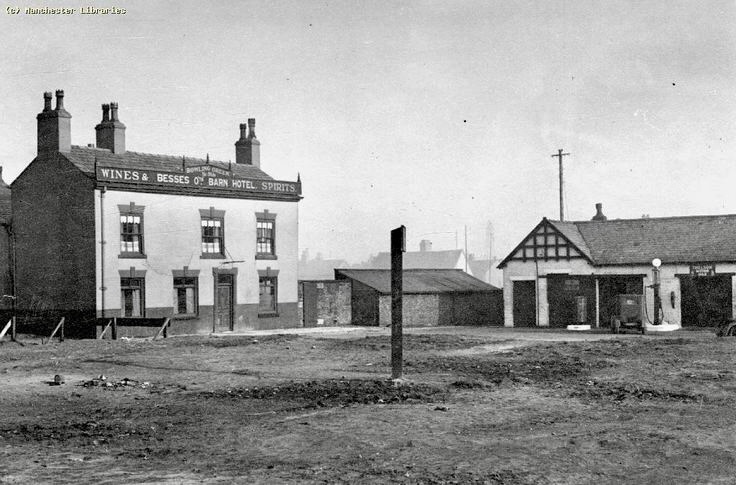

Bess
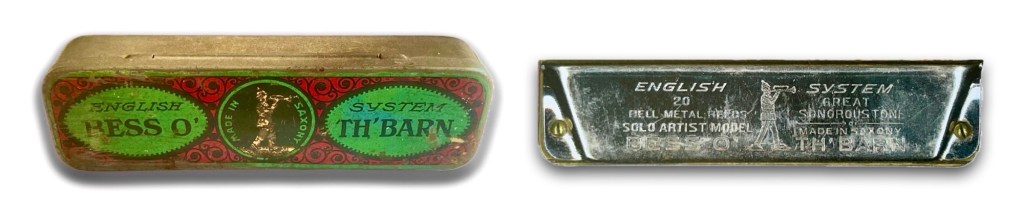
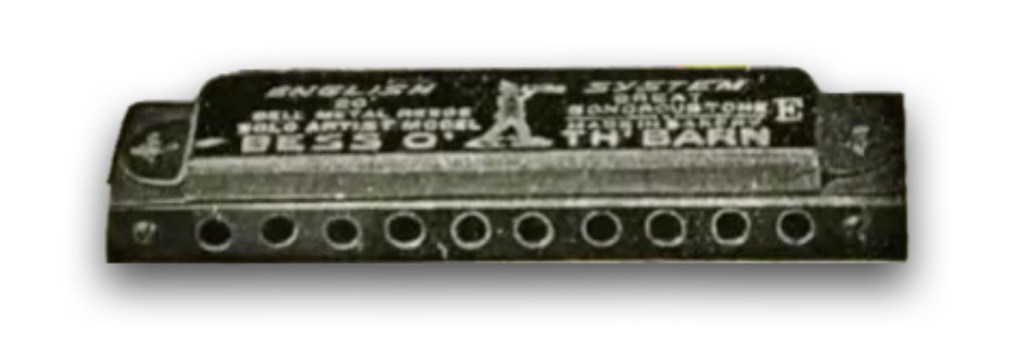
Just a month or so ago I penned a blawg relating to the Bess O’ Th’ Barn mouth organ tin I had unearthed from the Lakes district in Gippsland. In the article I related the intrigue into why ‘Besses’ was shortened to ‘Bess’ on the branding of the mouth organ.
We know the mouth organ was so named after the brass band that hailed from the tiny hamlet of ‘Besses o’ th’ Barn’ in Bury, Manchester. The band had made an almighty impact when they first visited our sunny shores in 1907. Well, thanks to the online ‘Manchester Evening News’, it appears the answer for the abbreviation had been blowing in the ether.
The spelling of the name has changed slightly. It was once spelt: “Bess o’ th’ Barn.” (Manchester Evening News, 27 March 2023)
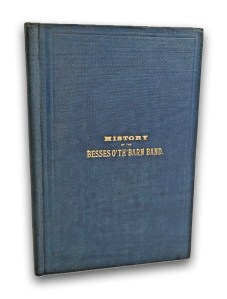
In the History of the Besses o’ th’ Barn Band authored by Joseph N Hampson (circa 1892), he outlined that the Yorkshire papers way back then had spelt the name, ‘Bess-o’ th’-Barn’ and the Baine’s map of Lancashire published in 1824, did exactly the same.
Still doesn’t explain why Otto Weidlich, the manufacturer of the mouth organ, went with this orthography.
Dick & Bessie
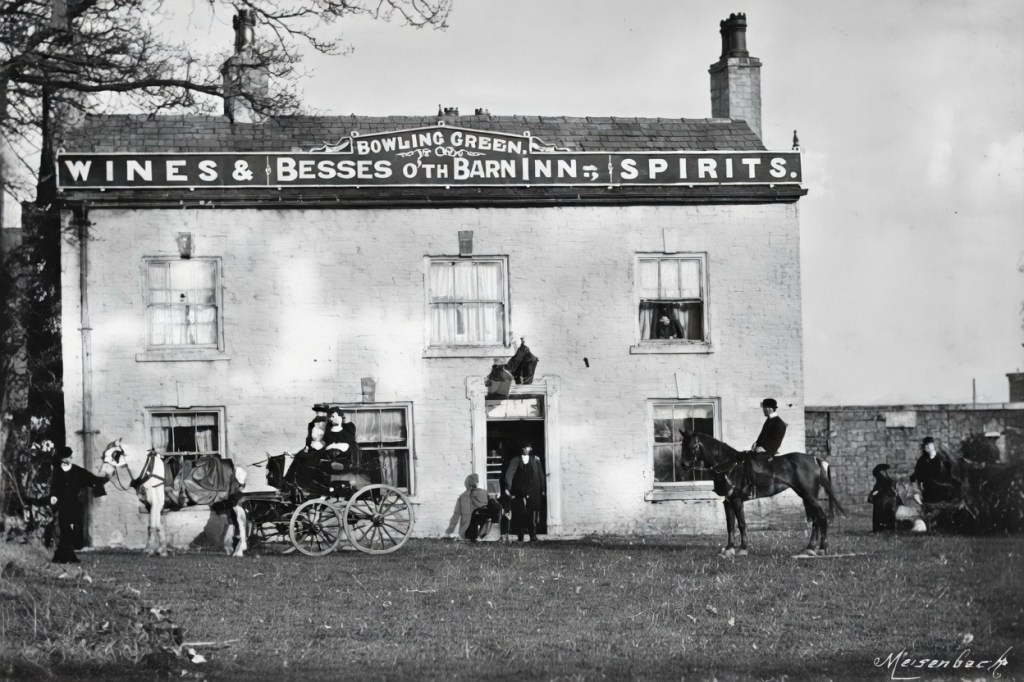
The etymology of the town’s name stems from an old tavern (of barn like appearance) and a publican called Bess. The locals would use the phrase, “Let’s go see Bessie at th’ barn.” when their thirst needed quenching.
The Kalgoorlie Miner, back in 1906 affirmed the tavern tale. It states that the town, which now holds 2000 inhabitants, but which once was nothing better than a small hamlet, contained a country inn with a barn-like appearance. It was kept by a prepossessing Lancashire lass called “Bess” or “Bessie.” It became noted far and wide as a house of call, where the stage coaches stopped on their tedious journeys; and as the landlady was very popular with travellers it was quite usual to hear the remark, “We will stop and see Bessie at the Barn.” (The Kalgoorlie Miner Sat 22 Sept 1906)
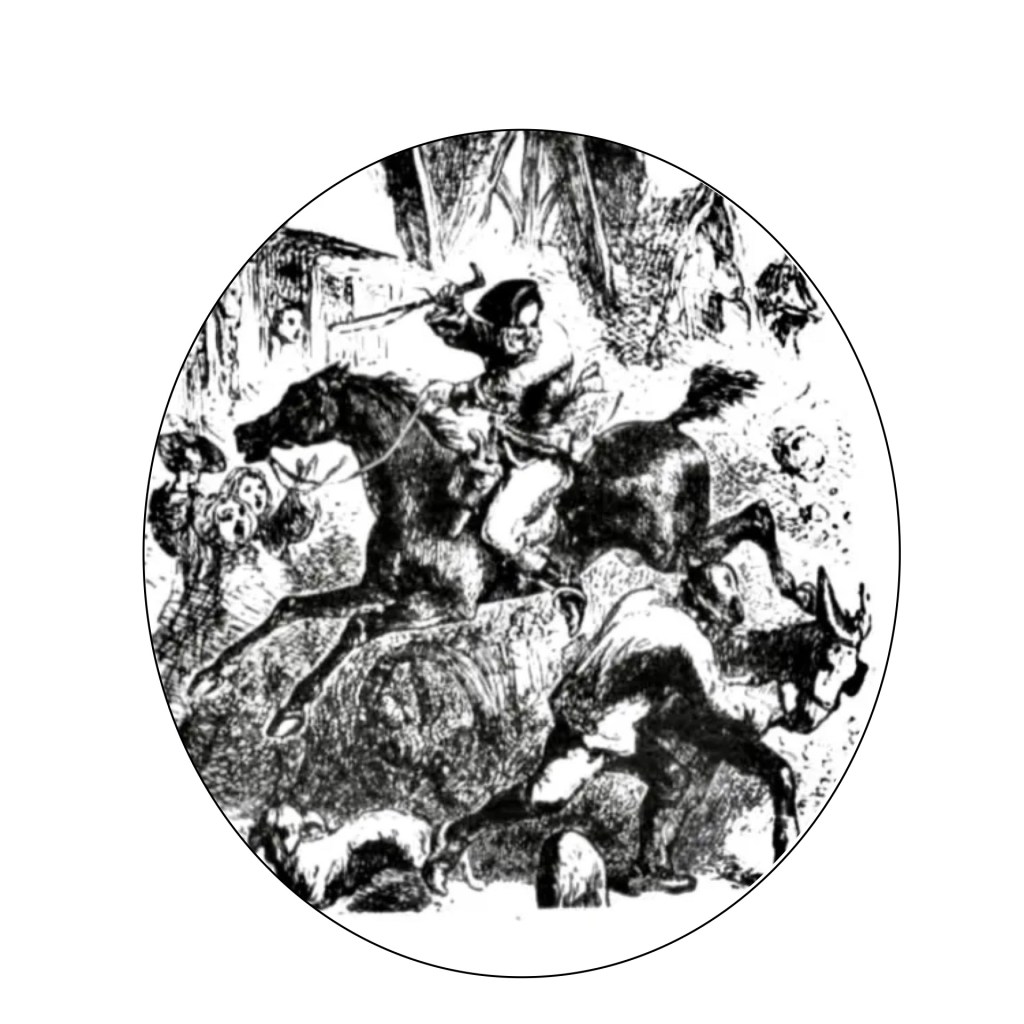
There had been another fanciful line of inquiry into the naming rights that involved the adventures of Dick Turpin and his mighty steed Black Bess. The Worlds News reported on this in 1906.
Another legend (presumably) was to this effect:-A noted highwayman (generally supposed to be Dick Turpin) was in the habit of stabling his steed in the old barn which stood at the square in front of the Besses o’ th’ Barn Inn. The name of this gallant steed was said to have been Black Bess or Bess o’ th Barn, and It was from the exploits of this horse and its rider that the village obtained its name. (The Worlds News, December 22, 1906)
Little Besses
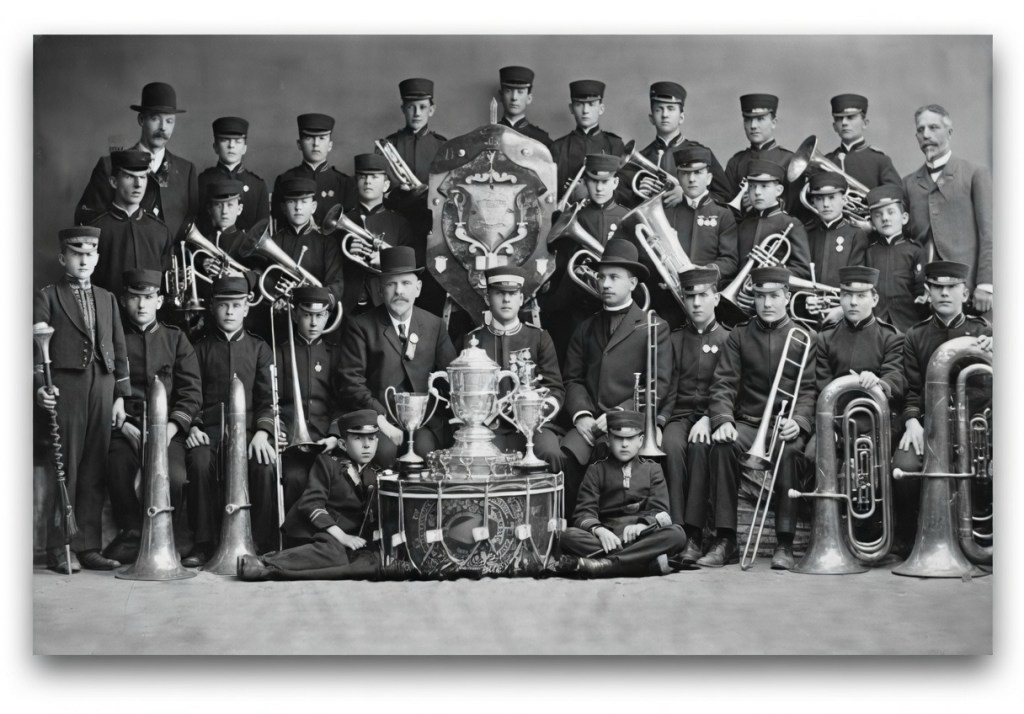
Advocate (Melbourne, Vic) Saturday 17 November 1906 – Page 14
St. Augustine’s Orphanage Band were known in Aussie Brass circles as the ‘Little Besses’. In 1902, James Ord Hume, eminent Scottish composer, conductor, musicologist and cornetist, judged them to be “the best boys band in the world” at the South Street Competition of that year. Take that all you other boy bands! In 1906, they won the Australian Championship against the best adult bands in Australia with an average age of approximately fourteen years. Their conductor and bandmaster was twenty one year old Percy Jones.
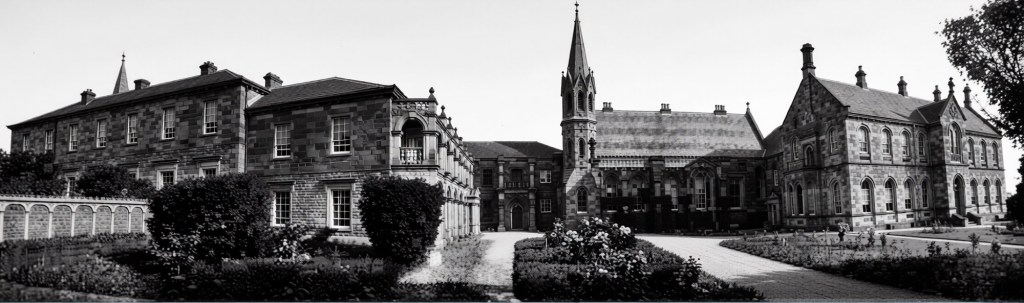
When the “Besses o’ th’ Barn toured in 1907, on their itinerary was the port city of Geelong, Victoria (45 miles SW of Melbourne). On their arrival they were greeted by the splendid tones of the St. Augustine’s orphanage band. The Big Besses invited the Little Besses to attend their Geelong concert as their guests and this was reciprocated when they joined the lads at the orphanage the following day.
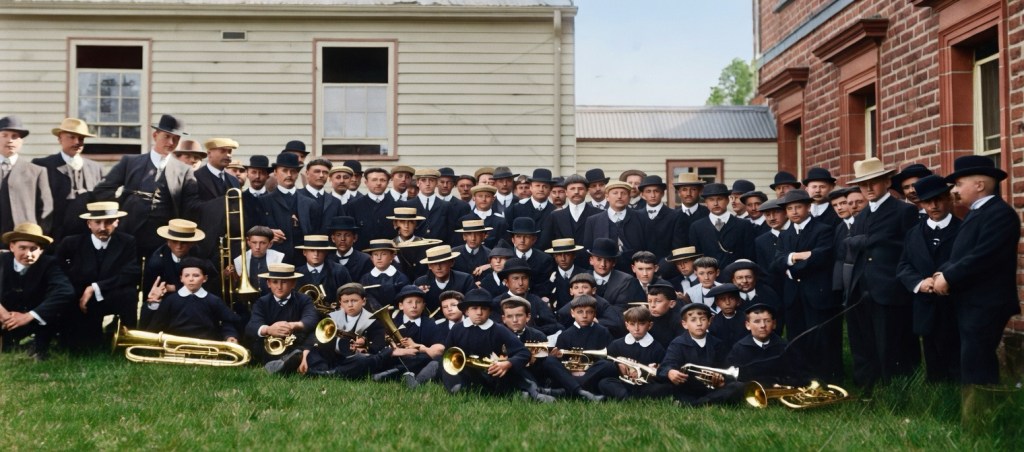
Photo: Oswald C. Hearne (Sunday 15th September 1907)
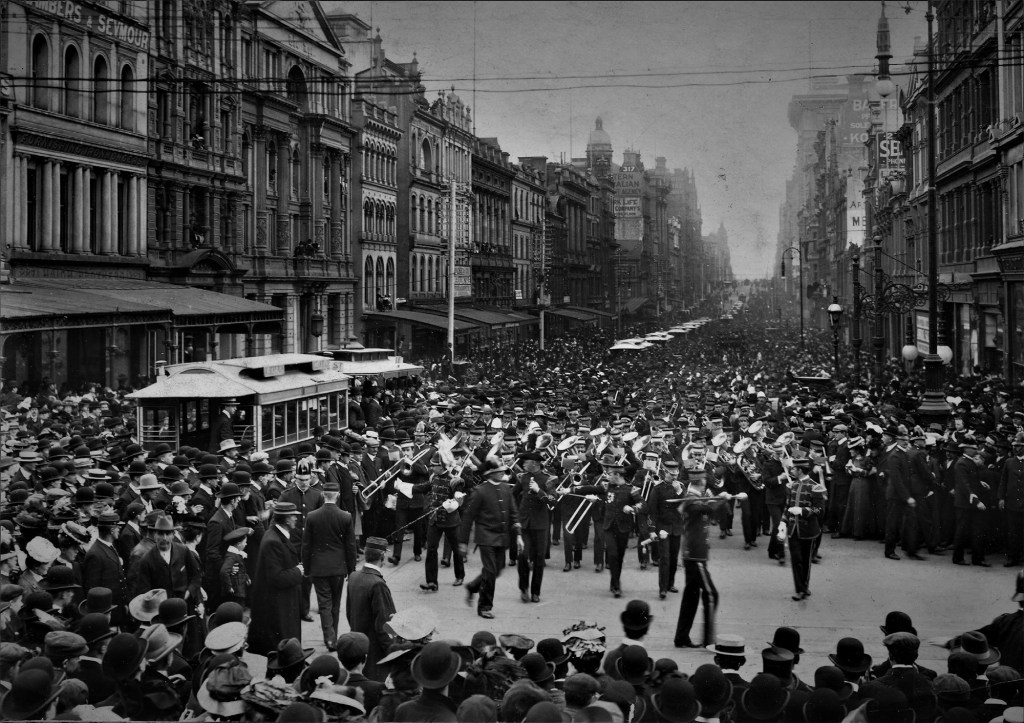
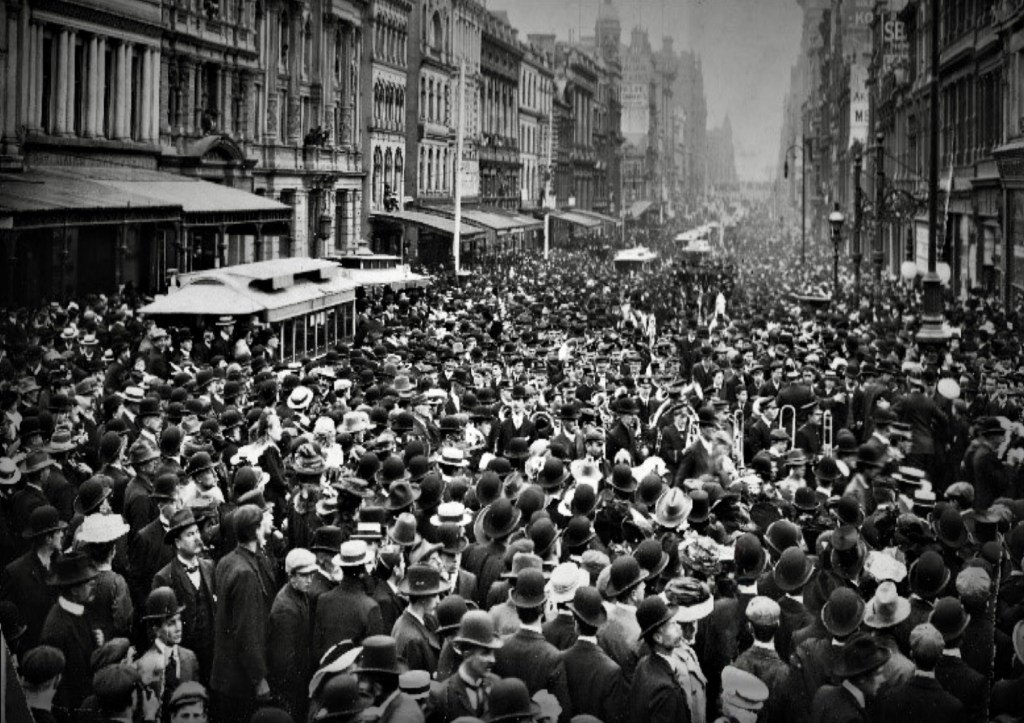
The lads with a tour of their own in 1907, had prepared the eastern seaboard for their big brother’s arrival later on in that year.
Messrs. J. and N. Tait are “touring” the St. Augustine’s Orphanage Band, commencing 31 the end of this month. The proposed tour includes Albury (January 1), Wagga, Goulburn, Sydney, Toowoomba, Brisbane, Maitland, and Newcastle. (The Daily Telegraph (Sydney, NSW: 1883 – 1930) / Sat 8 Dec 1906)
In 1902, John and Nevin Tait formed J. & N. Tait to promote concerts with artists from whom their brother Charles met through his job at Allan’s.
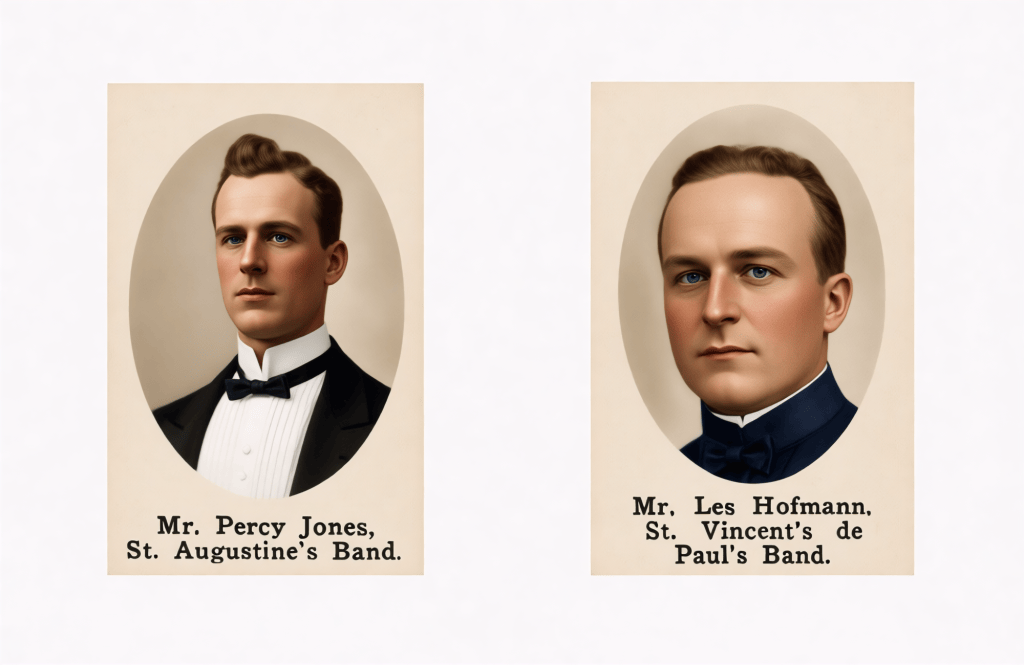
Percy 1885 – 1948
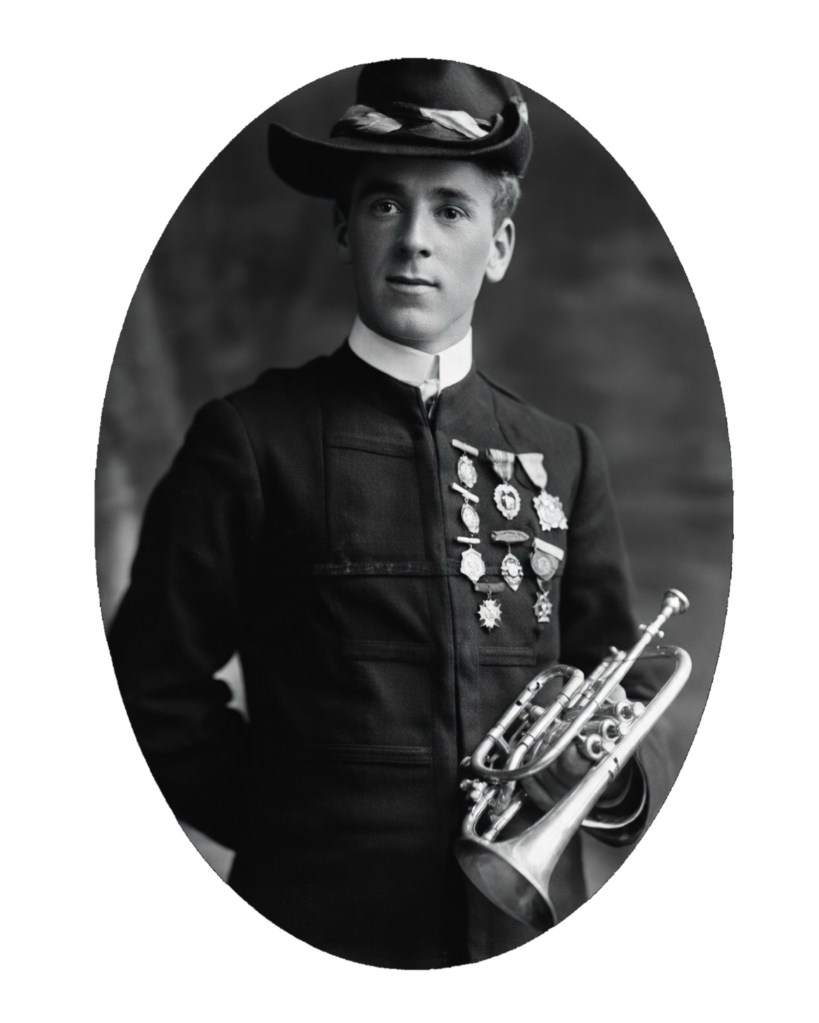
Percy was born in 1885 to a Welsh parents Harry and Mary. He lost his mother before he could crawl, and when just eight his father too. In 1899 he was placed in the custody of St. Augustine’s Orphanage.
The brass band at the orphanage was the making of Percy, where he immediately displayed tremendous expertise on the cornet. As a cornet soloist he was victorious in the 1904 and 1905 Australian Championships at South Street Ballarat, scoring 99 points out of a possible 100 on both occasions.
The orphanage raised funds to further his music prowess overseas studying musical composition and pianoforte in London, Leipzig, Berlin, Paris, and Vienna. Before going away, he accompanied St. Augustine’s Band on a concert tour throughout Australia as conductor.
In 1912, he returned home and the Geelong Council appointed him conductor of the Geelong Municipal Band. Taking this band to the South Street Society’s competition that year, he again carried off the championship. It was a big year for Percy as he married his sweetheart, Ethel Bourke on Boxing Day.
After WWI Percy took charge of the Prahran City Band replacing Percy Code. He then returned to the St. Augustine’s Band when Leslie Hoffman left and at some point in the 1920’s he was in charge of the Geelong West Municipal Band.
Les (1890 – 1959)
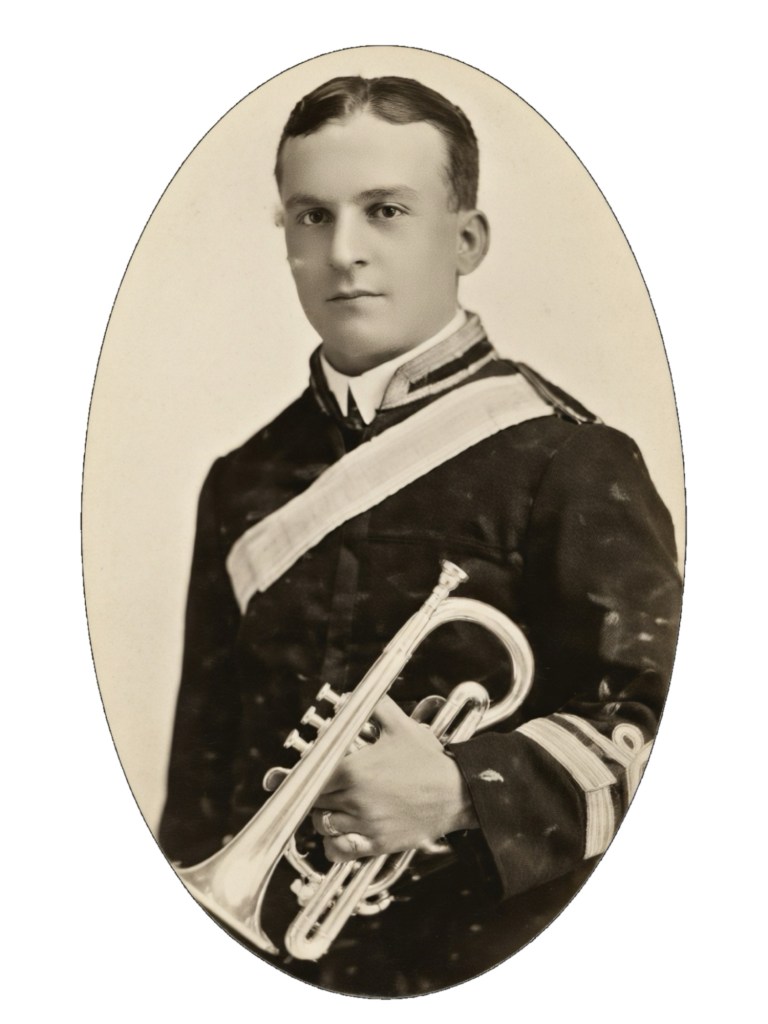
Leslie Hoffman was born in 1890 and like Percy (in possibly the same year) was placed in the care of St. Augustine’s orphanage. And he too became a fine cornet player, who played in their 1905 success. He was appointed bandmaster in 1907, after Percy’s departure, when only seventeen. There was only himself and one other from their 1905 win still in the band.
There was always a regular turnover of boys at the orphanage, so Les had to build up the band with juniors. After a four year hiatus from competitions, Les informed Brother Kerrins that they were ready for contest work again. They duly entered the South Street event and St. Augustine’s were once again crowned victors in 1911.
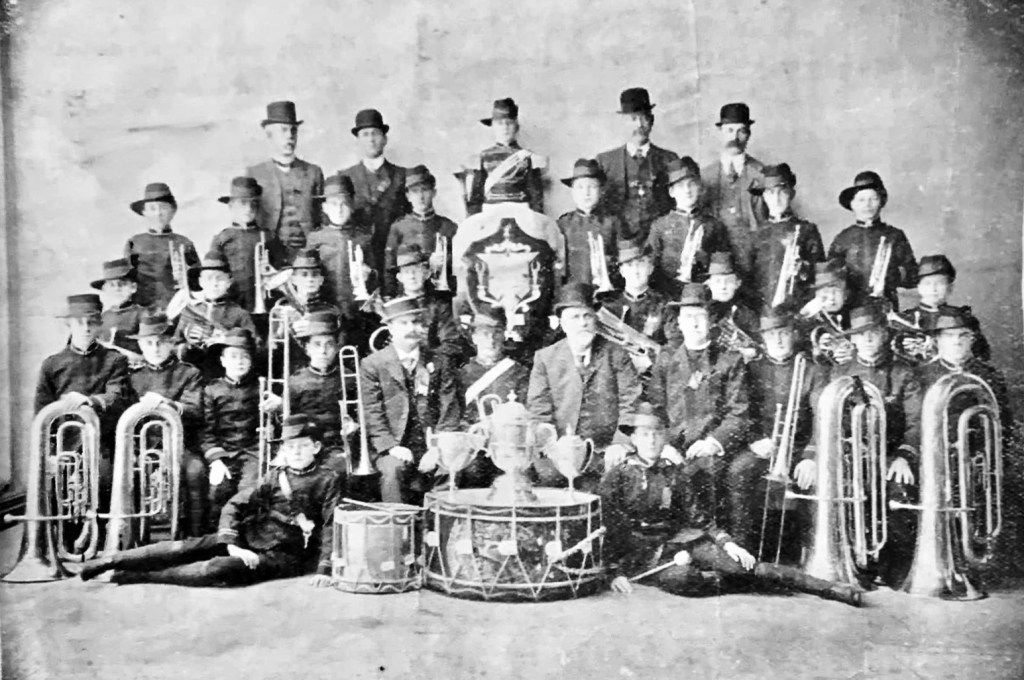
St. Augustine’s Orphanage Band. Winners of the Commonwealth Championship – 1911
With the onset of war in 1914, Les married Miss Daisy Geraldine Johnson. They had two children, Lesley Geraldine and Cecilia Ray.
Les even brought the St Augustine’s boys to Wonthaggi for their St Patrick’s Day Gala during the war years. In 1916, the Melbourne Tribune (April 6, 1916) proclaimed, “The local press and critics were loud in their praise of the band’s performance, and stated that it was the best musical treat given in the history of Wonthaggi.” The boys visited the local coal mine and also endured a bumpy ride to Inverloch. After an enjoyable trip they returned home by steamer.
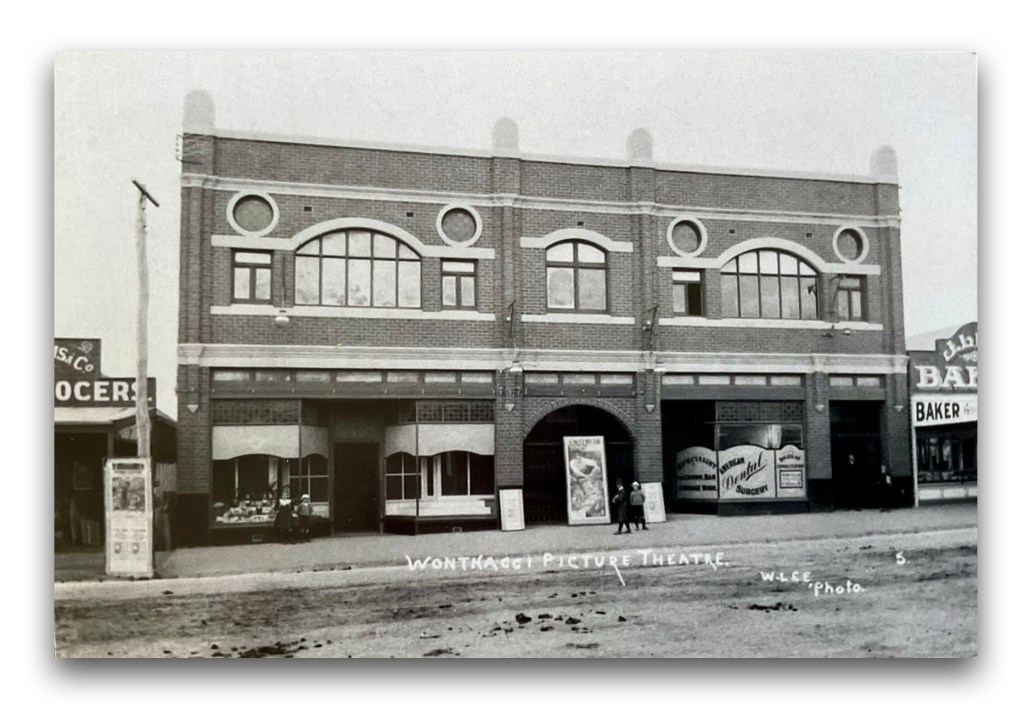
Wonthaggi Soldier’s Theatre (Foon Photograhy – not for reuse!)
Following on the successful precedent established last year, the St. Augustine’s Boys’ Band from Geelong, the champion band of Australia-was again engaged. They arrived on Friday morning in charge of Brother Kerrins and Mr Cody. Under the baton of Leslie Hoffman, the gifted conductor, they gave an excellent band concert in the Wonthaggi Theatre on Friday night. Owing to other attractions the attendance was not up to expectations, but those who attended were highly delighted with the musical feast. They resolved to hear the boys at the sports on the following day and made it a point of seeing that their friends did likewise. The march of the boys through the streets was commented upon in the highest terms, and an admiring crowd surrounded them playing selections during the day. (Powlett Express and Victorian State Coalfields Advertiser, Vic, Fri 30, 1917)
After a short stint in Sydney, even bringing the South Sydney band down to South Street (where they were runners up to Collingwood), Les returned to Victoria in 1918. There he took up a teaching appointment at St. Vincent’s Orphanage and would be bandmaster of St. Vincent de Paul’s band for thirty years.
1901 Band (Conductor J R Graves)
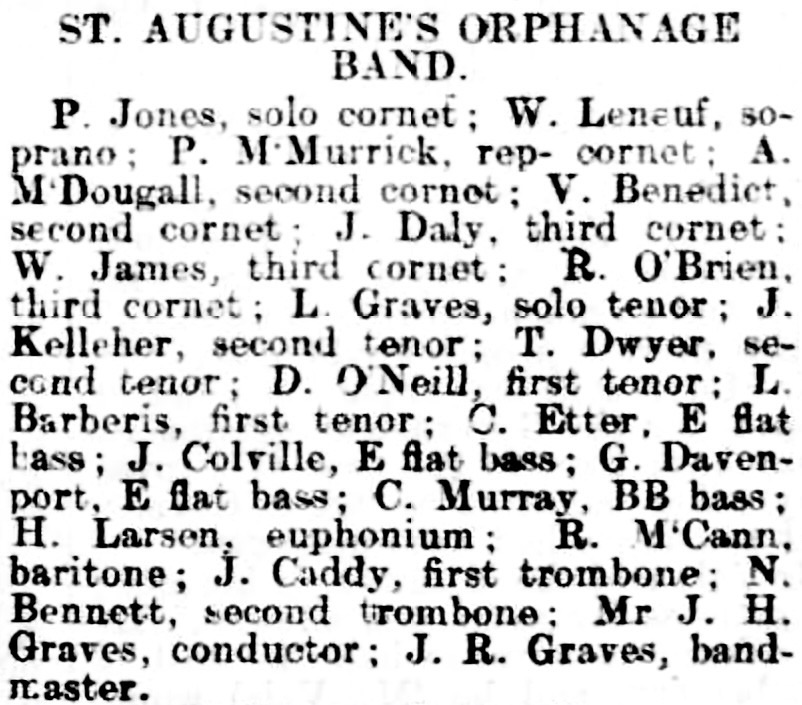
1905 (December) Band
The following are the members: Rev. Brother M. D. S. Kerrins, manager; Percy Jones, bandmaster, conductor, solo cornet; Leslie Hoffman, solo cornet; John Daley, solo cornet; George McCormack, repiano cornet; Thomas Geogehan, 2nd cornet; James Collins, 3rd cornet; Joseph Hickey, soprano cornet; John Jarvey, repiano flugel horn; John Thornton, 2nd flugel horn; Edward Dwyer, solo horn; James Kearney, Ist horn; Edward Dicks, 2nd horn; John Daniels, 3rd horn; Alfred Cereso, Ist baritone; Alfred Cares, 2nd baritone; Henry Larsen, solo euphonium; George Finlan, 2nd euphonium; James Kelleher, solo trombone; John Sculls, 2nd trombone; Walter Keating, bass trombone; John Carey, BBb bass; Valentine Hugher, Bb bass; Arthur Collins, Eb bass; Charles Ward, Eb bass; William Thornton, bass drum; John Watson, side drum; W. Grant cymbals; John Lane, drum-major; Mr W H Payne drill instructor. (Daily Telegraph, Launceston, Tas, Fri 22 Dec 1905)
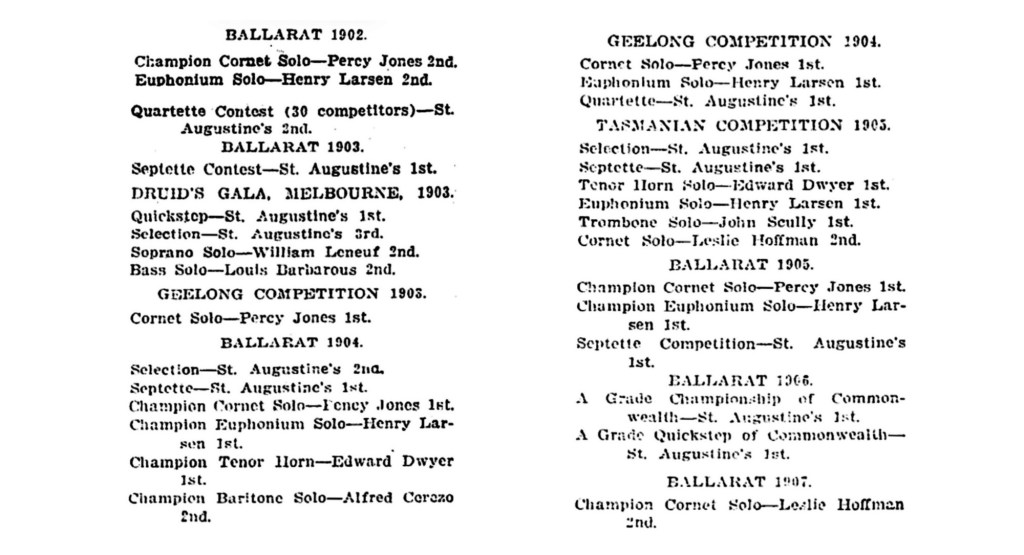
St. Augustine’s record 1902 – 1907
Henry (Harry) Larsen 1887 – 1976
Henry Larsen from St. Augustine’s Orphanage was Australian Euphonium Champion of 1904 & 1905.
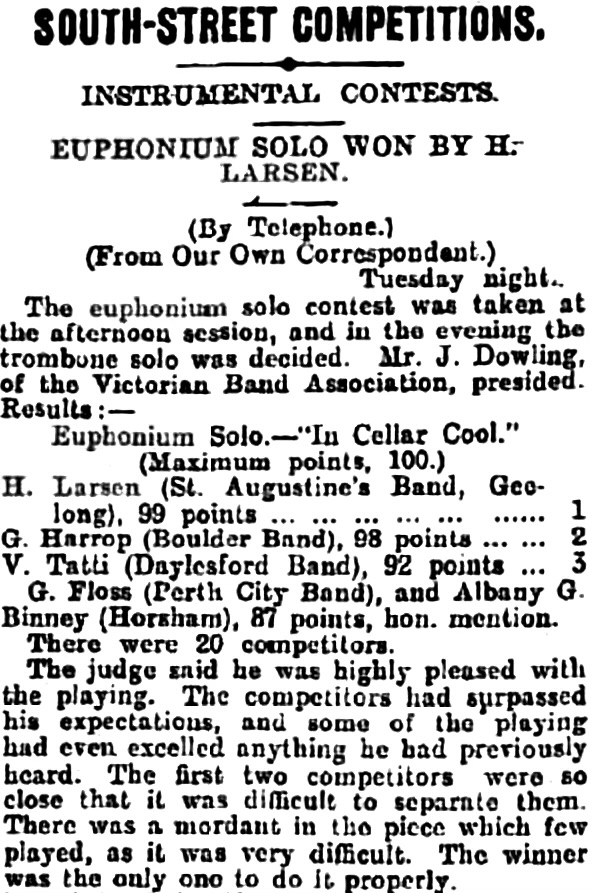
Geelong Advertiser, Vic, Wed 25 Oct 1905
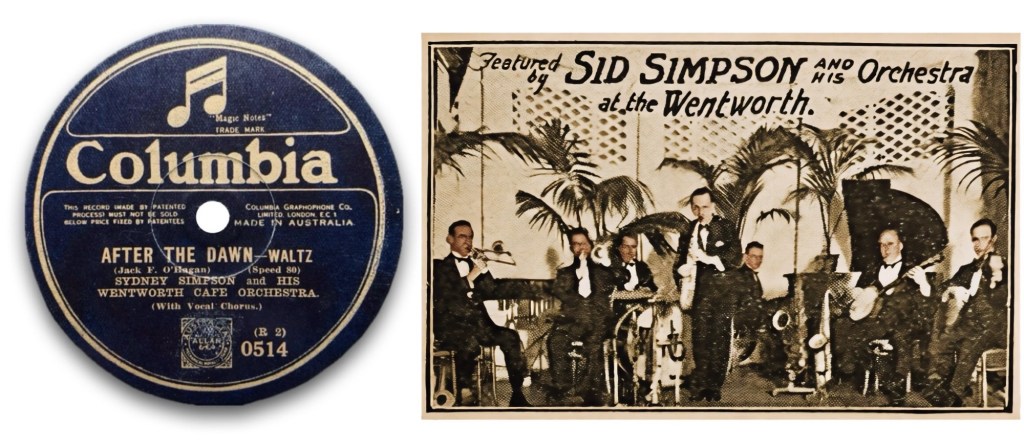
On 23 October 1926, the Daily Telegraph announced that the ‘Columbia Company’ had released the first record pressed and recorded at their Homebush studio and factory.
The recording consisted of two items played by Sydney Simpson and his Wentworth Cafe Orchestra. One of them was the popular ‘After the Dawn’ waltz by Jack O’Hagan. This was an all Australian recording, being composed, performed, recorded and pressed by Aussies.
Henry Larsen, aka Harry, was a member of the ‘Wentworth Cafe Orchestra’ and later he became the principal trombone player for the Sydney Symphony Orchestra during the thirties and forties. He may have commenced there on the euphonium. He was also a teacher at the N.S.W. State Conservatorium in the 1950’s and early 1960’s,
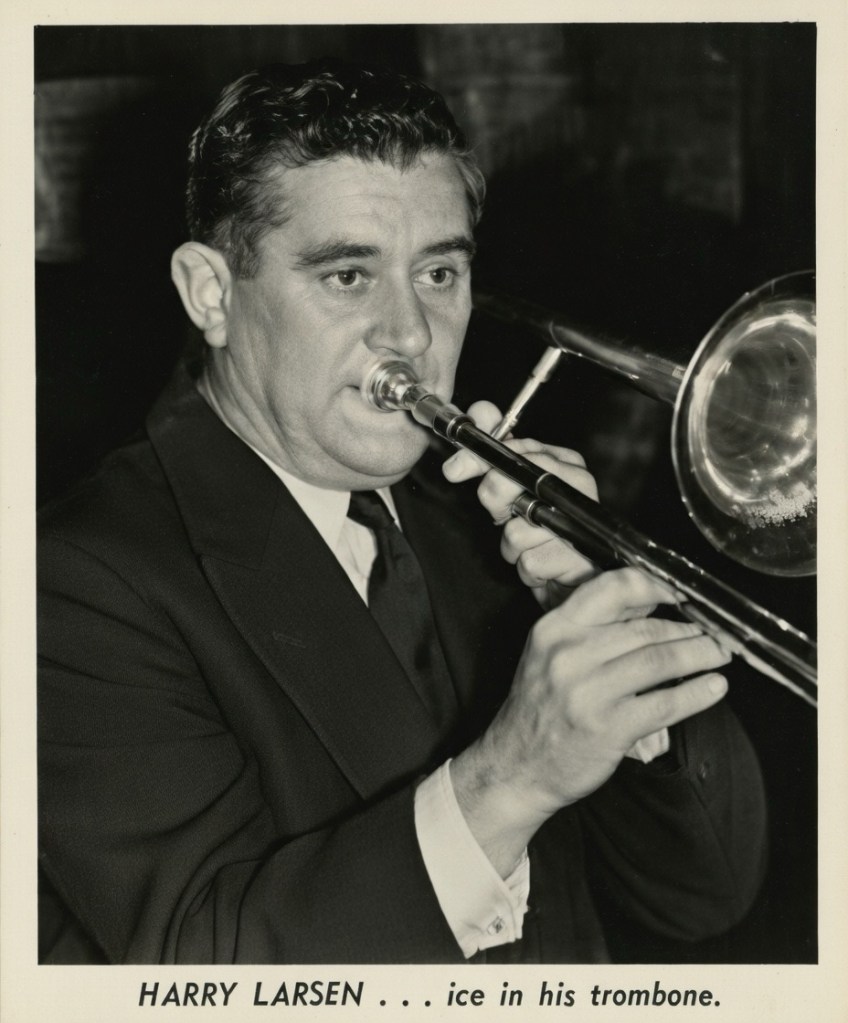
MEETING Harry Larsen, trombone player, I mentioned having seen him in the orchestra at the ice show in town. “The way that show is being supported it looks like being a life job for you,” I said. “No fear,” he replied. “I was only playing there whilst one of the boys was ill. In any case, I wouldn’t take that on permanently.” “Why not?” I asked. “Well,” he said, “you remember that lad who does his skating on stilts? Every time he skidded round my corner of the stage he shot about a pound of ice over the footlights. Half a pound or so went down my instrument and the rest straight down my back. Even in summer I’d take a dim view of that.” (ABC weekly / Vol. 13 No. 34, 25 August 1951)
Introducing Master Percy & Basil Jones
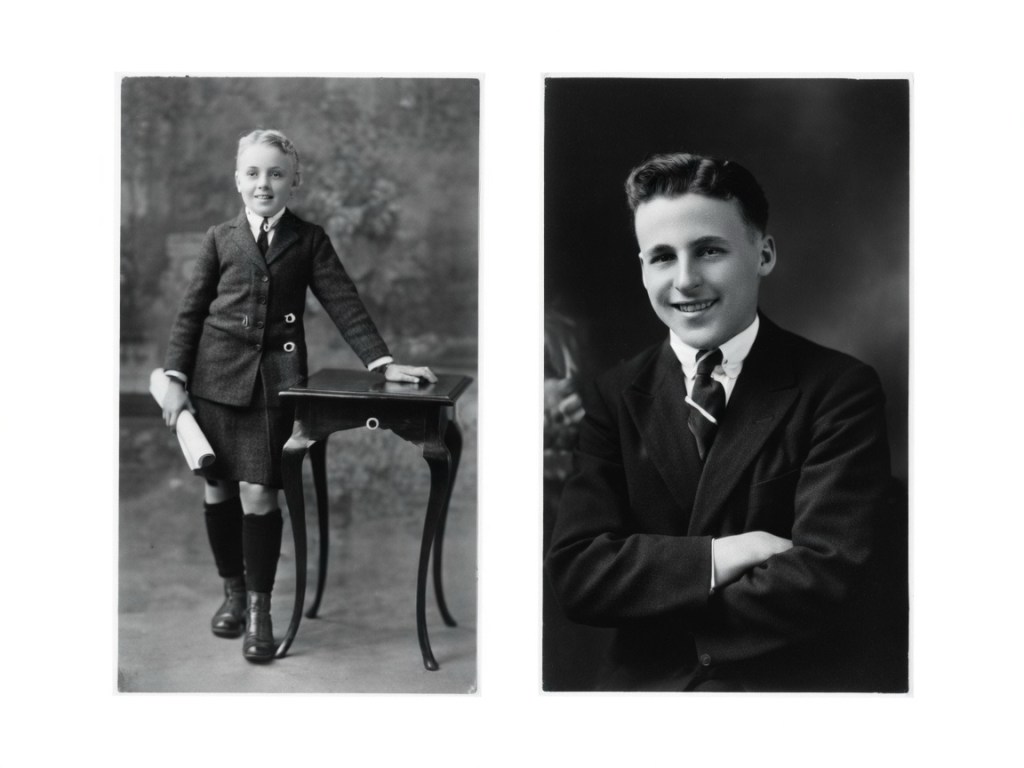
St. Augustine’s Boys’ Band, Geelong. In the recent examinations in the higher pianoforte division in the Geelong centre he secured the highest marks.
Right: Basil Jones aged 16, a clever young violinist, and son of Mr Percy Jones, the well-known musician of Geelong, was successful in gaining an entrance exhibition af the recent scholarship examinations held by the’ University Conservatorium of Music.
Percy Jones and his wife Ethel had five children and two of their three boys followed in their father’s footsteps carving out a career in music. Both boys competed in their relative instrument sections at South Street Ballarat. In fact Master Percy competed in 1925 when the first Australasian Mouth Organ competition took place. The same judge for the mouth organ competition, Gustave Slapoffski, awarded Percy the maximum points for his pianoforte solo in the under twelves, of which there were seventy six contestants. Gustave commenting on Percy’s performance stated, “he had shown a great deal of promise, and he would advise him to go on diligently with his studies. He played correctly and very musically.”
Basil finished third with an honourable mention in the violin under twelve section the following year. The judge, Mr. F. W. Dawson, in his notes appraised Basil’s performance thus, “intonation a little doubtful in feeling tone, quality very good, interpretation a little too pedantic for this piece, but nice in places.” Basil, like his dad, ventured to Europe to further his musical education in 1936.
Master Percy went on to become Rev. Dr. Percy Jones, Ph. Dd., a Diocesan Inspector of Music for the Archdiocese of Melbourne and choir master of St. Patrick’s Cathedral choir. His brother Basil became a violinist at the Brisbane Conservatory.
Percy senior’s influence and encouragement on his son’s musical advancement is best seen in his preparation for the family’s annual January school holiday. Stacked on their trailer was an upright piano ensuring his son didn’t miss his daily practice while away.
Please check home page for copyright details


Interesting write up Shep. I have never heard of this place in Manchester. The musical band starting in 1818 isn’t as well known here as the Brighouse and Rasterick band. We are holidaying near Brighouse, Yorkshire in a few weeks time. The sisters called the Unthanks sang one of the most beautiful songs I’ve ever heard. The King of Rome. Bet your brother really enjoyed your write up here.
I always wonder at these investigative write ups of yours and think of a huge book tome on a pulpit/plinth with an index at the back to go to specific enquiries. Housed? In a harmonica or historical wind instruments museum.
Cheers Shep. All the best.
LikeLiked by 1 person
Listened to the tune you mentioned Gray. Very moving. Not sure on your ‘Brother’ comment. Mine wouldn’t give a rat’s arse! Excuse the French. If Dad was still alive he sure would be. Hey! Here’s a bit of trivia. Peter Skellern (You’re A Lady – 1972) was a member of the Besses junior band. Probably explains the brass band in his hit and the Euphonium solo. Cheers for your 👀. Gray
LikeLiked by 1 person
I thought your brother played brass Shep. My memory is pretty useless though. So barking up the wrong tree. I really liked You’re a Lady. That time was a rich vein of all kinds of amazing and unusual songs. I tend to go down that timeline every so often on YouTube listens. Was listening to Hurricane Smith a week or so ago and then a whole range of songs began to be searched for. From really good groove ones to out and out pop. Seasons in the Sun, There’s a Ghost in my House, Run, Run, Run (JoJoGunne), Atomic Rooster, Glass of Champagne by Sailor, various Bill Nelson, Chicory Tip, The Arrows, etc. Strange aesthetic experimental sounds were the best though.
Cheers back Shep.
LikeLiked by 1 person
Ah! Yes. ‘Who Was It’.. this was on Explosive Hits 73 along with You’re A Lady..Actually bought Sailor’s single. Don’t tell anyone Gray. 🥂 🍾
LikeLiked by 1 person
I loved ‘Don’t let it Die’ by Hurricane Smith. He was The Beatles engineer on the first six albums. Really intelligent guy in the way he wanted to capture sound I the studio. Reminded me of Tony Visconti. Tony speaks of how he captured various sounds on the album Heroes. Just the quirks of thinking outside the box in these situations can really create Masterpiece albums. Roy Wood? Clive Langer? They all have interesting views on this subject.
We had lots of different types of compilation albums growing up. Now that’s what I call music, K-Tel, Ronco, Readers Digest, etc.. And of course the fabulous weirdness of the Top of the Pops albums where session musicians played the popular hits of the day. They were soulless! Sailor’s single is class. Pure pop.
I forgot to say about my favourite ‘one off artist’ listened to from those days. The album ‘Kongos’ by John Kongoscwas perfection from start to finish. I have the vinyl still. But can’t buy a CD to play for convenience. They are collectible and cost heavy money!
Reminiscing over Shep. Hopefully recording today. It’s been a busy five days of weekend hotel break and looking after grandson. Free day today. And I also have to think of how to burn the CDs to get my music down on hard copy. Just bought 100 80 minute CD blanks, a bunch of heavy card for CD cover making, some sticky round CD labels and a long stapler for creating song lyrics booklets too. Fun times!
All the best Shep. 🙏🏽🍁🍂
LikeLiked by 1 person
Yeah loved both, ’Tokoloshe Man’ and ‘He’s Gonna Step On You’, which was covered by a few Aussie Bands, notably The Party Boys
I actually worked out harp bits for it (both versions) some time back.
Looks like the album is go go go.
Good on ya mate and good luck with it. 💿 🎵
LikeLiked by 1 person
The whole Kongos album is absolutely worth a listen to Shep. ‘Gold’ is one of my all time favourite tracks. But to be honest, there isn’t a bad song on the album. I bought it because it was on the Fly label. Fly had the early T.Rex songs after the Regal Zonophone days. Some amazing musicians on that album. Way ahead of its time sound wise. Still sounds fresh.
Glad you sent the Party Boys link Shep. I scrolled down to the next video of them whilst listening to your link. Took a double take! ‘Is that Alan Lancaster from Quo on bass!’ I thought. Sure enough it was. He joined them in 1986. You learn something new everyday. 🙏🏽
LikeLiked by 1 person