
Bringing It Back – Dear Enemy
Thirty days has September
In the jailhouse, I remember
I got caught with too much soul
Bringing it back from Mexico
Bringing it back from Mexico
A wee taste of J. J. Cale Down Under. We begin with a couple of Aussie band covers from the early eighties.
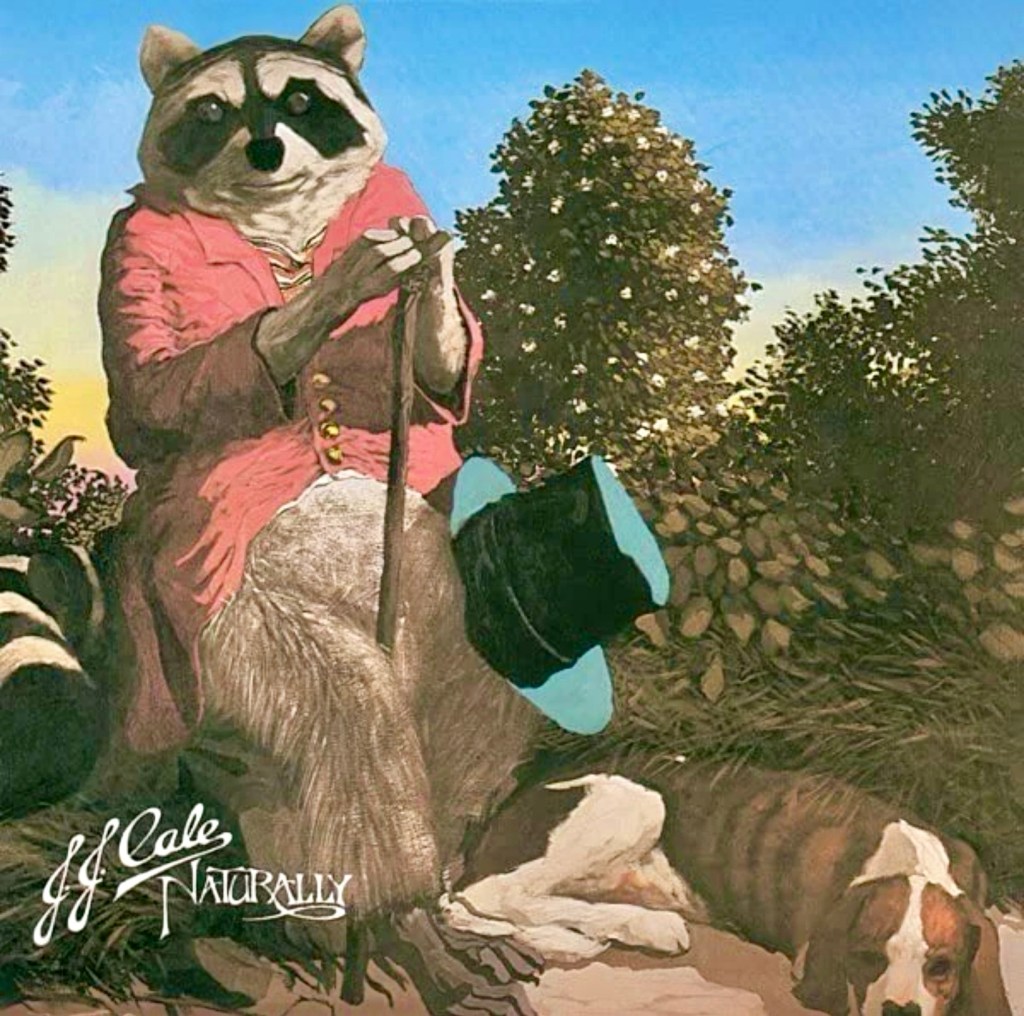
Firstly, Dear Enemy covering Bringing It Back from Cale’s 1971 (1972 in Australia) debut album ‘Naturally’. A regular in their live set prior to Dear Enemy’s success with their Top 20 charting single Computer One (1983) and album ‘Ransome Note’ (1984). Often I’d attend their Monday night gig with Uni mates at the London Tavern in Caulfield. The audio above is lifted (and enhanced) from a desk tape (party gig) in 1980 of Dear Enemy’s take of Bringing It Back (for the full version head to HRR’s Soundcloud). Guitarist, beret wearing and sometimes vocalist Chris Langford blows Ed Kollis’ original harmonica lines.
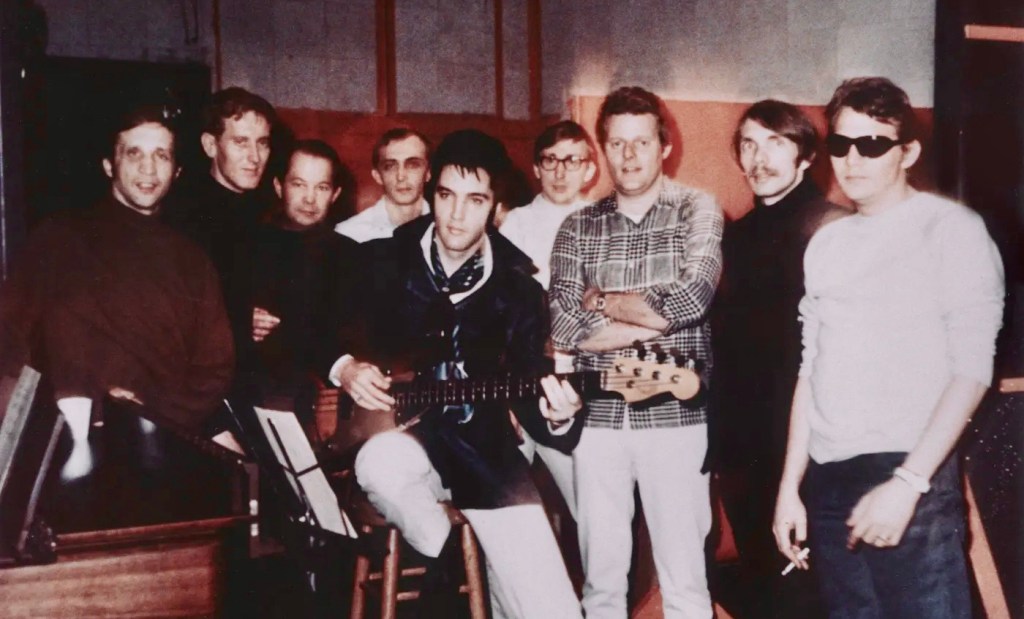
Ed was a member of the Memphis crew and can be heard blowing the harmonica on Elvis’ 1970 ‘Back in Memphis’ album. He also was known for his work as a producer and engineer. In the liner notes for J. J. Cale’s album ‘Naturally’ his name is misspelled as Ed Colis. Ed blows harp on at least three tracks Bringing It Back, Magnolia and Woman I Love. With Bringing It Back being his best work.
Cocaine – Stars
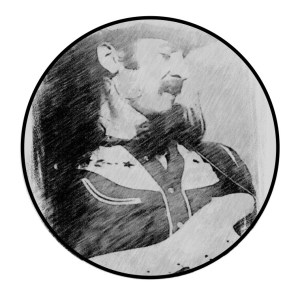
(2nd October 1954 – 6th May 1980)
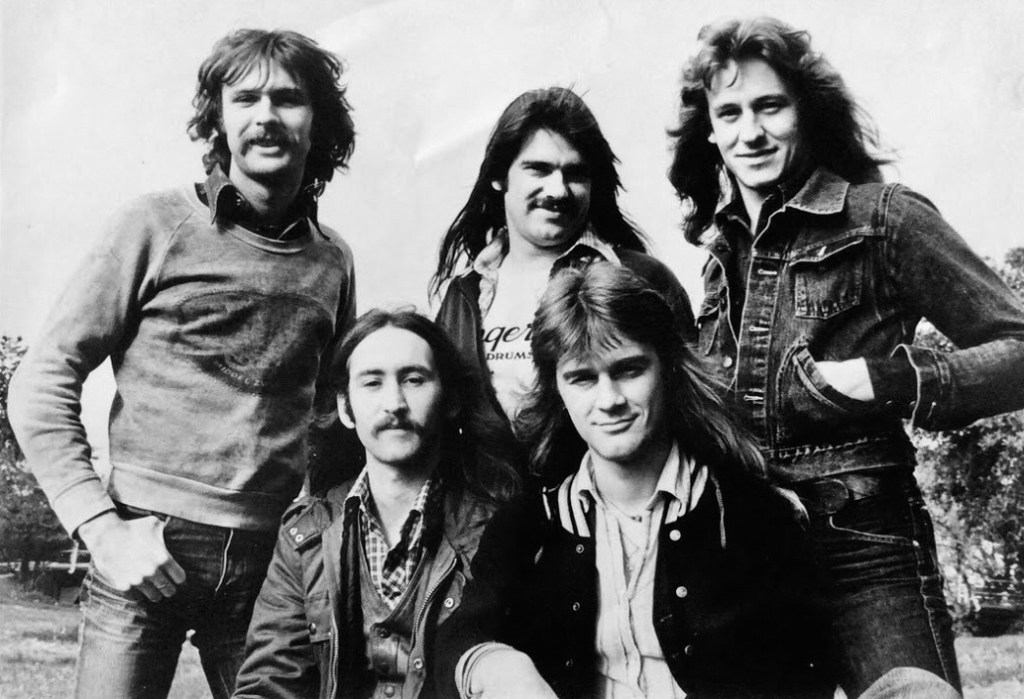
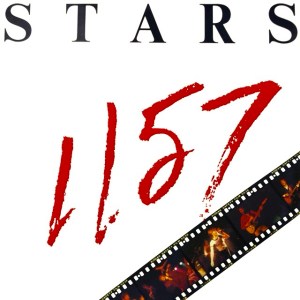
Next in line is a cover of Cocaine by Stars from their one and only live album ‘1157’. Released in July 1980 and dedicated to Andy Durant (songwriter and rhythm guitarist) after his untimely passing in May of that year. It was recorded live at Melbourne’s Bombay Rock in October the previous year. Andy had just been given the all systems go after his diagnosis (August) and treatment for a melanoma on his back.
In November, Stars disbanded due to poor sales of their second album ‘Land Of Fortune’. The following month Andy began session work on Richard Clapton’s ‘Dark Spaces’ album (also dedicated to Andy), but he had to leave before completion due to severe back pain, a result of a secondary cancer in his spine. Undergoing treatment once more, he fought, but would succumb in May of 1980.
The album was named (well…actually numbered) ‘1157’ as this was their one thousand one hundred and fifty seventh gig. Andy is blowing the harp riffs on Cocaine. His breath forever immortalised.
If your day is gone, and you want to ride on, cocaine
Don't forget this fact, you can't get it back, cocaine
She don't lie, she don't lie, she don't lie Cocaine
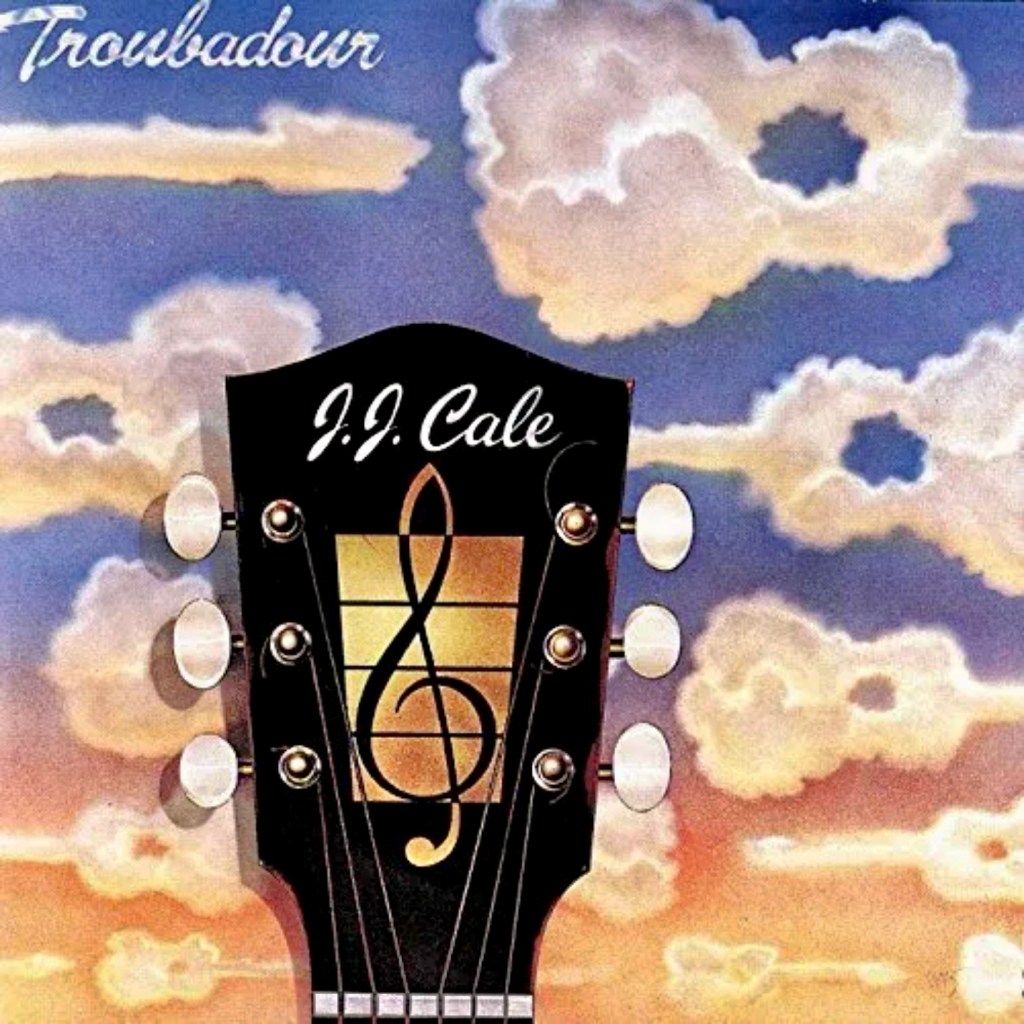
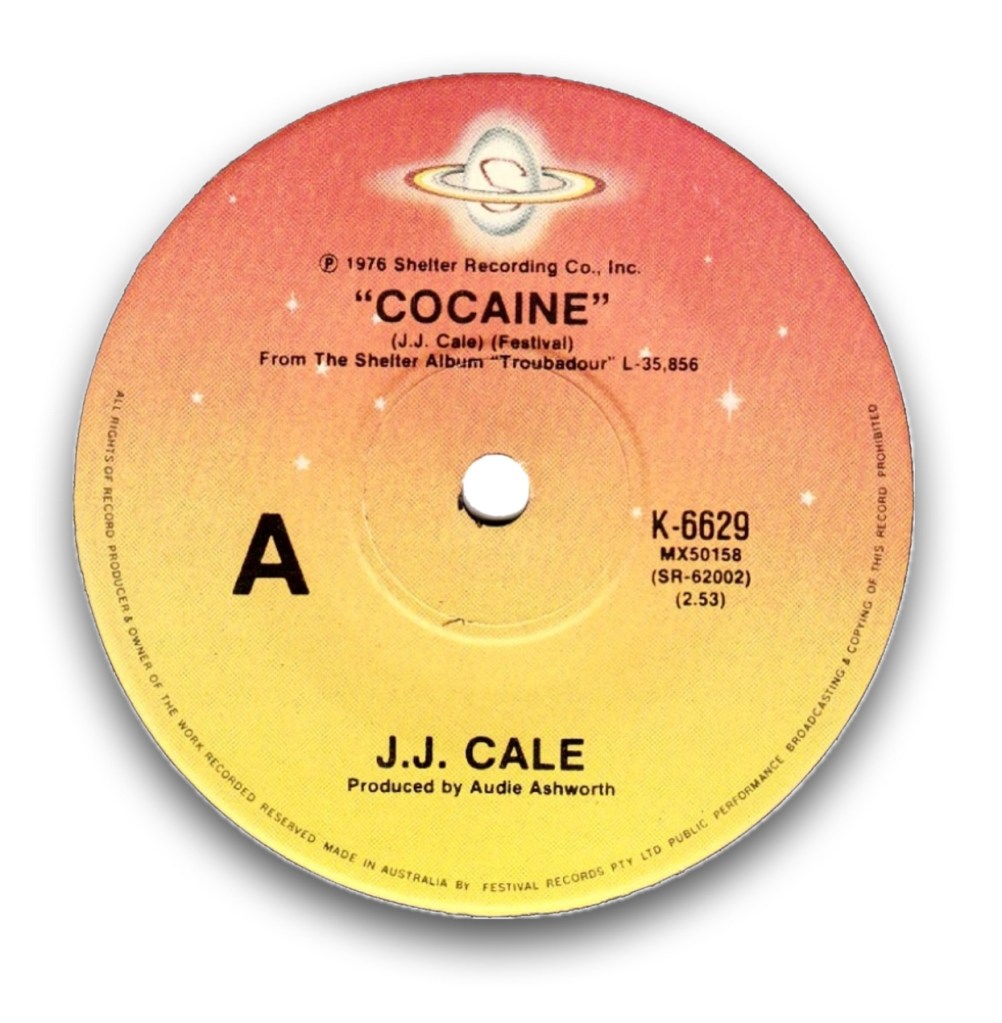
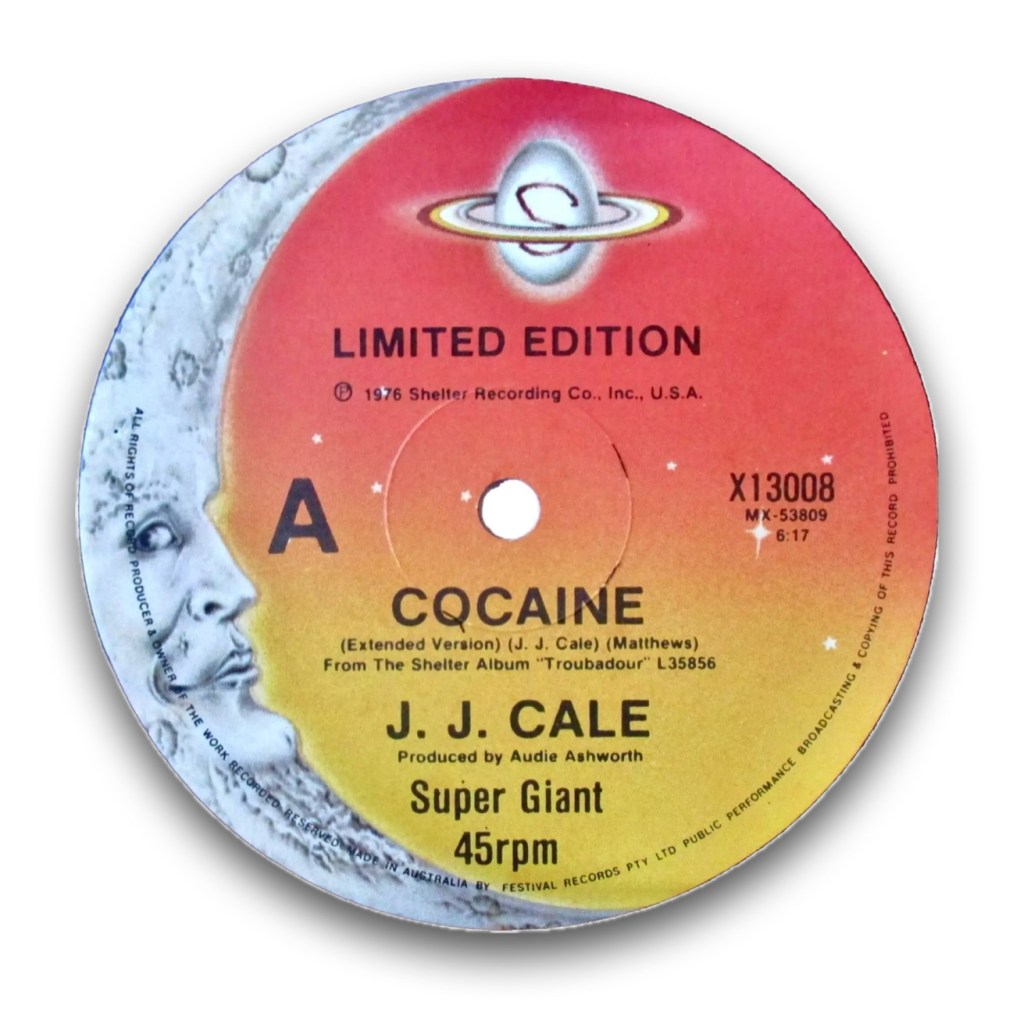
Cocaine was originally released in Australia (like America) as the ‘B’ side to Hey Baby. Both songs featured on J. J.’s Troubadour album. Management quickly realized a switcharoo was required with Cocaine becoming the main attraction. However the single never entered the Top 40 charts even with a switcharoo.

Crazy Mama
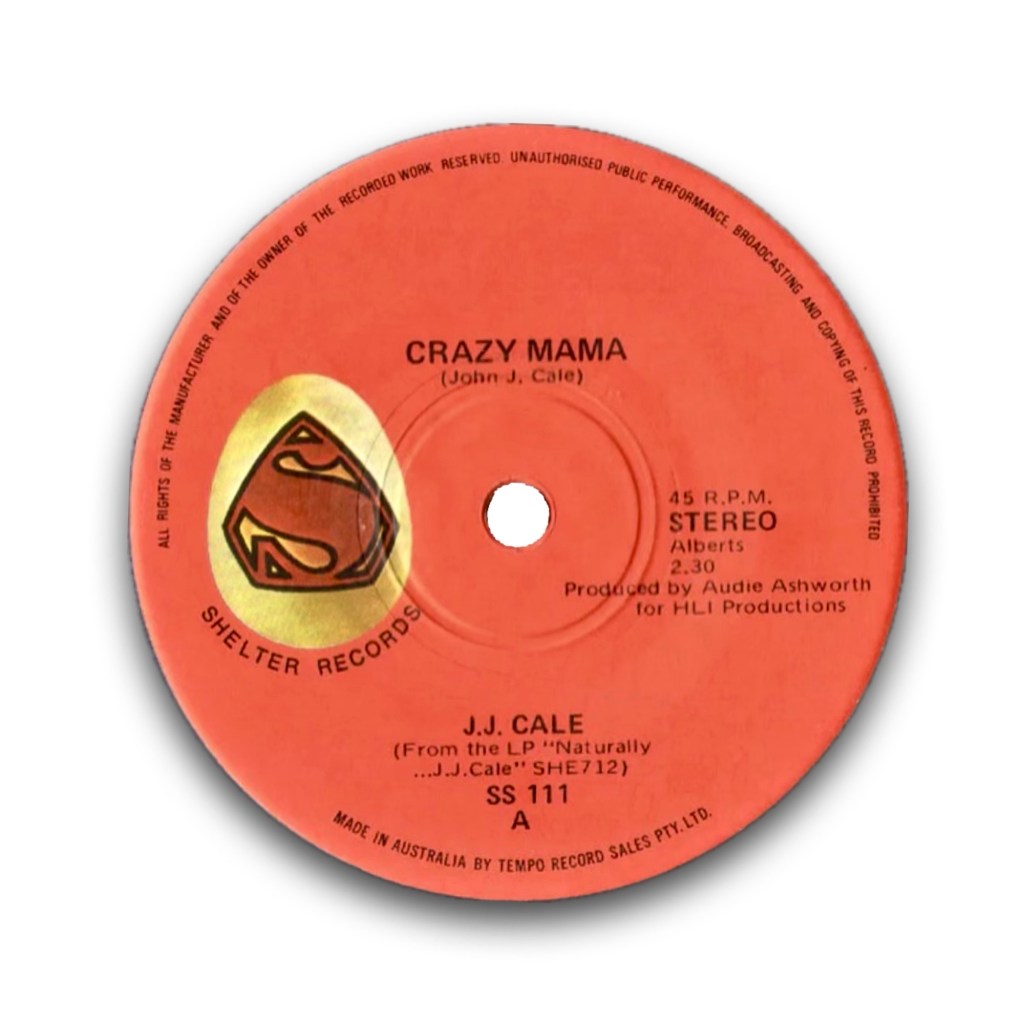
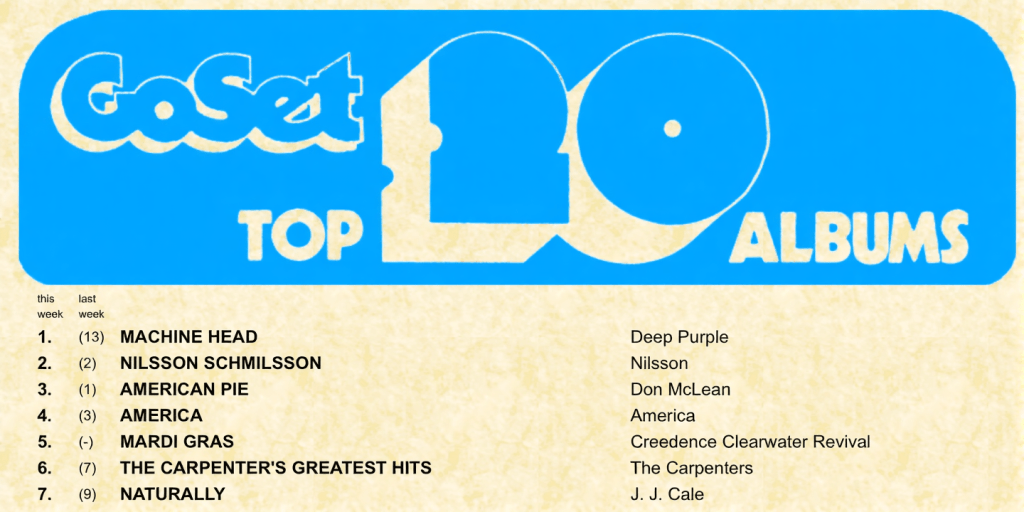
Crazy Mama was the most commercially successful single in both America and Australia. It too had its origins as the ‘B’ side. That was until a DJ in the states flipped Magnolia and placed Crazy Mama on high rotation. In Oz it was always the ‘A’ with the prize of the flip going to Don’t Go To Strangers. Crazy Mama peaked at number 22 in the States climbing even higher in the Antipodes hitting number 8 on the Go Set charts, and as high as seven on the Three Eggs Why Top 40.


Lies
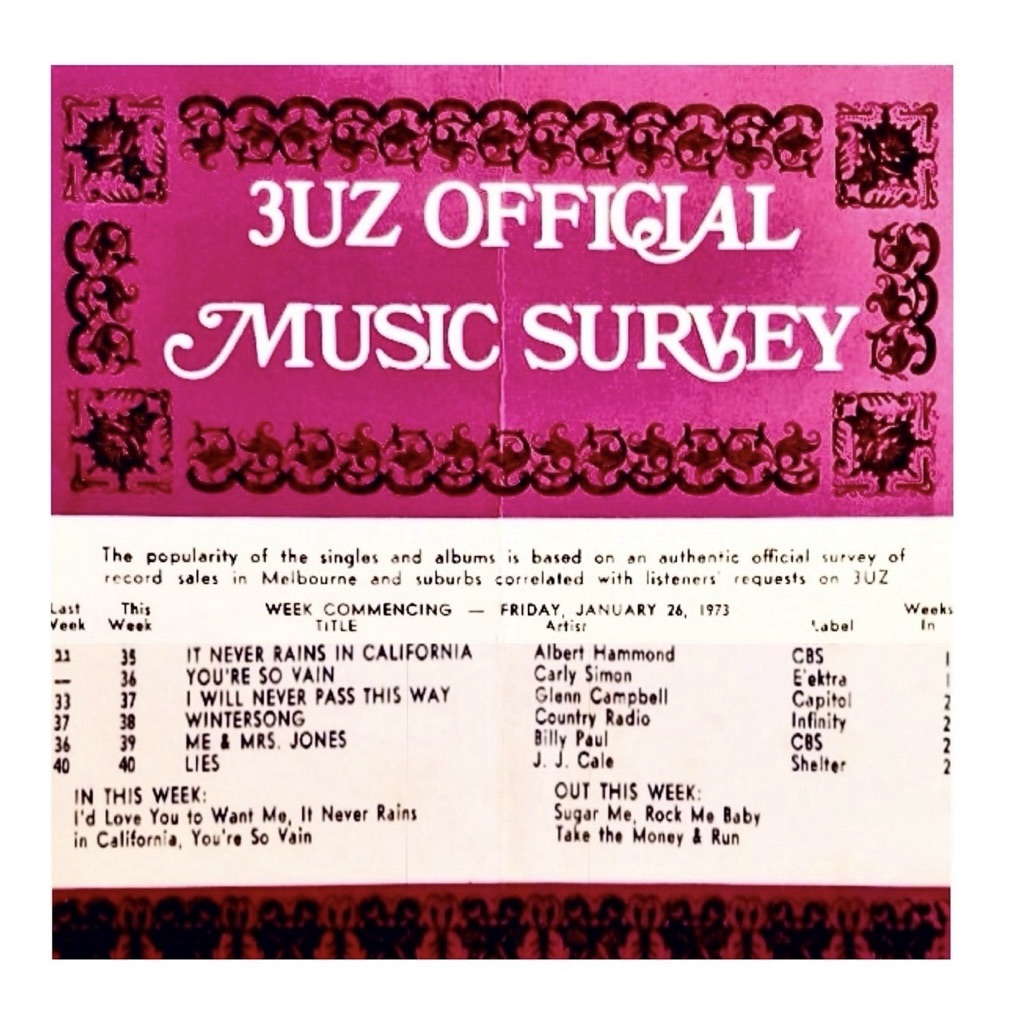
For some unaccountable reason, Wiki has Lies from the 1972 ‘Really’ album reaching the Top 10 on our charts. I can find no evidence of this being so, or that the single even enters the National Top 40. It did reside for two weeks at forty on Melbourne’s 3UZ charts in early 1973. The flip side to Lies was Ridin’ Home that featured Charlie McCoy’s harmonica. Interestingly (but not very funny), After Midnight/Crying Eyes from ‘Naturally’ cracked the Top 30 on the local 3XY charts in Melbourne in September of ’72.
In Concert
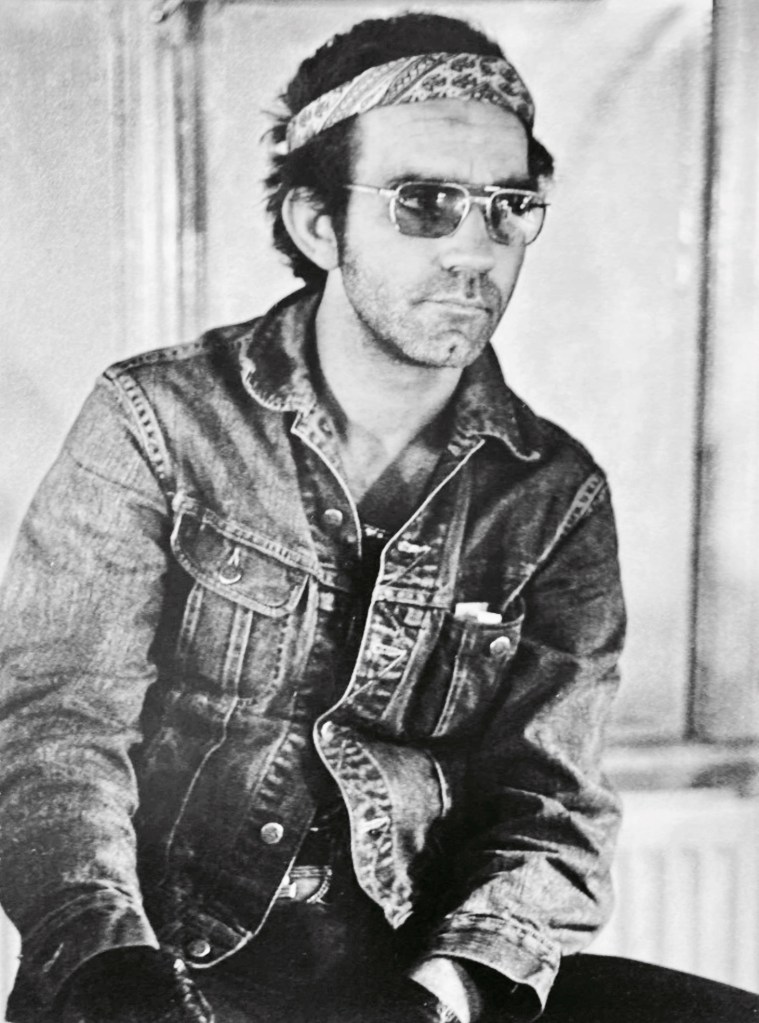
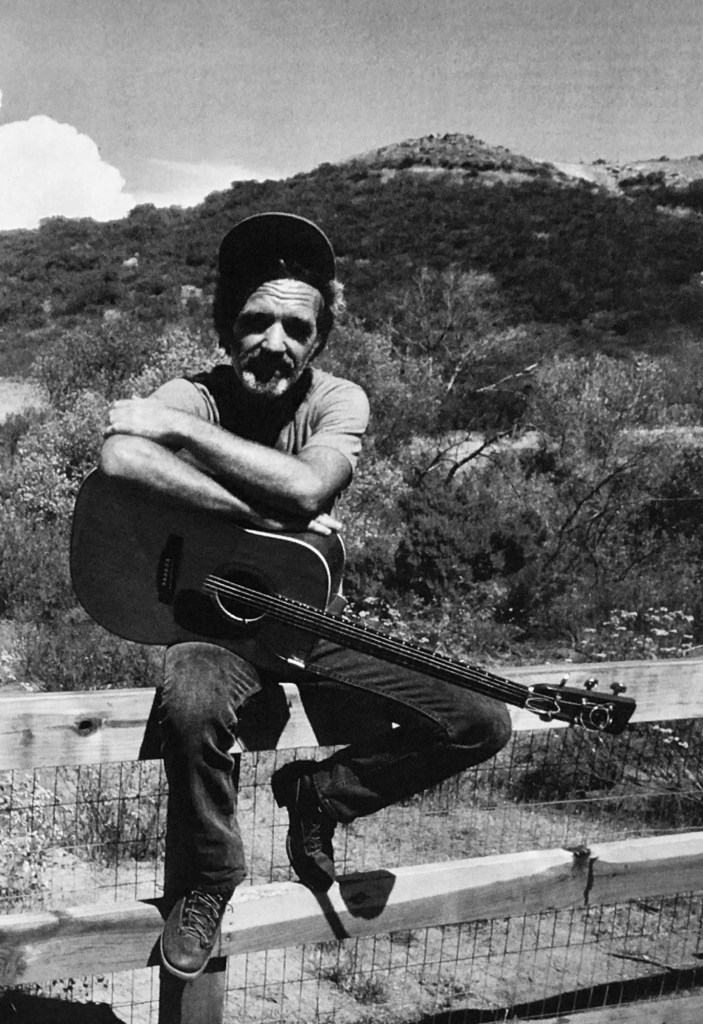
J. J. was a very private person who shunned the limelight. He viewed himself as a writer of tunes for other artists to perform. He didn’t tour outside the States too often having a phobia of flying, but his first international tour witnessed him down under in 1976. He appeared in Melbourne at the ‘house of stoush’, Festival Hall to a mellow acclaim.
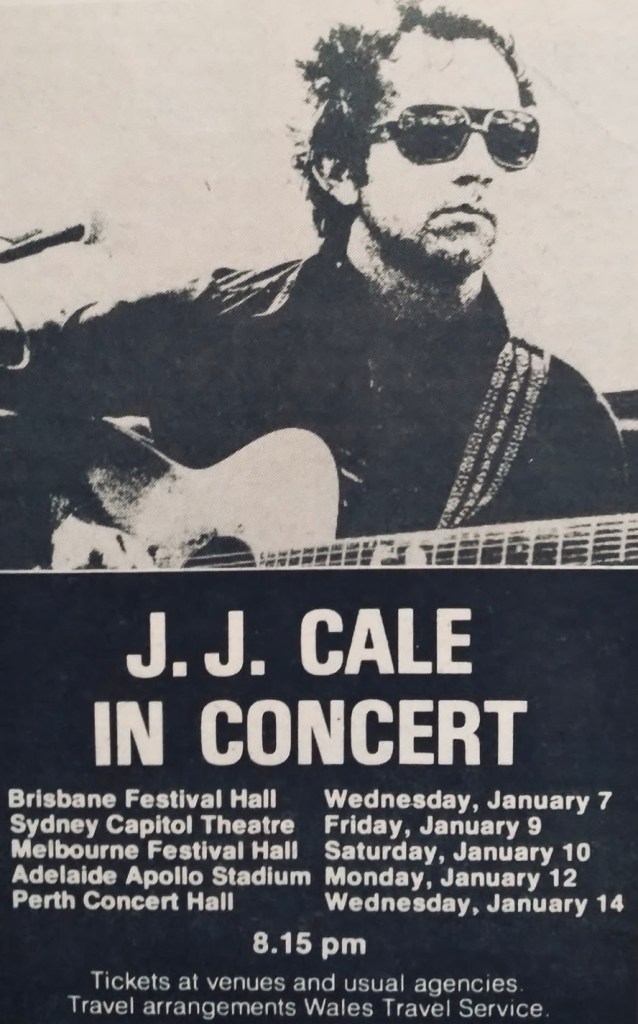
I didn’t locate a review, but here is a preview.
“J. J. Cale, the mellow guitar-picker and songwriter from Tulsa, will perform at Melbourne’s Festival Hall on Saturday, January 10 during his first Australian concert tour next year.” (The Age 1975)
Wasn’t a great interviewee either.
“If there were a Guinness Book of Rock Records (of achievements. that is, not plastic discs) Bob Hudson would rate an entry. Hudson, an escapee from the ABC rock station 2JJ, now going legit on the middle-of-the-road 2BL, says his greatest moment in radio came while interviewing the taciturn US singer J. J. Cale. Cale is one of those fellows who sing well enough but has trouble actually speaking. His answers to a series of questions from Hudson consisted of “Yep” and “Nope.” Exasperated, Hudson asked: “What’s the best question anyone ever asked you in an interview?” “That one weren’t bad.” replied Cale, And Hudson became the first interviewer to get Cale to string more than two words together.” (The Bulletin. Vol. 100 No. 5165 19 June 1979).
‘5’
J. J.’s highest rating album in Oz was his fifth album aptly named (numbered) ‘5’, which hit the marketplace in 1979. Not quite reaching its title on the National Go Set Charts, but rising as high as two on the local Melbourne 3XY charts. It just couldn’t quite hit the post first being pipped by a nose to Bob Dylan’s ‘Slow Train Coming’.
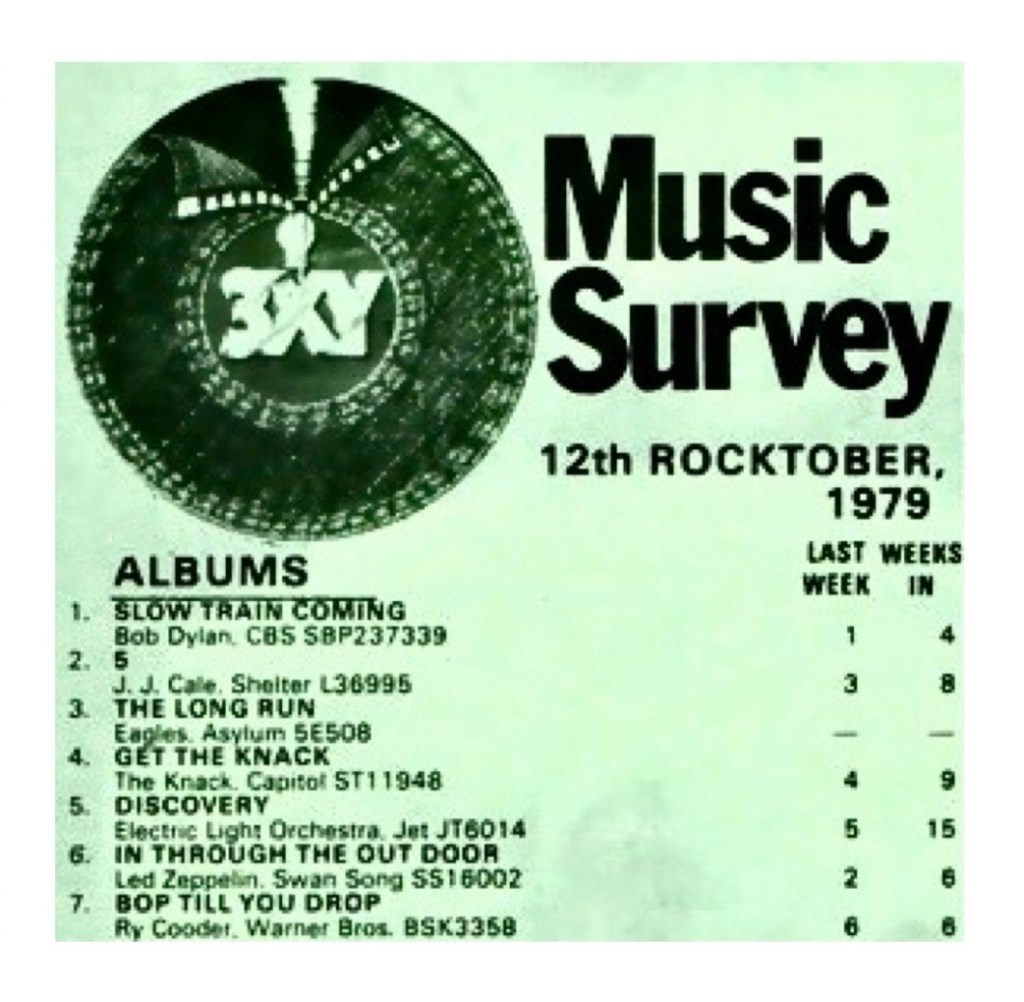
There was little information on J. J. in my newspaper travels, but I did come across this review of the album ‘5’.
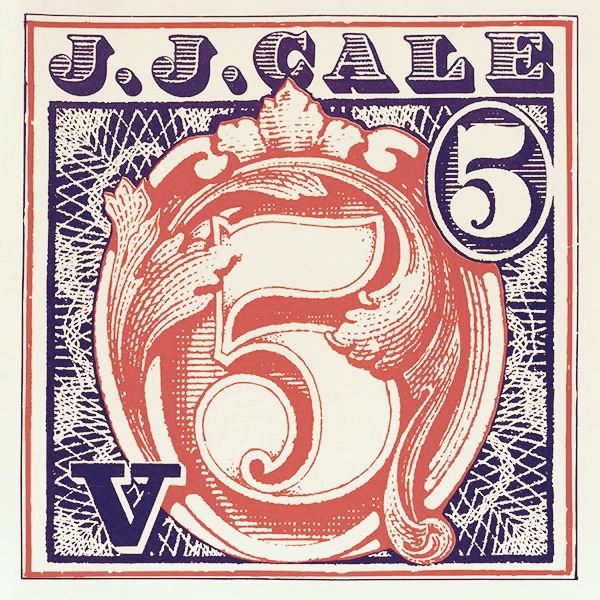
CALE AS IN THE BEGINNING
‘5′, J.J. Cale, Shelter Records, distributed by Festival.
“Listening to ‘5’ J. J. Cale’s latest and fifth album in a lengthy professional career, is like listening to a carefully arranged autobiography of the man’s styles of the past four albums worked into another dozen relatively simple songs. If you run out of new licks, rearrange the old ones, it beckons me to note. But that’s not necessarily true of J.J. Cale, whose singing, songwriting and guitar-playing are better known for their sedate, unassuming qualities. Writing in a predominantly 12-bar blues format utilising mainly minor keys with minimal chord changes, combined with his fairly straight forward guitar picking, Cale is however bound to sound repetitious at times. Cale’s fourth album, ‘Troubador’, which saw him making more use of his electric guitars, was the album that broke his cult image and exposed him to a wider audience, particularly with the single off that, ‘Cocaine’ (which is still a popular ‘hit’ spin at discos).
‘5′ does not exploit that commercial hiccup but rather shows Cale as he was in the beginning. This could quite well be a follow-up of any of his first three great albums, ‘Naturally’, ‘Really’ and ‘Okie’. and let others successfully imitate his style (Dire Straits more recently comes to mind) while he just keeps on playin’ it. Come to think of it, J.J. Cale would probably still be a cult item and people like myself would not have come to hear of him if it wasn’t for other people’s keen interest in his unique style, particularly Eric Clapton who in 1969 cut his first solo album and included Cale’s ‘After Midnight’ (off ‘Naturally’) after listening to a tape (via Carl Radle, Cale’s regular bassist and who plays on ‘5’). That song became a Top-10 number and opened a lot of doors for the singer-songwriter. The songs on ‘5’ didn’t take long to grow on me and it was fun matching up some of the songs which have an uncanny similarity with songs off ‘Naturally’ or ‘Okie’. If I was to line up all the Cale albums and see which ones I would tend to reach for more often, it would still be those two oldies plus ‘Really’ — sort of timeless satisfaction from those. Best songs on this include ‘Mona’, ‘Lou-Easy-Ann’, ‘Don’t Cry Sister’ and ‘Katy Kool Lady’ ”.
(Revue by Luis Feliu – The Canberra Times, Fri 17 Aug 1979)
Not So Special Special
On December 23rd of last year, a pre-record of Huff’n’Puff went to air on Peej’s The Imaginary Friends Show 3MDR (1hr. 32 mins in). A not so special Christmas Special that featured J. J. Cale tunes. A taste of coastal chill down on the Bass Coast.
We opened with Cocaine by Stars. Name That Riff was Crazy Mama, followed by Larry Carlton’s version, with the incredible Terry McMillan on harmonica. We doubled this up with Don’t Wait by J. J. himself and Terry’s again blowing the Tulsa Triller. From Short Stop was Call Me The Breeze by Blues Traveler and we closed the show with Bringing It Back by the man of the moment J. J. Cale, and Clyde by Dr. Hook (sadly it was cut off – sorry about that mum).
The link (above) will only be available for a short time. So here’s Name That Riff for all time, or until I exit (stage left).
Please check home page for copyright details.
 Harmonica Riff Raff
Hi Shep.
Loved the podcast and exchanges with you both. Great vibe. Christmas was a nice timing too. Good to hear you speak of your year and how it went well. Also, you putting your voice to the words you have been writing about felt nice to listen to too.
I followed through to YouTube and took a look at the husband and wife team of Tin Town. There was an hour live performance and chat on a radio show which was good to listen to. Their insights into the songs they wrote over the years. The chords that they used a lot of G, C and D I tend to use for my songs too. A capo on the guitar changes the key, but the notes you can hear through the chords’ structures give small melodic tunes that I find myself finding as I write songs as well. So it was nice to find peace in their way of putting songs together.
Thanks for the blog Shep. Very good read and, as ever, leading me to listens never heard before. All the best for 2026 to you and your family.
LikeLiked by 1 person
Glad you enjoyed Gray. G C & D with an Am thrown in too? Interested to read you had a post from the past placed in draft. I too had this same phenomena. ‘Song For Winter’ had to be republished! It wasn’t me who moved it there! Annoying! All the best to you and your family in ‘26. S
LikeLiked by 1 person
G, C, D, Am, with an Em and F thrown in with various little movements of add on and omission notes are the style I like to write songs around. Play the lower E, A, D strings with a plectrum and stroke the three lighter strings above with the middle, ring and little fingers to get at a different rhythmic chords and produced melodies. That’s how the 6 strings’ melodies interact and therefore show themselves into existence. And onwards into controlled tunes. I can’t produce music tunes with just my mind. I have to hum out loud. Or the guitar sounds always offer them up.
I suppose you have similar applications with using your breathing, synergy of chosen notes and force of produced ‘wind’ for harp techniques that bring out unique styles of playing.
Decided at start of January that I’m not going to be doing any blogs for quite a while Shep. A few months at least being away from the writing of them. Concentrate on getting a load of new songs done and dusted. Need to focus on the YouTube stuff too. Will dip in to read the bloggers I follow as usual. Just need a break from it all I suppose. Again…..Nice to listen to that podcast. Made me smile a lot with you two guys and your obvious friendship. And love of similar music. Both of your musical knowledge base is phenomenal.
I’ll check out ‘Song for Winter’. Be tomorrow now as it’s closing in on midnight over here. 🌘🌑🌒 Cheers Shep.
LikeLiked by 1 person
Don’t bother Gray you’ve already been there before somebody placed it back in draft mode!
LikeLiked by 1 person
Okay. Cheers Shep.
LikeLike
Hey Shep, Thought the huff’n’puff Christmas special was fantastic, I think “the Andy Durant Memorial Concert” DVD is one of the best in our collection, just looking at it, it also has “Stars live at Bombay Rock” might have to chuck it on
Cheers Loz & Tan from Anglesea
LikeLiked by 1 person
Hey Loz & Tan. Glad you enjoyed the not so special. Ocean Deep still gives me goosebumps. Hope all is well in your neck of the woods with fires and all? All the best. Shep & Pamcakes
LikeLike