

Harmonica Riff Raff, located in the beautiful Bass Coast acknowledges the Bunurong clan of the Kulin Nation as the Traditional Owners and Custodians of these lands and waters, and pays respect to their Elders past, present and emerging.
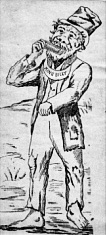
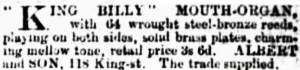
The King Billy mouth organ was manufactured by C. A. Seydel Söhne in Klingenthal, Germany for Albert and Son of Sydney, Australia. The branding tapped into the Australian identity through our indigenous people as did Albert’s successful Boomerang mouth organs. However, it’s time in the market place was short lived perhaps due to the names questionable origin. Looks like the King Billy was a sixteen hole (32 reeds) double sided model with the opposite side being in a different key to the other. There doesn’t appear to be a physical specimen in existence, that is unless you have one?
Gorget
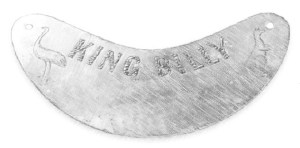
The Gorget or King Plates, the crescent shaped breastplate that was suspended from King Billy’s neck in the advertising, does have a murky background of racial undertones. The indigenous had elders, but they didn’t have kings and queens like the white man. These honours were given by local farmers or station owners to usually the most compliant aboriginals and were a symbol of white man’s authority. There were many indigenous men granted the so called honour of being titled ‘King Billy’ throughout Australia, and it should also be noted they were not their indigenous birth names.
Mordi’s King Billy
Having resided in nearby Parkdale and been a fully fledged ‘Mordi’ boy by playing for the Mordialloc Football Club (VFA daze), I thought we’d take a gander at our local indigenous man with the moniker King Billy. He was renowned for propelling both the returning and non returning boomerangs with great skill and finesse.
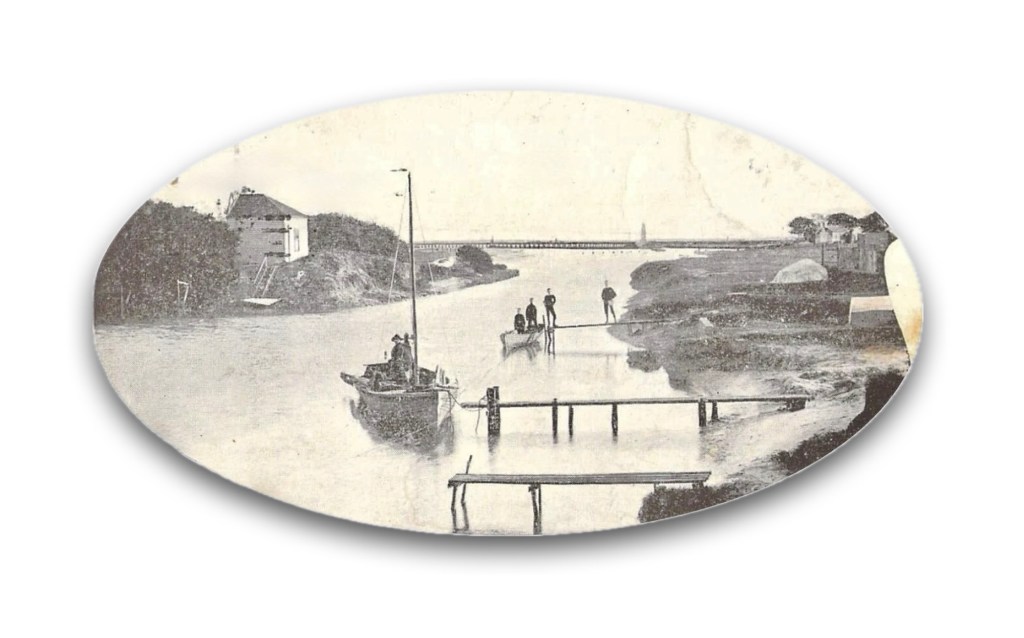

King Billy and Queen Eliza were members of an aboriginal tribe whose head quarters or camping place was Mordialloc. There were also Jimmie and Martha………………………………………………Their favourite place at holiday times was between the creek and Rennison’s Hotel, on the beach side of the Point Nepean-road. Many a time have I seen them throw their boomerangs from the creek up the hill to almost as far as the hotel…….Yours, &c., Brighton. THOS. MACPHERSON (The Age Sat 15 Dec 1934)
I can vouch that’s a bloody long throw! As a paperboy for the Mordialloc Newsagents, I would ride my bike from the creek, up the Main Street hill (seemed like a mountain with the papers and my short pegs) to the hotel and beyond. There is some distance between the two!
The Mordialloc mob’s usual roaming beat in the eighteen fifties and sixties, was from the late William Lyall’s Yallock property at Westernport, all the way to Mordialloc. There is mention of the hotel in my tale of the nearby Bridge Hotel. More on Rennison’ Hotel later. Not only could King Billy hurl a non returnable boomerang, but he was pretty hand with the returnable model too, as outlined by the Reverend B Danks.

“King Billy”, of Mordialloc, was quite an institution half a century ago and more. Very few outdoor public functions were complete without him, and wherever he went he was heartily welcomed, especially by the boys and girls. Somewhat short, but not so short, as he seemed by reason of his girth and width of shoulders; broad of face, spreading nostrils, large mouth, retreating forehead, bushy beard, and black hair, mingled with silver threads, together with his genial countenance, made “Billy” an interesting figure. But his great attraction lay in his skill with the boomerang. I have seen many pure-blooded aboriginals and half-castes throw it, but very few could equal his cunning in its use, and none surpass his skill. When it left his hand it seemed still under his influence as ho watched its flight with swaying body, much as a bowler sways as he watches his ball curving in towards the jack. It followed the undulations of the ground, skimmed the surface of a pond, and finally rose high into the air and curved in on its return journey to fall at his feet. (The Methodist, Sydney Sat 21 June 1919)
Here’s a portion from an official government report on the last remaining Mordialloc aboriginals that mentions King Billy’s Eliza.
Mr. J. W. Randell, who has now charge of the Aborigines at Mordialloc, reports, in June 1872, respecting the Aborigines under his care:—The number of Aborigines at Mordialloc under my charge, and who receive aid from me, is four-Jimmy and Nancy, Peter and Eliza. Eliza was married to the king of the Mordialloc tribe: he is dead, and she is married again.…From the Report of the Board for the Protection of the Aborigines in the Colony of Victoria.8th report 1872
Rennison’s (Mordialloc) Hotel
Thomas Rennison (1824 – 1905) arrived in Australia in 1849 from Great Driffield, Yorkshire. In 1855, he applied for a Publican’s Licence to operate the Lord Raglan Hotel in Richmond. In 1858, he was also the publican of the Victoria Hotel in Collingwood. Later in 1860, he opened the Schnapper Point Hotel in Mornington. Thomas Rennison sold up in 1873 seeking a quieter lifestyle, however this didn’t suit. So once again he applied for a Publican’s Licence, taking over the lease (seven years) of the Mordialloc Hotel in 1875. A carpenter by trade he engaged his skills and replaced the old building with a two story brick edifice. Later, when the licence was renewed, Thomas renovated and extended the hotel by adding two wings that contained additional bedrooms, a new drawing room, dining and billiard rooms.
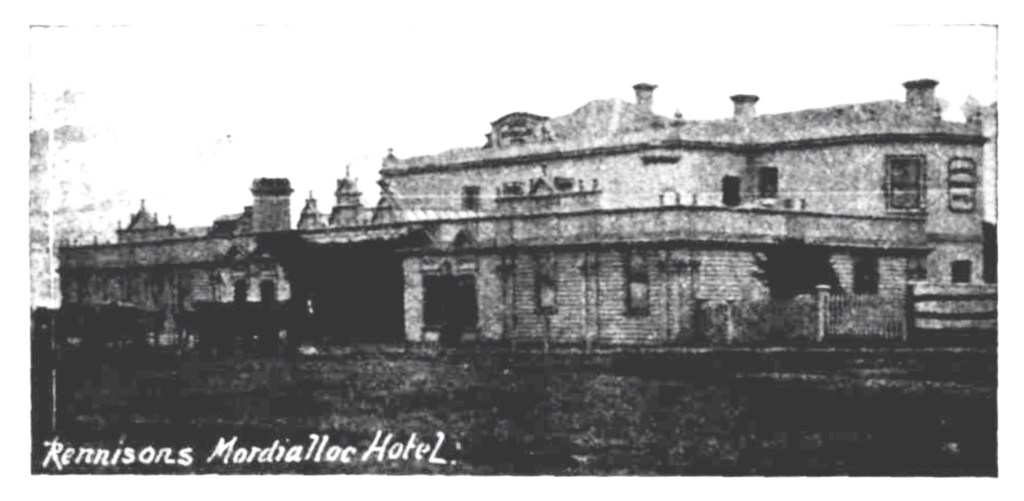
The Mordialloc Hotel was originally constructed by Alexander McDonald in 1853. At one stage the hotel operated as a coach office for Cobb & Co. Four horse coaches traversed from Melbourne to Frankston daily and it was at Mordialloc where a team of fresh horses were harnessed.
Adjacent to the hotel, Thomas built his marine brick villa with four stables on three acres of land and christened it Driffield Lodge.
Thomas Rennison was a fine horseman (riding and training) and a prominent huntsman with the Melbourne club. In his youth he had been attached to the stable of the famous Sir Tatton Sykes riding out many of the Yorkshire baronet’s finest. Thomas even trained and rode a winner at Flemington in 1886, when he was 63 years old. On the Queens Birthday, at the Melbourne Hunt Club meeting at Flemington, he won the Welter Flat Race on Maroney.
Mr Rennison was also a first-class amateur rider, and in 1886, rode a memorable race on Maroney, when that horse beat the favorite. Aristocrat. The victory of the “veteran,” for he was then over three score years, was loudly proclaimed by the public. (Weekly Times Sat 20 May 1905)
Maroney, ridden by Mr. T. Rennison, of Mordialloc, went to the front as soon as the flag fell, and, though he swerved half-way across the course, he led the held a merry dance to within the distance. Here Aristocrat made a great effort, but by sheer plucky riding the veteran horseman landed Maroney a winner by half a length. The victory was a very popular one, both rider and horse meeting with a round of appluuse on returning to scale, which was repeated after the “all right” of the weighing officials. (The Argus, Tuesday May 25, 1886)
In one report it was suggested a large section of the cheering rose from the Bookmaker’s section – as they would when a favourite is beaten.
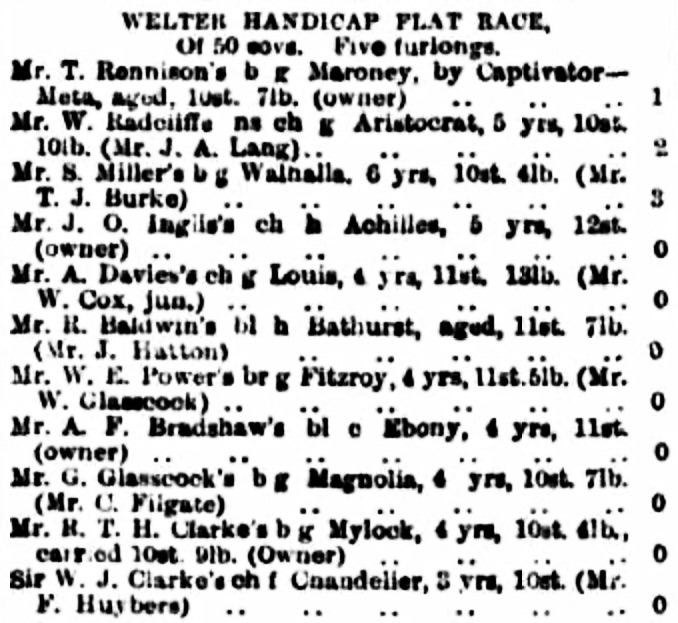
In his day Mr Rennison owned many racehorses, including Maroney, Salvo, Sorcerer, Witch of Endor, Driffield and Torpedo. From the latter speedy mare he bred Detonator, Destroyer, Sparklet and Aggressor, each winners. (Weekly Times Sat 20 May 1905)
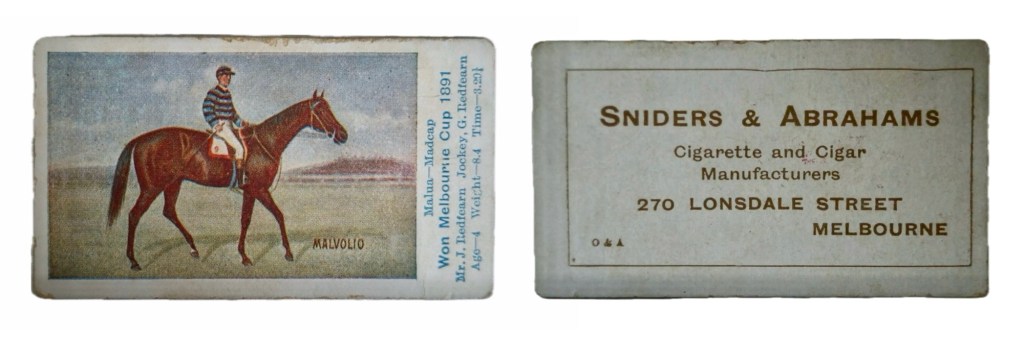
Detonator, Destroyer, Sparklet were all sired by the Melbourne Cup Winner of 1891 Malvolio. He even had a filly Lady Brassy by Malvolio out of his mare Torpedo. Torpedo was out of a Neckersgat mare. Neckersgat had sired the 1887 Melbourne Cup winner Dunlop. I’m pretty sure Thomas had his sights set on success in a Melbourne Cup. This double staying cross may have resulted in a slow horse, as it appears Lady Brassy wasn’t highly successful.
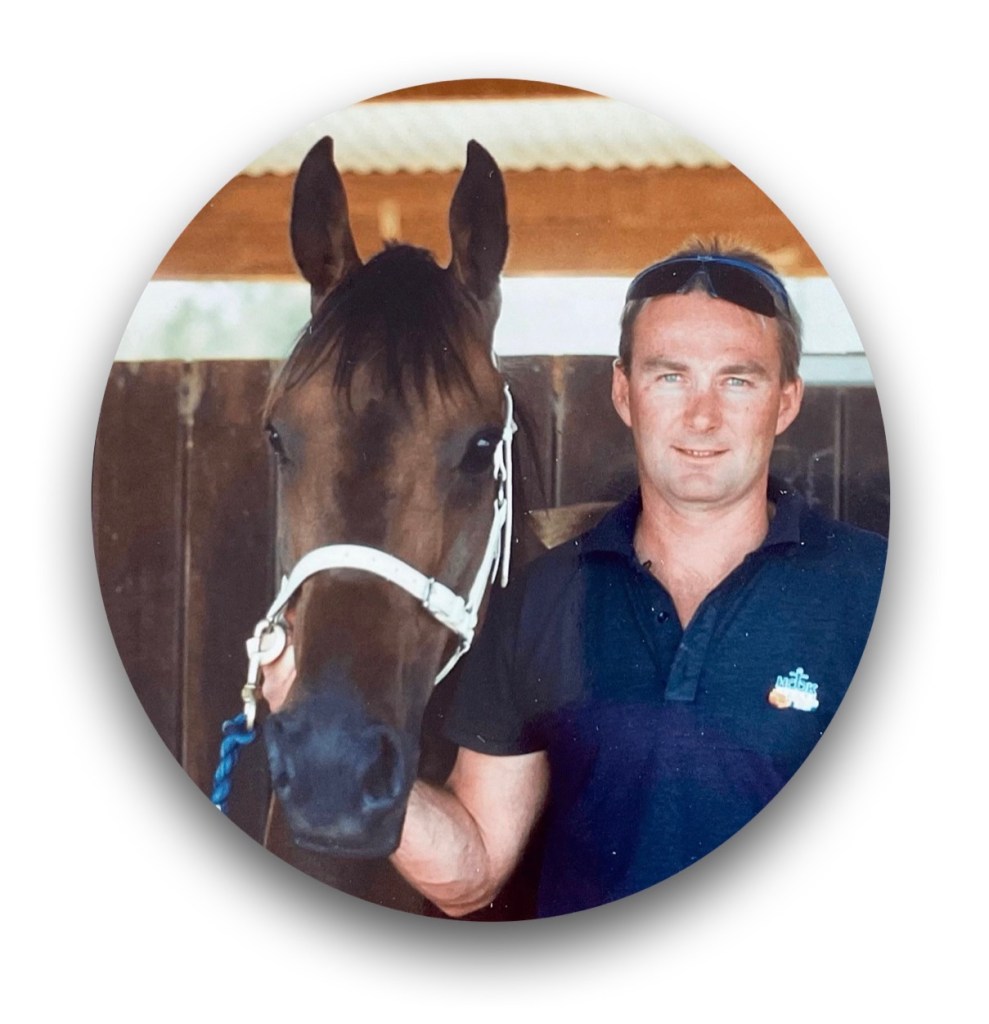
I also have a personal connection with horse racing in Mordialloc having been involved with horses at the Epsom training track and even with the rushing and swimming of horses at the local beach. I have fond memories of riding the Macca (macaroni – pony) and Sterlo (Sterling Lad) down past the Mordy football ground to the track. However, having experienced the racing industry close at hand, my empathies now solely lie with the welfare of these noble creatures.
Harry Stanton
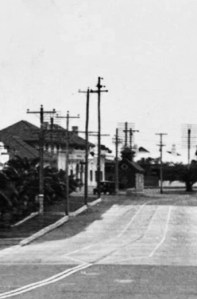
In 1941 Albert Stanton purchased the Mordialloc Hotel, when he passed away in 1953 (perhaps a couple of years earlier) Harry, his son grabbed the reins. Unknown to me until researching this article, Harry was a fine Mordialloc footballer (Federal League) and is named in the ‘Team of the Century’. He ran the hotel well into the seventies and I have to say each beer I downed at the hotel was as refreshing as the next.
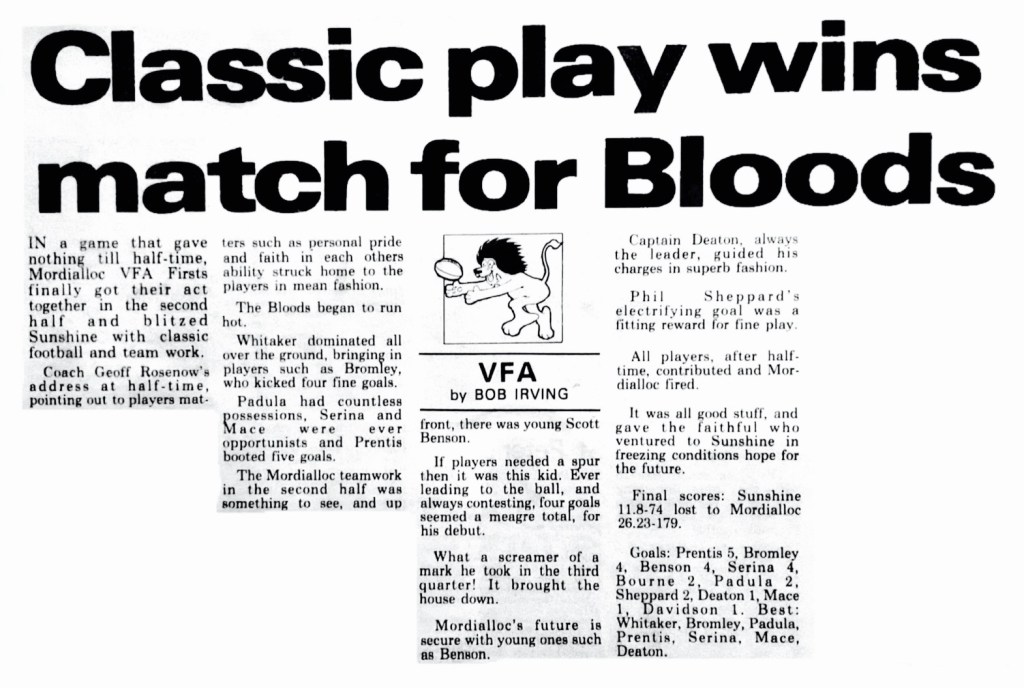
I didn’t make the team of the century, but I had a couple of seasons for the Bloodhounds until a neck injury curtailed any future ambitions. Here’s a clipping from my playing days at Mordialloc. The electrifying goal had a backstory that Huff’n’Puff listeners would be fully cognisant. It concerns an old, long handled fridge and an empty beer can stuck in its motor that was stationed in the trainer’s bunker.
Double Sided Boomerangs
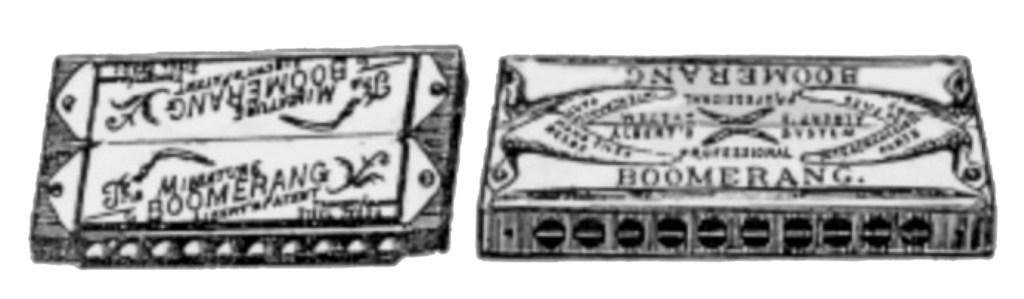
The King Billy mouth organs, as mentioned earlier, only danced on the earth for a short time and would be succeeded by The Miniature Boomerang and the Professional Boomerang (20 holes forty reeds times two). These two (no pun intended) haven’t surfaced either to the best of my knowledge.
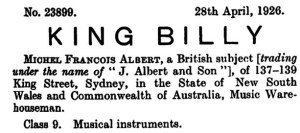
Interestingly Frank Albert trademarked the King Billy again in 1926. Perhaps there were thoughts of rebranding Seydel’s double sided The Bandmaster (below) as a King Billy for the Australian market. It puts pay to the earlier idea they were quickly rebranded due to the name being on the nose.
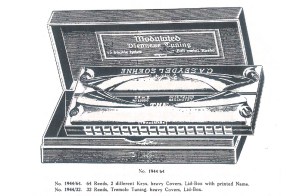
Please check home page for copyright details
 Harmonica Riff Raff
Great read as ever Shep. Nice to see you in past times in the photograph. Also, delved deep into these words here. Your storytelling runs smoothly and is always a truly interesting recording of historical perspectives covering many themes. Oh! By the way, Facebook (always adverts nowadays) threw up a harp player by the name of Will Wilde. I’m sure you probably know of him. But worth mentioning in case not. Amazing player.
Cheers Shep and hope all is going well in this new 2026 daily ride.
LikeLiked by 1 person
Thanks Gray…yeah Will’s pretty crazy (not too sure about his specially tuned harps)…you should check out his sister Dani.
LikeLiked by 1 person
Cheers Shep. I did check out Dani. Great guitar player. Vocals too. I reckoned you knew of Will Wilde. And his quirks re: specifics like the type of harp. I can’t imagine a harp player that isn’t within your radar system. Cheers Shep and good wishes.
LikeLiked by 1 person