

James Donnelly 1865 – 1937
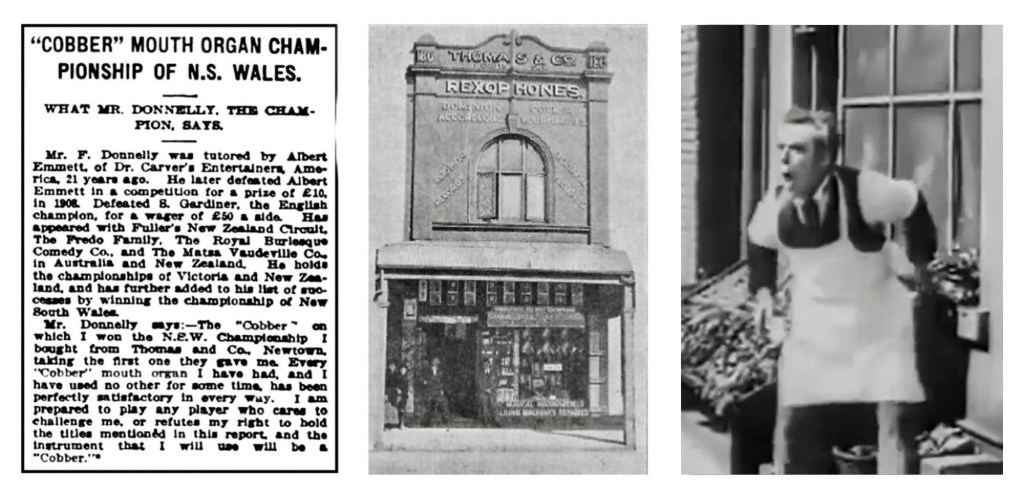
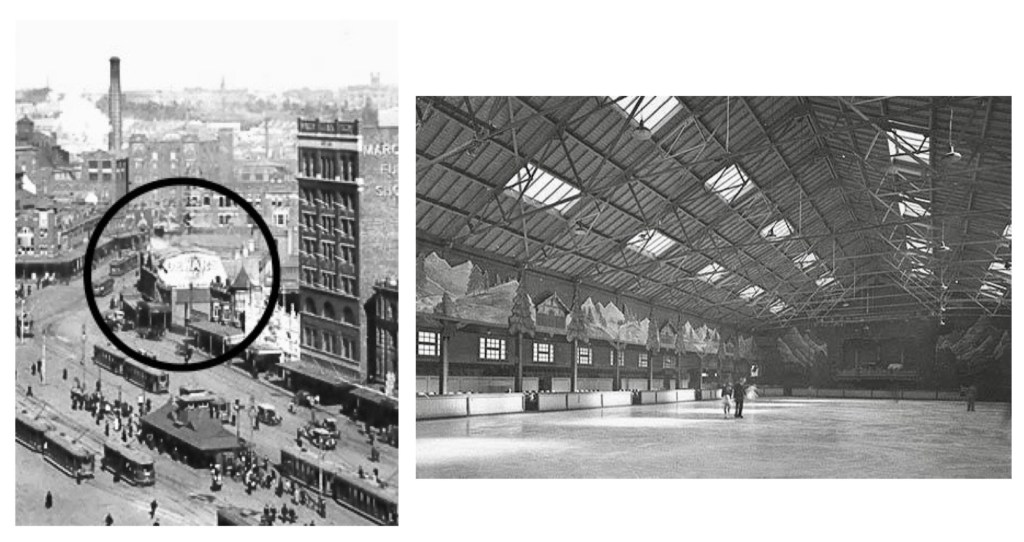
On the 18th December 1913 at the West’s Glaciarium (a skating rink and picture theatre), the Cobber New South Wales Mouth Organ Championship was held and won by a Mr. J Donnelly. Although the advertisement above has printed his initial as ‘F’ the one below is correct. Thanks to Ray Grieve, who in his revised publication of ‘Boomerangs & Crackajacks’ identified the man in question as American, James Donnelly.
James Donnelly was born in 1865 in Boston, Massachusetts, USA. The American visited Australia and was a member of the George Willoughby’s American Musical Comedy Company. In one of their plays, the ‘Mayor of Tokio’, James had the feature role. The theatre critic for the Sydney Referee (6th May, 1914) wasn’t too complimentary of his performance. “Mr. James Donnelly as the Mayor of Tokio, is the one weak spot in an otherwise exceptionally good cast. His enunciation is so indistinct that it is almost impossible to catch the meaning of his lines, his acting lacks ease and he seems to have no settled conception of the character he impersonates.”
I don’t think he was too enamoured with James’ acting!
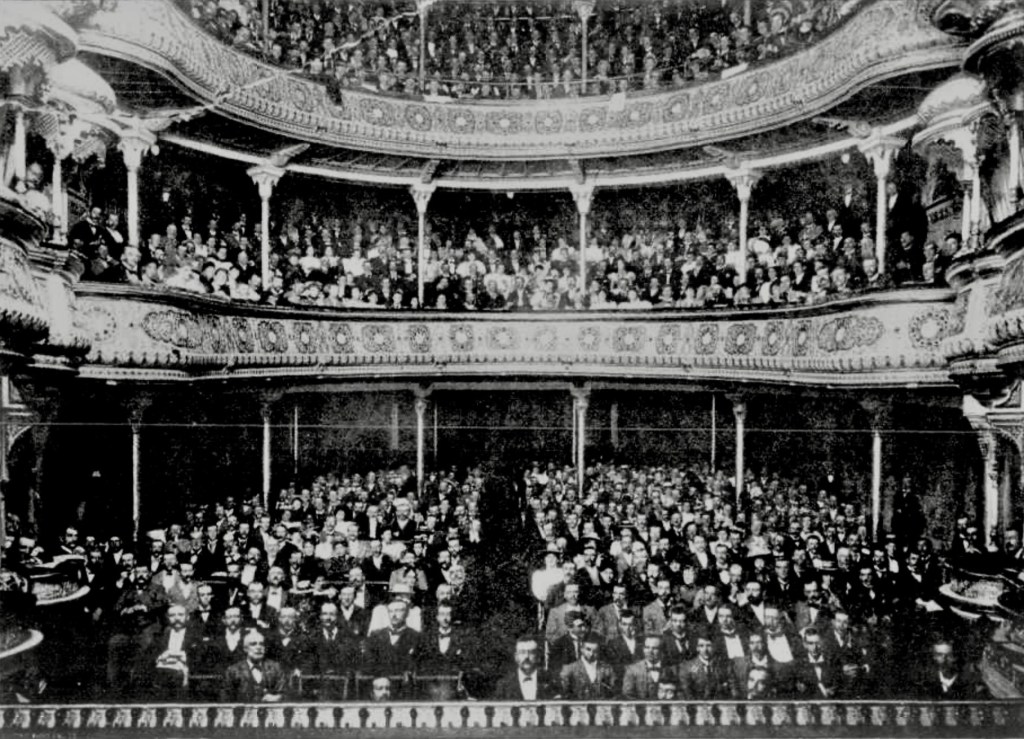
James Donnelly also scripted his own play titled ‘Father’s Nightmare’ that was performed in the Palace, Sydney in July of 1914. The story deals with the reformation of a drunkard by making him imagine that he has stumbled from a cabaret into the infernal regions. Of course James had the starring role as the Father.
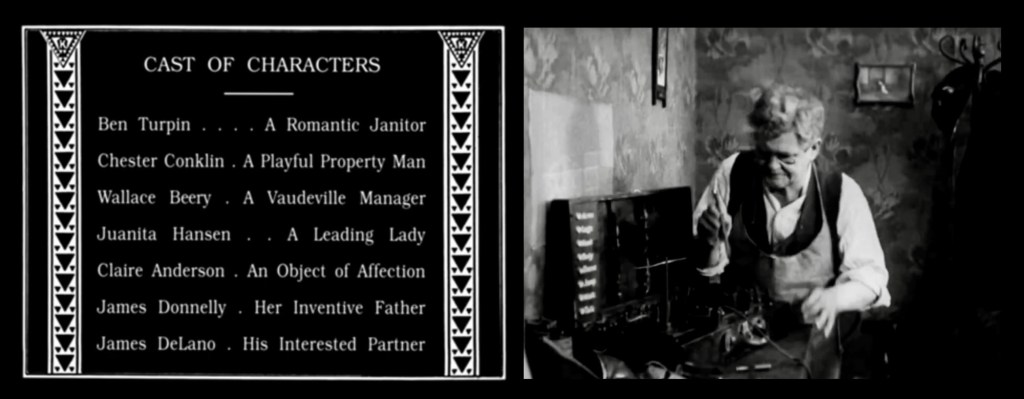
James later became well known for his support roles in silent movies alongside Larry Semon and Oliver Hardy (Laurel & Hardy). Possibly a good medium for him based on the theatre critic’s earlier review. James passed this mortal coil on April 13, 1937 in Hollywood, California, USA.
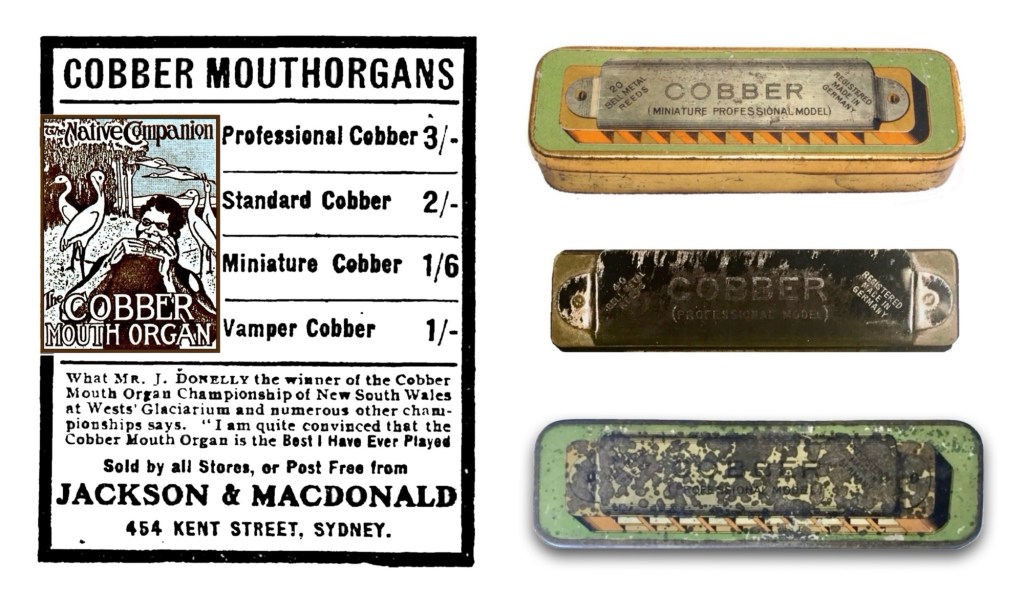
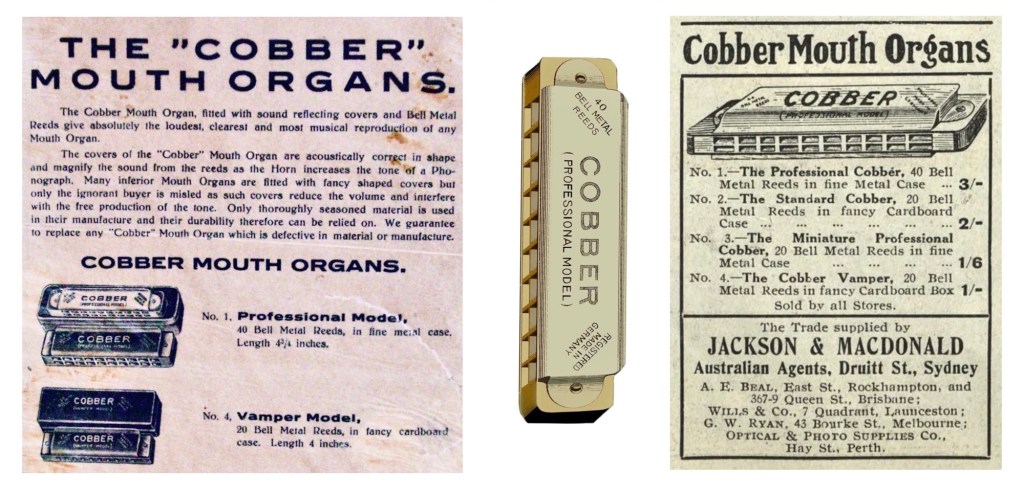
Cobber Mouth Organs
(There ain’t too many – 1 mouth organ & 3 tins)
Glacarium
Doc Carver
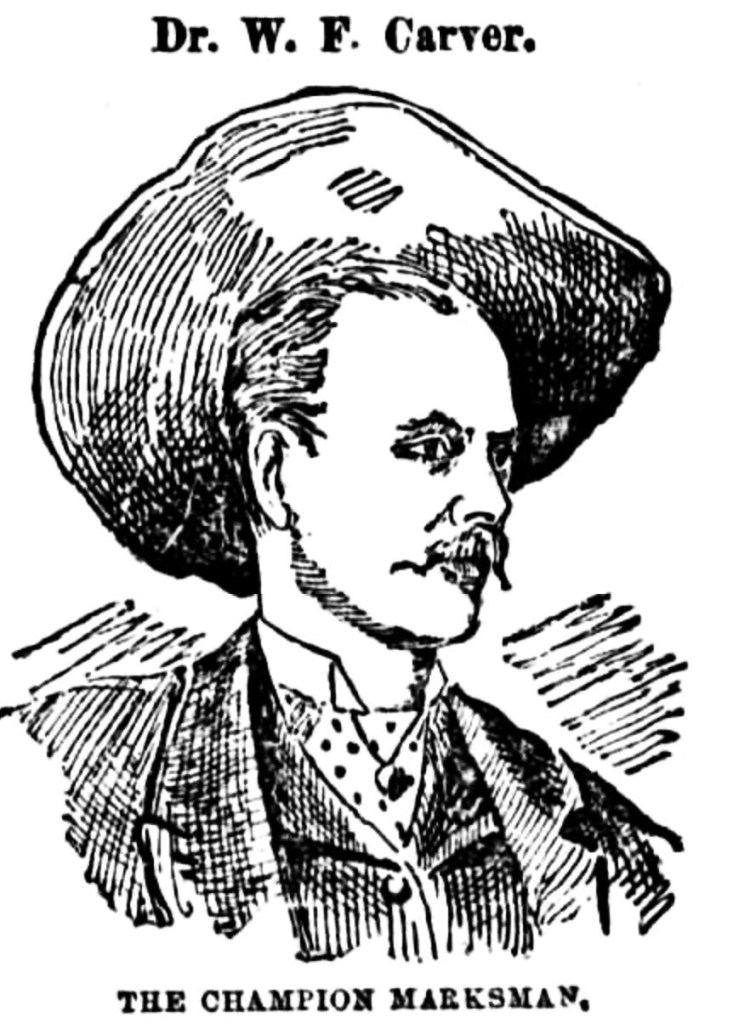
Couldn’t dig up any information on Albert Emmett, James’ mouth organ tutor. However Dr. Carver (Albert Emmett) was one of his troupe entertainers) was a different kettle of fish.
William Frank ‘Doc’ Carver (May 7, 1840 – August 31, 1927), was a crack rifle shot, who teamed up with Buffalo Bill Cody to present a travelling Wild West Show. After just one season, Wild Bill and the Doc had an almighty bust up with both going their separate ways.
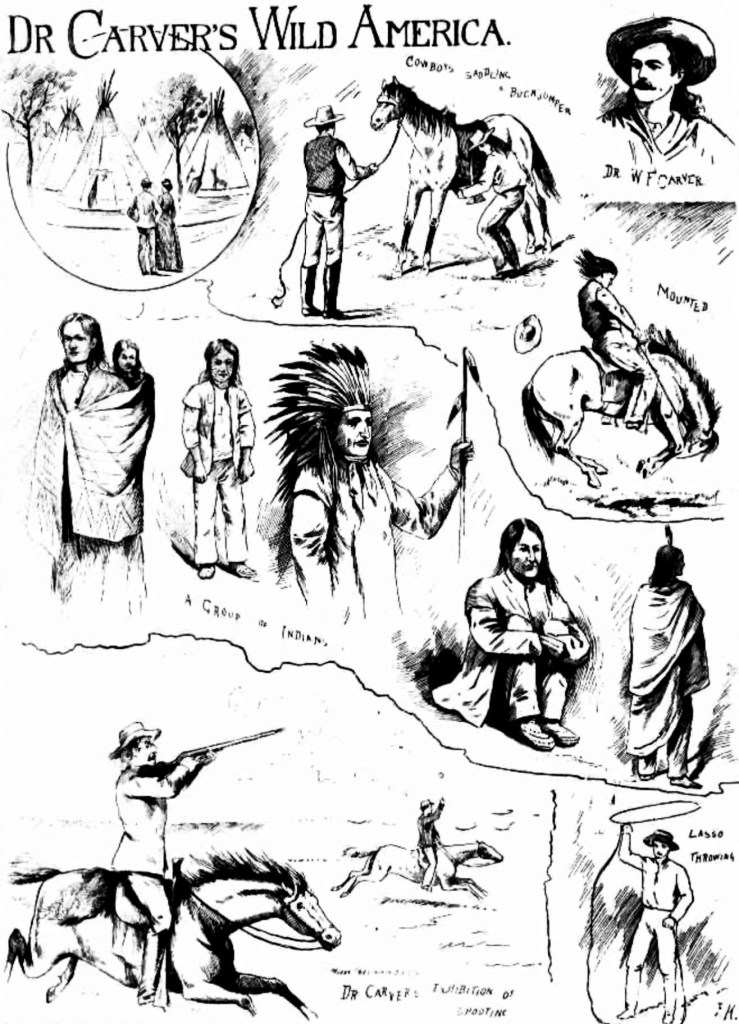
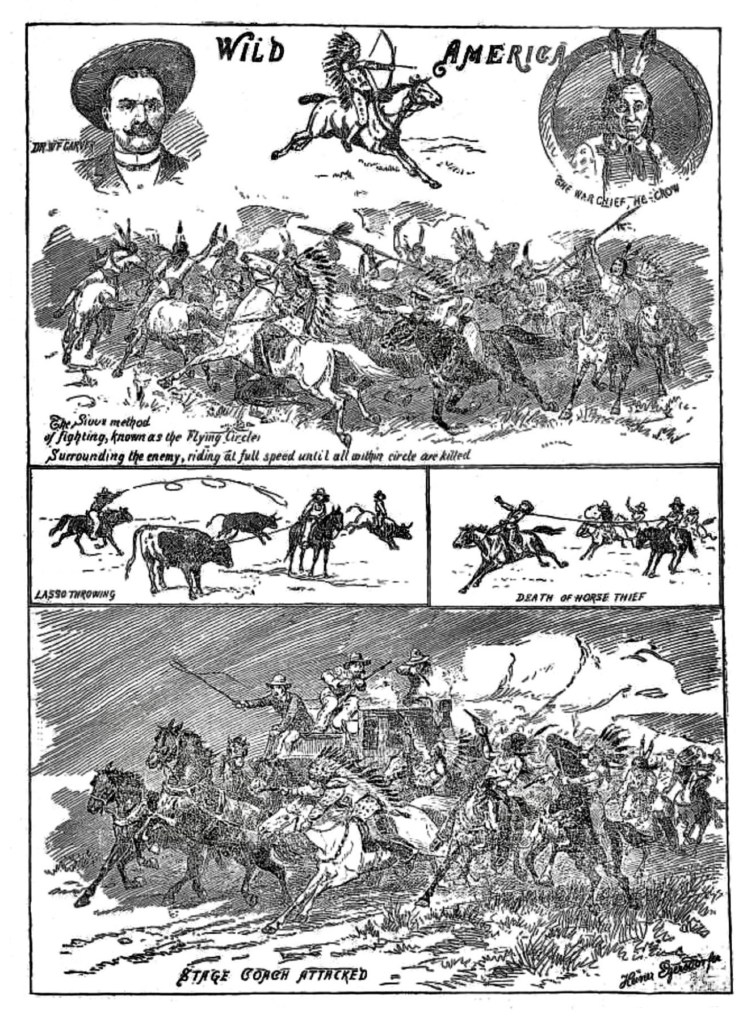
Doc developed his own act ‘Wild America’ and launched a worldwide tour, which arrived in Australia in December of 1890. Later Doc gained further notoriety for his invention of the Diving Horse act.
Does Chidley Like Trousers?
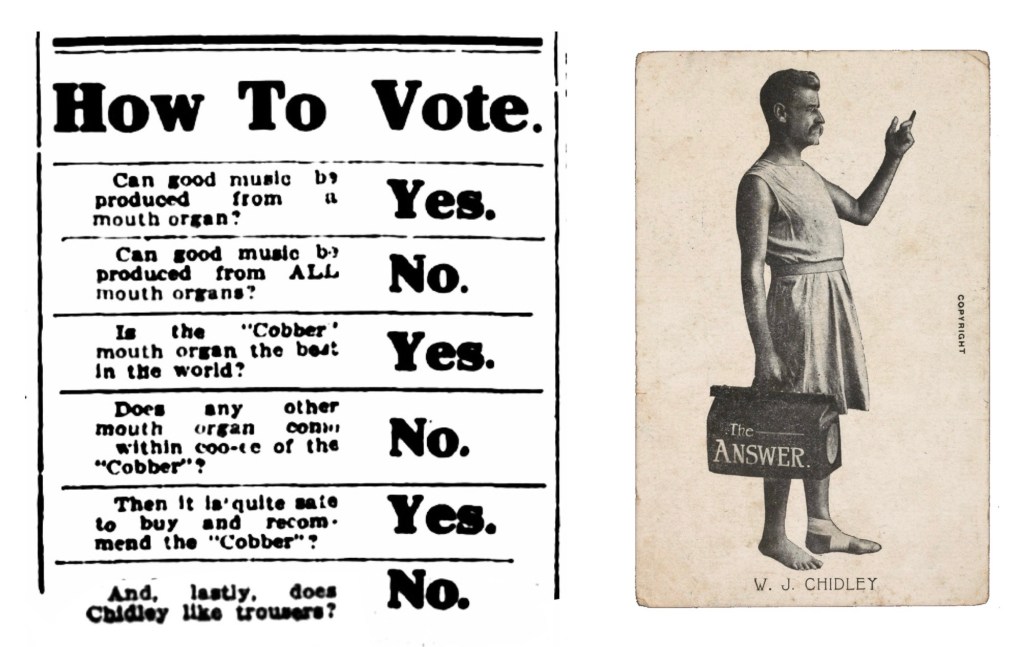
Cobber’s ‘How To Vote’ advertisement of 1913, was intriguing especially for the last response. Who the heck was Chidley and why wouldn’t he like trousers?
William James Chidley (c.1860 -1916), was an eccentric figure early in the twentieth century. He roamed the streets of Melbourne in a short white tunic and preached a controversial ‘correct’ method of intercourse. William also prescribed vegetarianism, plenty of sunlight and fresh air and light unrestrictive clothing. In 1911, William wrote and published The Answer. He offered copies for sale to bemused bystanders on the streets of Melbourne. Later he moved to Sydney, where he was somewhat controversially certified as insane (twice).
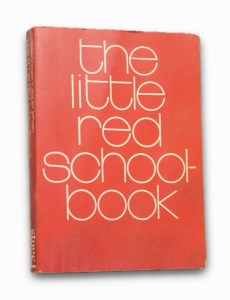
‘The Answer’ reminds me of ‘The Little Red School Book’ that was offered at the front gates at the end of a school day in the early seventies. I never did see a copy, as (would you believe it) this was on a day I was missing in action. It was going to provide this little chap (just turned thirteen) with all the answers to the mystery of what sex was all about. I was spewin’! – to use the vernacular of the time.
And The Search Goes On (La-de-da-de-de, la-de-da-de-da).
Some of us never give up trying in our search for truth in the harmonica world. Good friend of HRR, Pat Missin, is always on the lookout for ways and means of cracking the code. Here’s an example of his pursuit for the Cobber mouth organ manufacturer.
“Hi Shep. I think something happened before the war. Bauer and Krause specialised in import/export of various items, including textiles, toys and novelties. Their markets were Spain, Central and South America, India and Australia. Oddly, for what seems to be a busy and well established company, I’m not finding much in the way of trademarks beyond those for the Jackson & MacDonald stuff. Then within months of those, Jackson & MacDonald stuff trademark them all again in their own name and run this ad in the German trade press, claiming to be the biggest Australian importer of gramophones and stuff:
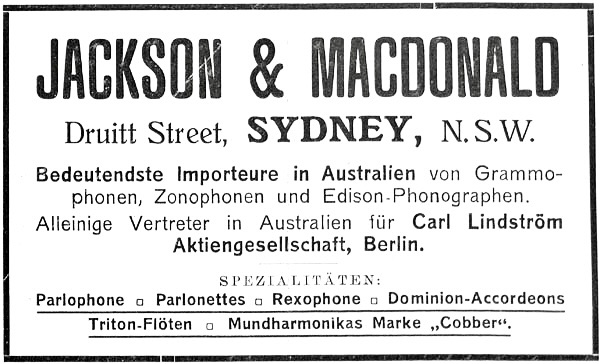
It was this ad that gave me an idea last week. Instead of trying to find who made ‘Cobber’ or ‘Dominion’, why not take a step sideways and try to find out who made ‘Rexophone’ and see if that gives us a clue. Well, that bit was easy – the original Rexophones were rebranded Thorens units, later being assembled in Australia using parts bought in from Thorens:
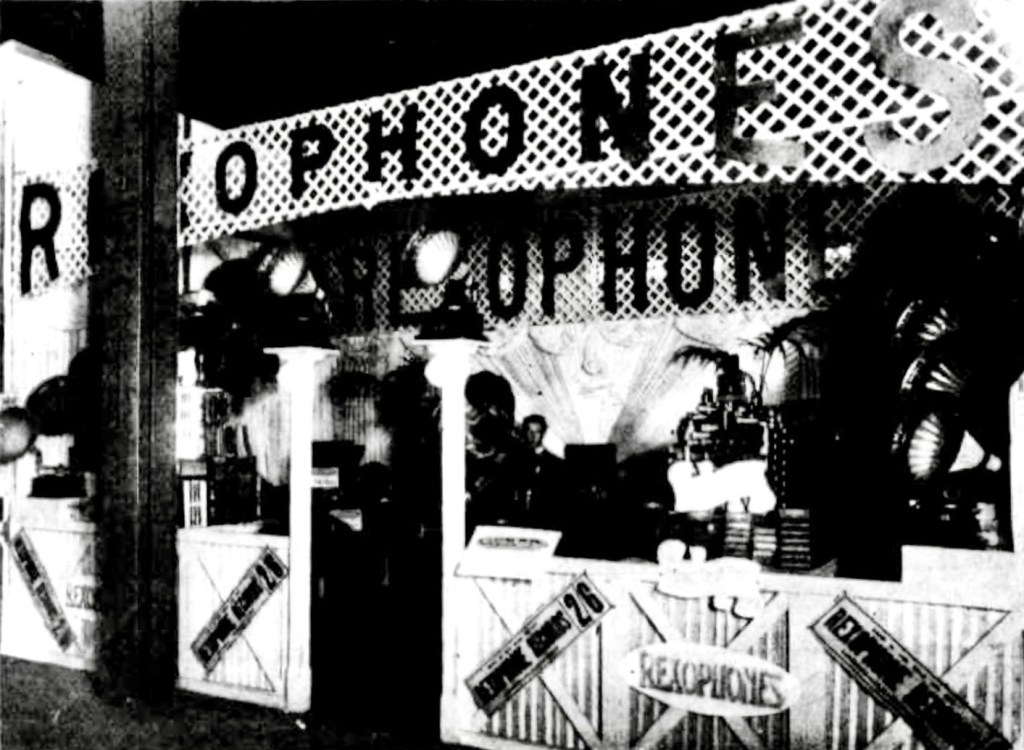
The display of Rexophones and Cobber Mouth Organs by Messrs. Jackson and MacDonald, of Kent and Druitt streets, Sydney, at the 1913 Sydney Royal Show.
I was quite excited to find this, as Thorens have been known to make a harmonica or two, along with their music boxes and audio gear. In fact, Thorens are supposed to have ventured into the harmonica market twice – the first time around WWI, the second time around WWII. The former would be coincident with the production of the ‘Cobber’ harmonicas. Surely that couldn’t be a coincidence?
Well, of course, then I remembered that the ‘Cobber’ tin and cover clearly state ‘Made in Germany’ and my excitement quickly faded. Still, that’s one hell of a coincidence – they were marketing their own range of (presumably rebranded) harmonicas around the time they were dealing with a company that also made harmonicas.”
So Pat had me thinking of other left field ideas. What about makers that had harmonicas on the box top like the Cobber tin? There was Hohner’s The Pro, Seydel’s Silver Bells, Koch’s Kochamonica and the Alpenglocken, Weiss’ La Bijou and Max Spranger’s Pinguin. Still no closer!
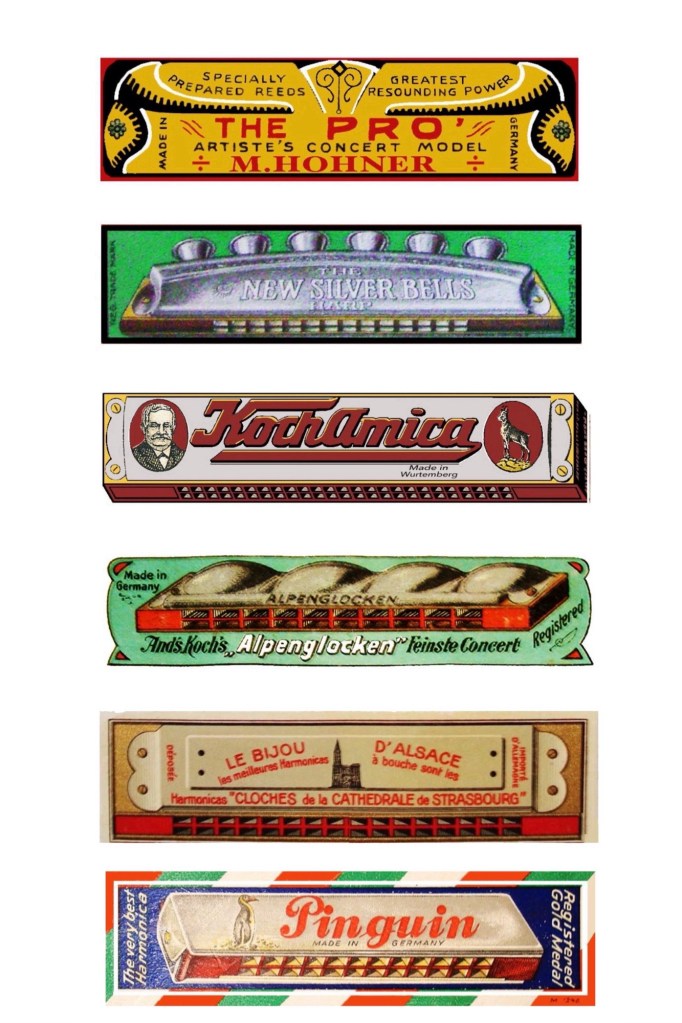
1890-1940 First Edition April, 2019 John R. Whiteman
Graphics Restorations by Ken VanEtten
The top of a Crackajack tin has a cover plate appearance.

And what about Doug’s Cobber tin from earlier – the ten hole Miniature Professional. Seydel’s Boomerang mouth organs had a ten hole Miniature Professional and I wasn’t aware of any other manufacturer branding a ten holer in this manner. I sent an email to Bertram Becher of Seydel wondering if Seydel was then a possibility for the manufacturer. He forwarded my enquiry onto Thorald, a director of a local harmonica museum. However, he ruled out Seydel, and implicated Zuleger as a potential candidate.
Strangely enough, on a completely different research project, I stumbled across a Weidlich mouth organ, a Pied Piper, with a cover stamped Miniature Professional on a fluted ten holer. Otto had many irons in the fire down in the Antipodes.
But my verdict is in (I have to move on) and someone else will have to find indisputable proof that it is a different manufacturer. Tune in later this month for the declaration.
Please check home page for copyright details
 Harmonica Riff Raff